KB-1452

JNJ79635322-CD3-hIgG1

×
Please enable JavaScript in your browser to complete this form.
45718
Home » Antibodies » JNJ79635322-CD3-hIgG1

Background of JNJ79635322-CD3-hIgG1

JNJ-79635322 is a novel trispecific antibody that simultaneously targets three different antigens: BCMA (B-cell maturation antigen), GPRC5D and CD3. By binding to BCMA and GPRC5D on the surface of multiple myeloma cells, as well as CD3 on T cells, JNJ-79635322 brings the T cells into close proximity with the myeloma cells. This cross-linking of the three targets (BCMA, GPRC5D, and CD3) triggers the activation and cytotoxic function of the T cells, leading to the killing of the BCMA and GPRC5D-expressing myeloma cells. JNJ-79635322-CD3-hIgG1 is a monoclonal antibody that binds to the CD3 protein.

Specifications

Catalog NumberKB-1452
Antibody NameJNJ79635322-CD3-hIgG1
IsotypeHuman IgG1, kappa
TargetCD3E&CD3D
Species ReactivityHuman
Host Cell LineEXPI CHO
Purification MethodAffinity purified
Concentration>2 mg/mL
Formulation50 mM sodium citrate,150mM NaCl,pH5.5
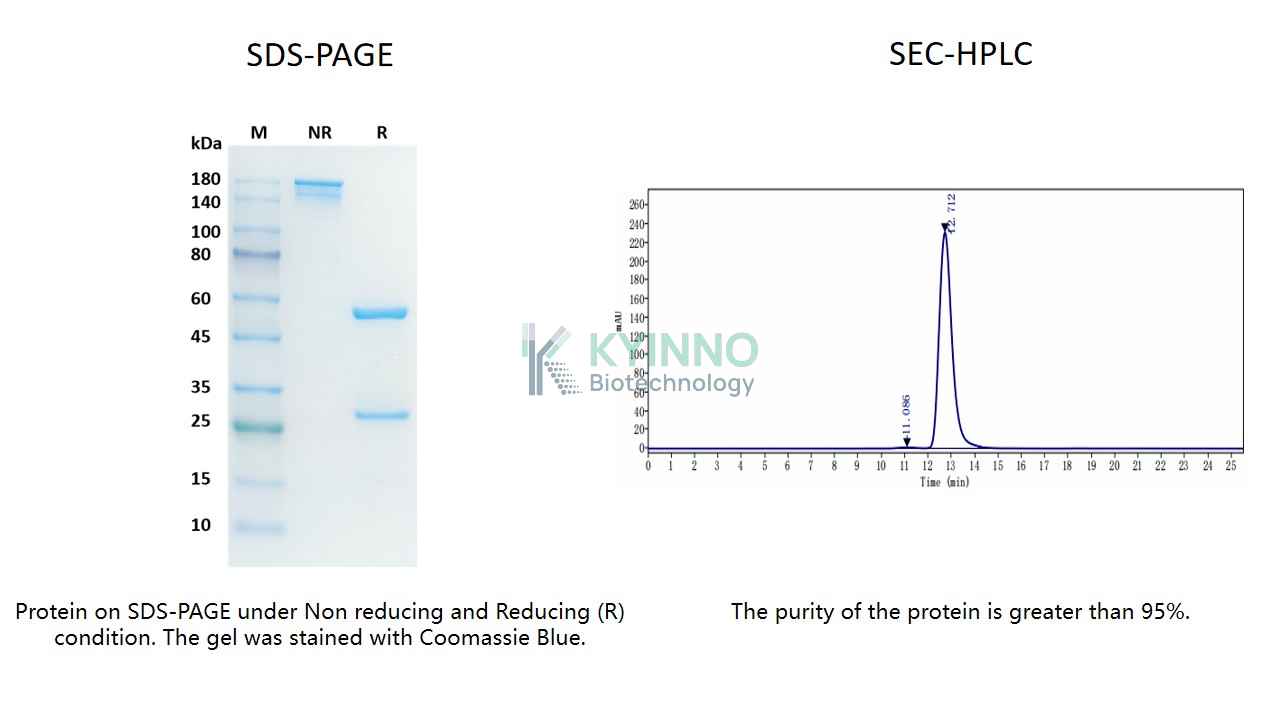
Purity>95% by SDS-PAGE and SEC-HPLC
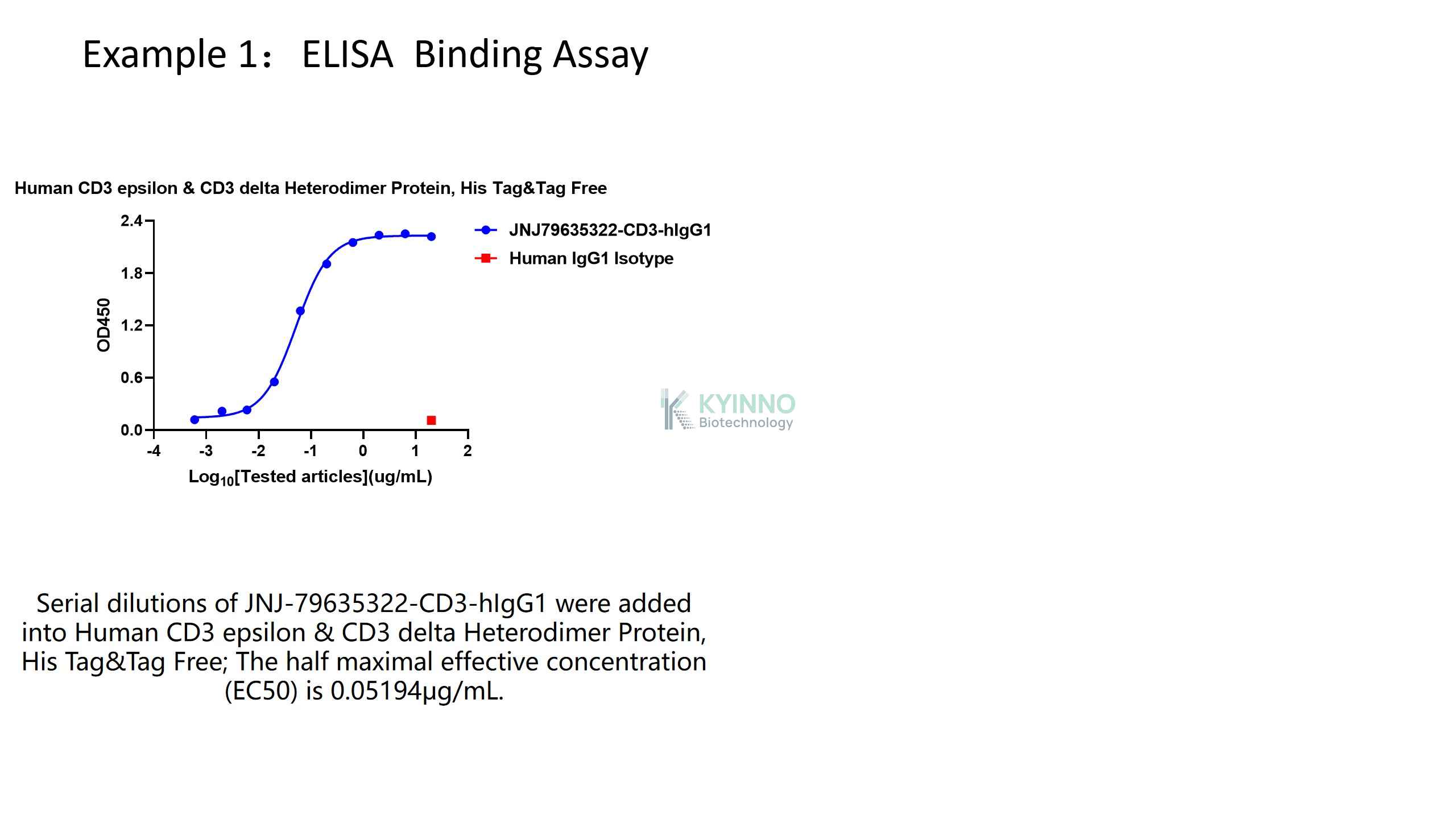
ValidationELISA
Endotoxin Level<0.2 EU/mg as determined by the LAL method
Sterility0.2μm filtered
StorageIt is recommended that the protein should be aliquoted for optimal storage.
Avoid repeated freeze-thaw cycles.
StabilityStable for twelve months from date of receipt when stored at -20°C to -80°C;
Stored at 2-8°C for one month without detectable loss of activity.

Characterization

Application

References

  1. Bahlis NJ, Tomasson MH, Mohty M, et al.. Efficacy and safety of elranatamab in patients with relapsed/refractory multiple myeloma Naïve to B-Cell Maturation Antigen (BCMA)-directed therapies: results from cohort a of the magnetismm-3 study. Blood 2022; 140:391–393.
  2. Touzeau C, Krishnan AY, Moreau P, et al.. Efficacy and safety of teclistamab (tec), a B-cell maturation antigen (BCMA) x CD3 bispecific antibody, in patients (pts) with relapsed/refractory multiple myeloma (RRMM) after exposure to other BCMA-targeted agents. J Clin Oncol 2022; 40:8013–18013.
Please enable JavaScript in your browser to complete this form.