KC-1822

293T-membrane-IL11 Cell Line

×
Please enable JavaScript in your browser to complete this form.
22871
Home » 293T-membrane-IL11 Cell Line

Background of 293T-membrane-IL11 Cell Line

IL11 (Interleukin 11) is a Protein Coding gene, it is an elusive member of the IL6 family of cytokines. he protein encoded by this gene is a member of the gp130 family of cytokines. These cytokines drive the assembly of multisubunit receptor complexes, all of which contain at least one molecule of the transmembrane signaling receptor IL6ST (gp130). IL11 stimulation of TECs induces ERK- and p90RSK-mediated GSK3β inactivation, SNAI1 upregulation and pro-inflammatory gene expression. Mice with TEC-specific deletion of Il11ra1 have reduced pathogenic signaling and are protected from renal injury-induced inflammation, fibrosis, and failure. This cytokine is shown to stimulate the T-cell-dependent development of immunoglobulin-producing B cells. It is also found to support the proliferation of hematopoietic stem cells and megakaryocyte progenitor cells. IL11 as a therapeutic target for restoring stalled endogenous regeneration in the diseased kidney.

Specifications

Catalog NumberKC-1822
Cell Line Name293T-membrane-IL11 Cell Line
NCBI/UniProt Accession NumberNP_000632.1
Clone Number1#
Host Cell Line293T
DescriptionStable 293T clone expressing exogenous membrane IL11 gene
QuantityTwo vials of frozen cells (≥2-106/vial)
StabilityStable in culture over a minimum of 10 passages
ApplicationDrug screening and biological assays
Freezing Medium70% DMEM + 20% FBS + 10% DMSO
Propagation MediumDMEM + 10% FBS + 1μg/mL Puromycin
Selection MarkerPuromycin
MorphologyEpithelial
SubcultureSplit saturated culture 1:4-1:5 every 2-3 days; seed out at about 1-3 × 10⁵ cells/mL
Incubation37 °C with 5% CO2
StorageLiquid nitrogen immediately upon receiving
Doubling TimeApproximately 30 hours
Mycoplasma StatusNegative
In Vivo ValidationNA

Cell Line Generation

293T-membrane-IL11 cell line was generated using a lentiviral vector expressing the membrane IL11 sequence.

Characterization

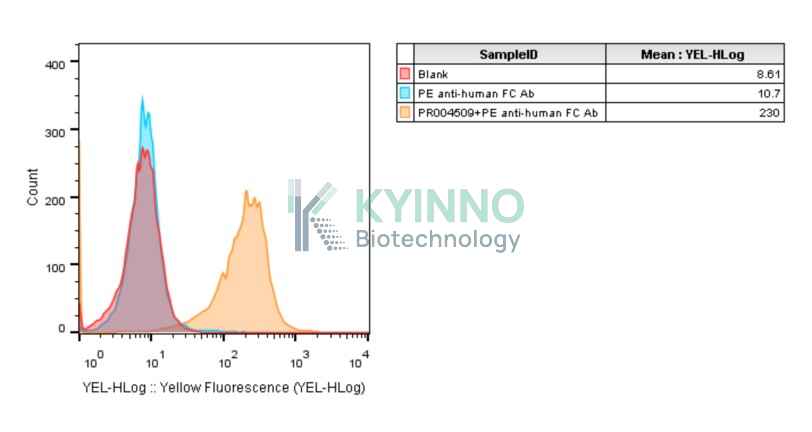
Figure 1: Characterization of membrane IL11 overexpression in the 293T-membrane-IL11 stable clone using FACS.

Figure 2: Characterization of membrane IL11 and its mutants overexpressing in 293T stable clones using PCR sequencing.

Cell Resuscitation

1. Prewarm culture medium (DMEM supplemented with 10% FBS and 1μg/mL Puromycin) in a 37°C water bath.
2. Thaw the frozen vial in a 37°C water bath for 1-2 minutes.
3. Transfer the vial into biosafety cabinet, and wipe the surface with 70% ethanol.
4. Unscrew the top of the vial and transfer the cell suspension gently into a sterile centrifuge tube containing 9.0mL complete culture medium.
5. Spin at ~ 125 × g for 5-7 minutes at room temperature, and discard the supernatant without disturbing the pellet.
6. Resuspend cell pellet with the appropriate volume of complete medium and transfer the cell suspension into a T25 culture flask.
7. Incubate the flask at 37°C, 5% CO2 incubator.
8. Split saturated culture 1:4-1:5 every 2-3 days; seed out at about 1-3 × 10⁵ cells/mL.

Cell Freezing

1. Prepare the freezing medium (70% DMEM + 20% FBS + 10% DMSO) fresh immediately before use.
2. Keep the freezing medium on ice and label cryovials.
3. Transfer cells to a sterile, conical centrifuge tube, and count the cells.
4. Centrifuge the cells at 250×g for 5 minutes at room temperature and carefully aspirate off the medium.
5. Resuspend the cells at a density of at least 3×10⁶ cells/mL in chilled freezing medium.
6. Aliquot 1 mL of the cell suspension into each cryovial.
7. Freeze cells in the CoolCell freezing container overnight in a -80°C freezer.
8. Transfer vials to liquid nitrogen for long-term storage.

References

1. Tan Y, Mosallanejad K, Zhang Q, O'Brien S, Clements M, Perper S, Wilson S, Chaulagain S, Wang J, Abdalla M, Al-Saidi H, Butt D, Clabbers A, Ofori K, Dillon B, Harvey B, Memmott J, Negron C, Winarta D, Tan C, Biswas A, Dong F, Morales-Tirado V, Lu X, Singh G, White M, Ashley S, Knight H, Westmoreland S, Phillips L, Carr T, Reinke-Breen L, Singh R, Xu J, Wu K, Rinaldi L, Stoll B, He YD, Hazelwood L, Karman J, McCluskey A, Stine W, Correia I, Gauld S, Levesque MC, Veldman G, Hubeau C, Radstake T, Sadhukhan R, Fiebiger E. IL11-mediated stromal cell activation may not be the master regulator of pro-fibrotic signaling downstream of TGFβ. Front Immunol. 2024 Feb 22;15:1293883. doi: 10.3389/fimmu.2024.1293883. PMID: 38455057; PMCID: PMC10917968.
2. Cook SA. Understanding interleukin 11 as a disease gene and therapeutic target. Biochem J. 2023 Dec 13;480(23):1987-2008. doi: 10.1042/BCJ20220160. PMID: 38054591; PMCID: PMC10754292.
3. Ernst M, Putoczki TL. Molecular pathways: IL11 as a tumor-promoting cytokine-translational implications for cancers. Clin Cancer Res. 2014 Nov 15;20(22):5579-88. doi: 10.1158/1078-0432.CCR-13-2492. Epub 2014 Jul 29. PMID: 25074610.
4. Widjaja AA, Viswanathan S, Shekeran SG, Adami E, Lim WW, Chothani S, Tan J, Goh JWT, Chen HM, Lim SY, Boustany-Kari CM, Hawkins J, Petretto E, Hübner N, Schafer S, Coffman TM, Cook SA. Targeting endogenous kidney regeneration using anti-IL11 therapy in acute and chronic models of kidney disease. Nat Commun. 2022 Dec 5;13(1):7497. doi: 10.1038/s41467-022-35306-1. PMID: 36470928; PMCID: PMC9723120.

Please enable JavaScript in your browser to complete this form.