KB-1099

SG55903-hIgG1

×
Please enable JavaScript in your browser to complete this form.
12113
Home » SG55903-hIgG1

Background of SG55903-hIgG1

Programmed Cell Death Ligand 1 (PD-L1) , also known as cluster of differentiation 274 (CD274) or B7 homolog 1 (B7-H1) , is a trans-membrane protein that is considered to be a co-inhibitory factor of the immune response, it can combine with PD-1 to reduce the proliferation of PD-1 positive cells, inhibit their cytokine secretion and induce apoptosis. PD-L1 also plays an important role in various malignancies where it can attenuate the host immune response to tumor cells. Based on these perspectives, PD-1/PD-L1 axis is responsible for cancer immune escape and makes a huge effect on cancer therapy.

Specifications

Catalog NumberKB-1099
Antibody NameSG55903-hIgG1
IsotypeHuman IgG1,kappa
FC MuationsWild Type
TargetPDL1
Species ReactivityHuman
Host Cell LineEXPI CHO
Purification MethodAffinity purified
Concentration>2 mg/mL
Formulation50 mM sodium citrate,150mM NaCl,pH5.5
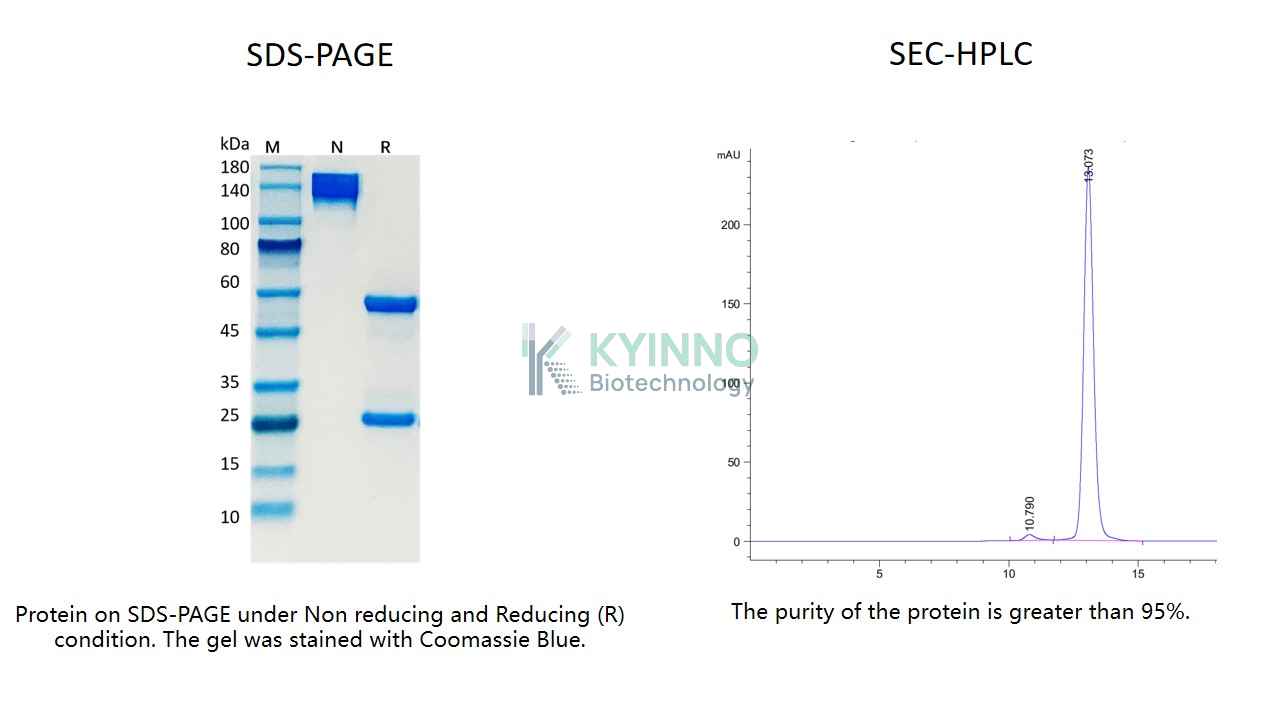
Purity>95% by SDS-PAGE and SEC-HPLC
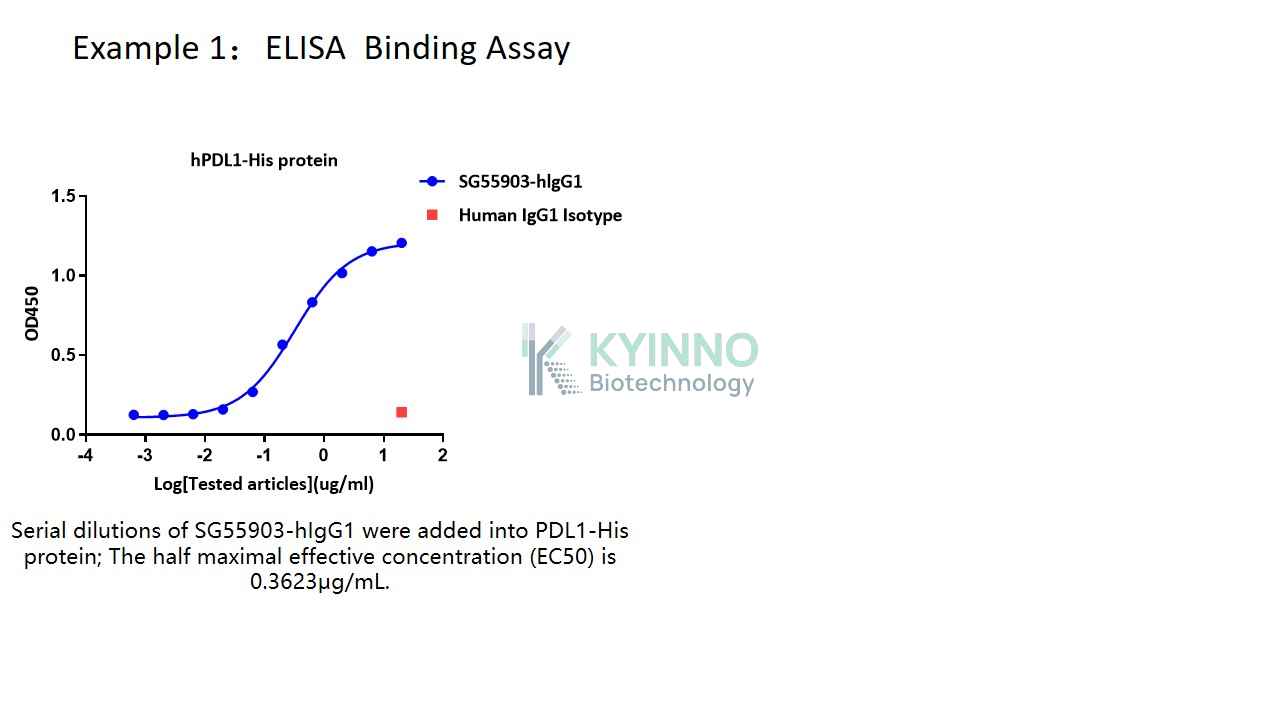
ValidationELISA
Endotoxin Level<0.2 EU/mg as determined by the LAL method
Sterility0.2μm filtered
StorageIt is recommended that the protein should be aliquoted for optimal storage.
Avoid repeated freeze-thaw cycles.
StabilityStable for twelve months from date of receipt when stored at -20°C to -80°C;
Stored at 2-8°C for one month without detectable loss of activity.

Characterization

Application

References

  1. Salmaninejad A, Valilou SF, Shabgah AG, Aslani S, Alimardani M, Pasdar A, Sahebkar A. PD-1/PD-L1 pathway: basic biology and role in cancer immunotherapy. J Cell Physiol. 2019;234:16824–16837.
  2. Sacher AG, Gandhi L. Biomarkers for the clinical use of PD-1/PD-L1 inhibitors in non-small-cell lung cancer: a review. JAMA Oncol. 2016;2:1217–1222.
  3. The B7 family of ligands and its receptors: new pathways for costimulation and inhibition of immune responses. Annu Rev Immunol. 2002;20:29–53.
Please enable JavaScript in your browser to complete this form.