KB-1242

Felzartamab

×
Please enable JavaScript in your browser to complete this form.
12245
Home » Felzartamab

Background of Felzartamab

CD38 has been identified as a transmembrane receptor that triggers proliferation and immune responses in lymphocytes and is used as a malignancy or differentiation marker in leukaemia or HIV infection. CD38 is also present in many tissues other than haematopoietic cells, including the brain and pancreas. It can catalyse the formation of cyclic ADP-ribose (cADPR) and nicotinic acid adenine dinucleotide phosphate (NAADP) by ADP-ribosyl cyclase from NAD1 and NAD phosphate. cADPR and NAADP mobilize Ca21 from ryanodine-sensitive intracellular Ca21 stores in the endoplasmic reticulum or other pools located in lysosomes or secretory granules, and thus act as second messengers.

Specifications

Catalog NumberKB-1242
Antibody NameFelzartamab
IsotypeHuman IgG1,lambda
FC MuationsWild Type
TargetCD38
Species ReactivityHuman
Host Cell LineEXPI CHO
Purification MethodAffinity purified
Concentration>2 mg/mL
Formulation50 mM sodium citrate,150mM NaCl,pH5.5
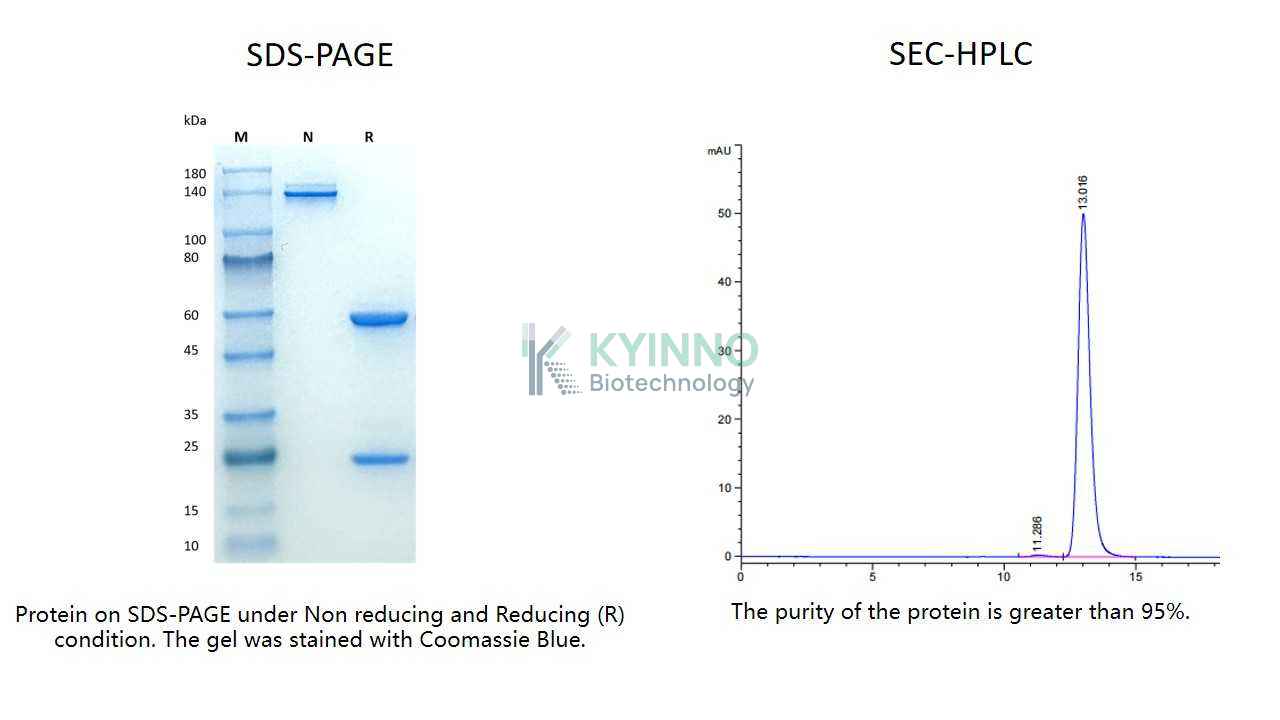
Purity>95% by SDS-PAGE and SEC-HPLC
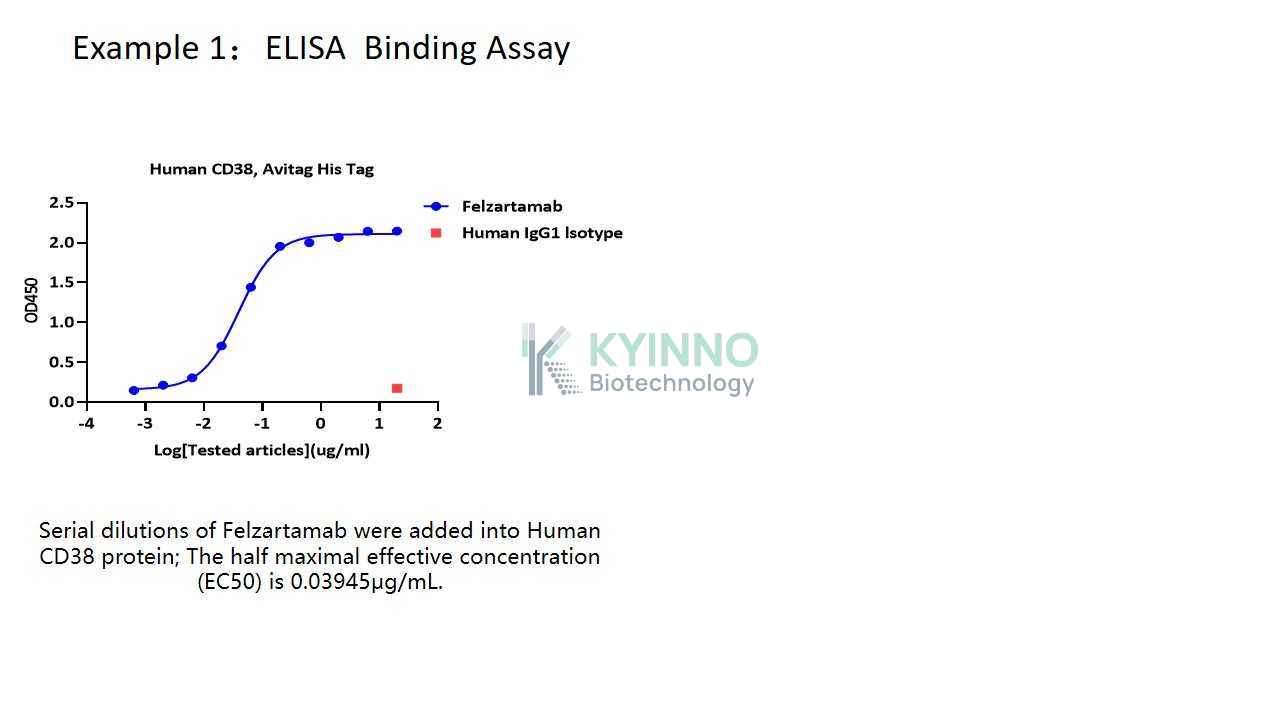
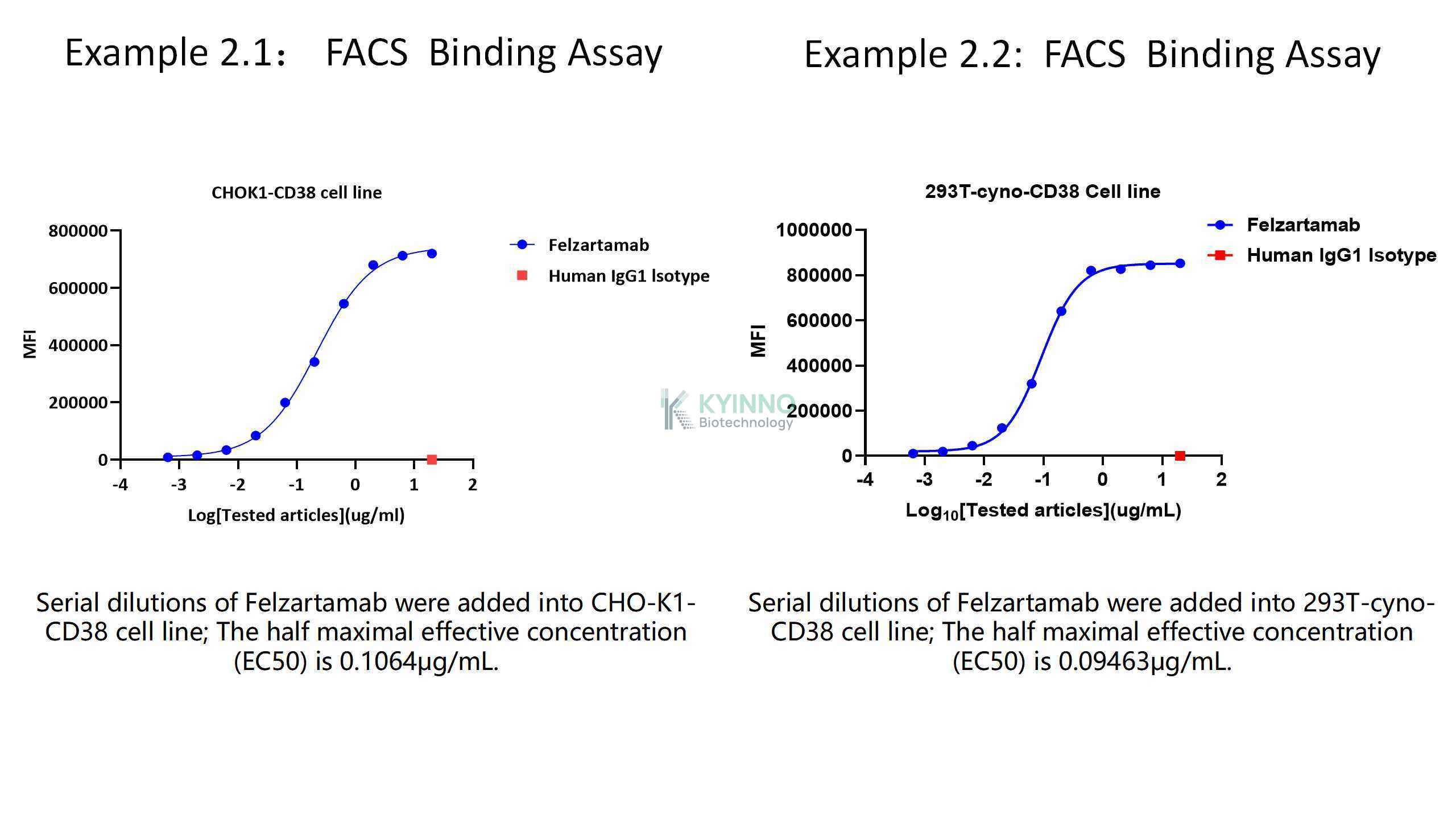
ValidationELISA | FACS
Endotoxin Level<0.2 EU/mg as determined by the LAL method
Sterility0.2μm filtered
StorageIt is recommended that the protein should be aliquoted for optimal storage. Avoid repeated freeze-thaw cycles.
StabilityStable for twelve months from date of receipt when stored at -20°C to -80°C;Stored at 2-8°C for one month without detectable loss of activity.

Characterization

Application

References

  1. Lee, H. C. Physiological functions of cyclic ADP-ribose and NAADP as calcium messengers. Annu. Rev. Pharmacol. Toxicol. 41, 317-345 (2001).
  2. Deaglio, S., Vaisitti, T., Aydin, S., Ferrero, E. & Malavasi, F. In-tandem insight from basic science combined with clinical research: CD38 as both marker and key component of the pathogenetic network underlying chronic lymphocytic leukemia. Blood 108, 1135-1144 (2006).
  3. Hunt, P. W. et al. The independent effect of drug resistance on T cell activation in HIV infection. AIDS 20, 691-699 (2006).
  4. Higashida, H. et al. Cyclic ADP-ribose as a second messenger revisited from a new aspect of signal transduction from receptors to ADP-ribosyl cyclase. Pharmacol. Ther. 90, 283-296 (2001).
  5. Okamoto, H. & Takasawa, S. Recent advances in the Okamoto model: the CD38- cyclic ADP-ribose signal system and the regenerating gene protein (Reg)-Reg receptor system in beta-cells. Diabetes 51, S462-S473 (2002).
  6. Takasawa, S. et al. Synthesis and hydrolysis of cyclic ADP-ribose by human leukocyte antigen CD38 and inhibition of the hydrolysis by ATP. J. Biol. Chem. 268, 26052-26054 (1993).
  7. Howard, M. et al. Formation and hydrolysis of cyclic ADP-ribose catalyzed by lymphocyte antigen CD38. Science 262, 1056-1059 (1993).
  8. Lee, H. C. Nicotinic acid adenine dinucleotide phosphate (NAADP)-mediated calcium signaling. J. Biol. Chem. 280, 33693-33696 (2005).
Please enable JavaScript in your browser to complete this form.