
KC-1110

HT1080-NFκb-Luc2-OX40-reporter Cell Line

×
Please enable JavaScript in your browser to complete this form.
21551
Home » 细胞系 » HT1080-NFκb-Luc2-OX40-reporter Cell Line

Background of HT1080-NFκb-Luc2-OX40-reporter Cell Line

"OX40, also named as CD134 or tumor necrosis factor receptor superfamily, member 4 (TNFRSF4), is a member of the TNFR superfamily acting as co-stimulatory immune checkpoint molecule expressed on the activated T cells. OX40 plays a critical role in maintaining of immune response and lead to a memory immune response. OX40-OX40 Ligand interaction is involved in allergic airway inflammation, graft-versus-host disease and autoimmune disease and cardiovascular disease. NFκb pathway plays an important role in controlling many biological processes including transcription of DNA, cytokine production, cell survival, immune responses to infection, developmental process, synaptic plasticity, memory and cancer development. In response to the various stimuli, such as stress, cytokines, free radicals, heavy metals, ultraviolet irradiation, oxidized LDL, and bacterial or viral antigens, NFκb pathway is activated and NFκb protein complex translocate from cytoplasm to nucleus, regulates a wide spectrum of gene expression after binds to its response element on the promoter region of downstream gene."

Specifications

Catalog NumberKC-1110
Cell Line NameHT1080-NFκb-Luc2-OX40-reporter Cell Line
Host Cell LineHT1080-OX40
DescriptionStable HT1080 cell line expressing exogenous luciferase under the control of NF-κb responsive element and full-length human OX40 protein sequence.
QuantityTwo vials of frozen cells (≥2-106/vial)
StabilityStable in culture over a minimum of 10 passages
ApplicationDrug screening and biological assays
Freezing Medium70% RPMI1640 + 20% FBS + 10% DMSO
Propagation MediumRPMI1640 + 10% FBS +150μg/mL Hygromycin B + 1μg/mL puromycin
Selection MarkerHygromycin B, Puromycin
MorphologyEpithelial
SubcultureSplit saturated culture 1:4-1:5 every 2-3 days; seed out at about 1 × 10⁵ cells/mL
Incubation37 °C with 5% CO2
StorageLiquid nitrogen immediately upon receiving
Doubling TimeApproximately 30 hours
Mycoplasma StatusNegative
In Vivo ValidationNA

Cell Line Generation

HT1080 -NFκb-Luc2-OX40 Cell Line was generated using a lentiviral vector expressing the NFκb-Luc2 sequence.

Characterization

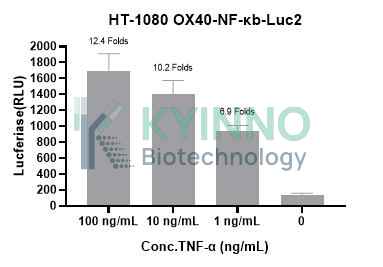
Figure1: HT1080 -NFκb-Luc2-OX40 cells were seeded into 96-well plates, treated with TNF-α for 16 hours, and then read out using Bright-Glo Detection System.
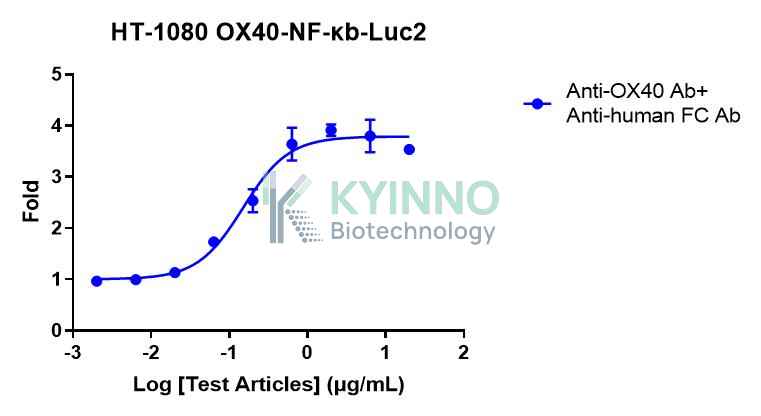
Figure2: HT1080 -NFκb-Luc2-OX40 cells were seeded into 96-well plates, treated with Anti-OX40 Ab and Anti-human FC Ab in different concentrations for 16 hours, and then read out using Bright-Glo Detection System.
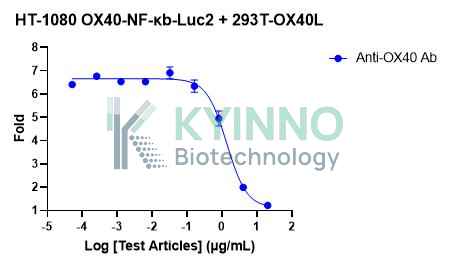
Figure3: HT1080 -NFκb-Luc2-OX40 cells and 293T-OX40L cells were seeded into 96-well plates, treated with Anti-OX40 Ab in different concentrations for 16 hours, and then read out using Bright-Glo Detection System.

Cell Resuscitation

  1. Prewarm culture medium (RPMI 1640 supplemented with 10% FBS, 150µg/mL Hygromycin B and 1μg/mL Puromycin) in a 37°C water bath.
  2. Thaw the frozen vial in a 37°C water bath for 1-2 minutes.
  3. Transfer the vial into biosafety cabinet, and wipe the surface with 70% ethanol.
  4. Unscrew the top of the vial and transfer the cell suspension gently into a sterile centrifuge tube containing 9.0mL complete culture medium.
  5. Spin at ~ 125 × g for 5-7 minutes at room temperature, and discard the supernatant without disturbing the pellet.
  6. Resuspend cell pellet with the appropriate volume of complete medium and transfer the cell suspension into a T25 culture flask.
  7. Incubate the flask at 37°C, 5% CO2 incubator.
  8. Split saturated culture 1:4-1:5 every 2-3 days; seed out at about 1 × 10⁵ cells/mL.

Cell Freezing

  1. Prepare the freezing medium (70% RPMI 1640 + 20% FBS + 10% DMSO) fresh immediately before use.
  2. Keep the freezing medium on ice and label cryovials.
  3. Transfer cells to a sterile, conical centrifuge tube, and count the cells.
  4. Centrifuge the cells at 250×g for 5 minutes at room temperature and carefully aspirate off the medium.
  5. Resuspend the cells at a density of at least 3×10⁶ cells/mL in chilled freezing medium.
  6. Aliquot 1 mL of the cell suspension into each cryovial.
  7. Freeze cells in the CoolCell freezing container overnight in a -80°C freezer.
  8. Transfer vials to liquid nitrogen for long-term storage.

References

1. Jensen SM, Maston LD, Gough MJ, Rubyet al. Signaling through OX40 enhances antitumor immunity. Semin Oncol. 2010 Oct;37(5):524-32. 2. Webb GJ, Hirschfield GM, Lane PJ. OX40, OX40L and autoimmunity: a comprehensive review. Clin Rev Allergy Immunol. 2016 Jun;50(3):312-32.
Please enable JavaScript in your browser to complete this form.