KC-1461

293T-cyno-LILRB2 Cell Line

×
Please enable JavaScript in your browser to complete this form.
22183
Home » 293T-cyno-LILRB2 Cell Line

Background of 293T-cyno-LILRB2 Cell Line

Leukocyte immunoglobulin-like receptor subfamily B member 2 (LILRB2), also known as ILT4, LIR2, monocyte/macrophage immunoglobulin-like receptor 10, MIR-10, and CD85d, belongs to the leukocyte immunoglobulin-like receptor (LIR) family of transmembrane glycoproteins that negatively regulate immune cell activation.LILRB2 is expressed on both innate (monocytes, macrophages, basophils, and DCs) and adaptive (CD4+ T cells) immune cells and interacts with MHC-I on nucleated cells (unknown specific ligand). LILRB2 interacts with related ligands hLA-G, ANGPTLs, SEMA4A and CD1d in tumor microenvironment, resulting in myeloid cells promoting tumor growth and enhancing tumor immune escape. It has been shown pre-clinically that LILRB2 antagonism promotes macrophage maturation and activation. MK-4830 (Merck and Agenus) is an anti-LILRB2 fully human IgG4 monoclonal antibody, and phase II clinical studies have been initiated. In addition, IO-108, JTX-8064, and NGM707 are in phase I clinical studies.

Specifications

Catalog NumberKC-1461
Cell Line Name293T-cyno-LILRB2 Cell Line
NCBI/UniProt Accession NumberXM_015441717.1
Clone NumberNA
Host Cell Line293T
DescriptionStable 293T cell line expressing exogenous cyno LILRB2 gene bearing Flag
QuantityTwo vials of frozen cells (≥2-106/vial)
StabilityStable in culture over a minimum of 10 passages
ApplicationDrug screening and biological assays
Freezing Medium70% DMEM + 20% FBS + 10% DMSO
Propagation MediumDMEM + 10% FBS + 1μg/mL Puromycin
Selection MarkerPuromycin
MorphologyEpithelial
SubcultureSplit saturated culture 1:4-1:5 every 2-3 days; seed out at about 1-3 × 10⁵ cells/mL
Incubation37 °C with 5% CO2
StorageLiquid nitrogen immediately upon receiving
Doubling TimeApproximately 30 hours
Mycoplasma StatusNegative
In Vivo ValidationNA

Cell Line Generation

293T-cyno-LILRB2 cell line was generated using a lentiviral vector expressing the cyno LILRB2 sequence bearing Flag.

Characterization

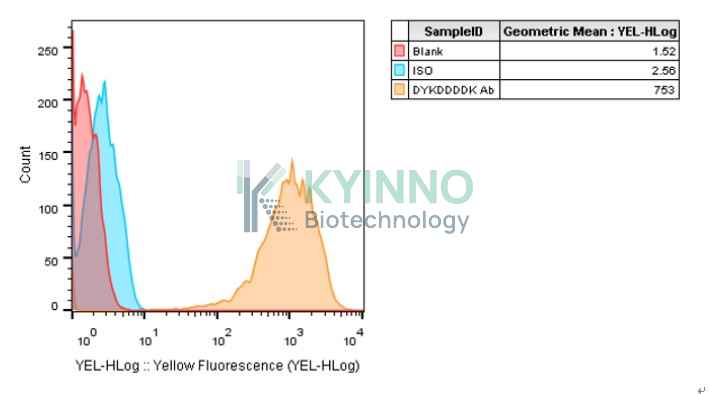
Figure 1: Characterization of Flag tag overexpression in the 293T-cyno-LILRB2 stable clone using FACS.

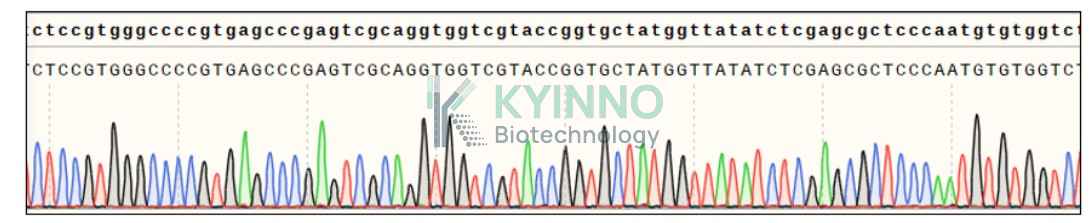
Figure 2: Characterization of cyno LILRB2 and its mutants overexpressing in 293T stable clones using PCR sequencing.

Cell Resuscitation

1. Prewarm culture medium (DMEM supplemented with 10% FBS and 1μg/mL puromycin)in a 37°C water bath.
2. Thaw the frozen vial in a 37°C water bath for 1-2 minutes.
3. Transfer the vial into biosafety cabinet, and wipe the surface with 70% ethanol.
4. Unscrew the top of the vial and transfer the cell suspension gently into a sterile centrifuge tube containing 9.0mL complete culture medium.
5. Spin at ~ 125 × g for 5-7 minutes at room temperature, and discard the supernatant without disturbing the pellet.
6. Resuspend cell pellet with the appropriate volume of complete medium and transfer the cell suspension into a T25 culture flask.
7. Incubate the flask at 37°C, 5% CO2 incubator.
8. Split saturated culture 1:4-1:5 every 2-3 days; seed out at about 1-3 × 10⁵ cells/mL.

Cell Freezing

1. Prepare the freezing medium (70% DMEM + 20% FBS + 10% DMSO) fresh immediately before use.
2. Keep the freezing medium on ice and label cryovials.
3. Transfer cells to a sterile, conical centrifuge tube, and count the cells.
4. Centrifuge the cells at 250×g for 5 minutes at room temperature and carefully aspirate off the medium.
5. Resuspend the cells at a density of at least 3×10⁶ cells/mL in chilled freezing medium.
6. Aliquot 1 mL of the cell suspension into each cryovial.
7. Freeze cells in the CoolCell freezing container overnight in a -80°C freezer.
8. Transfer vials to liquid nitrogen for long-term storage.

References

1. Lentz RW, Colton MD, Mitra SS, Messersmith WA. Innate Immune Checkpoint Inhibitors: The Next Breakthrough in Medical Oncology Mol Cancer Ther. 2021 Jun;20(6):961-974. doi: 10.1158/1535-7163.MCT-21-0041. Epub 2021 Apr 13. PMID: 33850005; PMCID: PMC9028741.
2. Chen HM, van der Touw W, Wang YS, Kang K, Mai S, Zhang J, Alsina-Beauchamp D, Duty JA, Mungamuri SK, Zhang B, Moran T, Flavell R, Aaronson S, Hu HM, Arase H, Ramanathan S, Flores R, Pan PY, Chen SH. Blocking immunoinhibitory receptor LILRB2 reprograms tumor-associated myeloid cells and promotes antitumor immunity. J Clin Invest. 2018 Dec 3;128(12):5647-5662. doi: 10.1172/JCI97570. Epub 2018 Oct 22. PMID: 30352428; PMCID: PMC6264729.
3. Zhao P, Xu Y, Jiang LL, Fan X, Ku Z, Li L, Liu X, Deng M, Arase H, Zhu JJ, Huang TY, Zhao Y, Zhang C, Xu H, Tong Q, Zhang N, An Z. LILRB2-mediated TREM2 signaling inhibition suppresses microglia functions. Mol Neurodegener. 2022 Jun 18;17(1):44. doi: 10.1186/s13024-022-00550-y. PMID: 35717259; PMCID: PMC9206387.

Please enable JavaScript in your browser to complete this form.