KC-1753

MCF7-CD24-KO-2A1-Cell-Line

×
Please enable JavaScript in your browser to complete this form.
22743
Home » MCF7-CD24-KO-2A1-Cell-Line

Background of MCF7-CD24-KO-2A1-Cell-Line

CD24, also known as heat stable antigen or small-cell lung carcinoma cluster 4 antigen, is a heavily glycosylated glycosylphosphatidylinositol-anchored surface protein and is expressed on B cells, T cells, keratinocytes, and myofiber synaptic nuclei and is upregulated in a wide variety of cancers. CD24 is a potent anti-phagocytic, ‘don’t eat me’ signal that is capable of directly protecting cancer cells from attack by Siglec-10-expressing macrophages. CD24– Siglec-10 as an innate immune checkpoint that is essential for mediating anti-tumor immunity and provides evidence for the therapeutic potential of CD24 blockade, with promise for the treatment of ovarian and breast cancers.

Specifications

Catalog NumberKC-1753
Cell Line NameMCF7-CD24-KO-2A1-Cell-Line
Host Cell LineMCF7
DescriptionStable MCF7clone with human CD24 gene knockout, No.2A1
QuantityTwo vials of frozen cells (≥2-106/vial)
StabilityStable in culture over a minimum of 10 passages
ApplicationDrug screening and biological assays
Freezing MediumEMEM+20% FBS+10% DMSO
Propagation MediumEMEM+10% FBS+0.01mg/ml
Selection MarkerN/A
MorphologyEpithelial
SubcultureSplit saturated culture 1:2-1:4 every 2-3 days; seed out at about 1-3 × 10⁵ cells/
Incubation37 °C with 5% CO2
StorageLiquid nitrogen immediately upon receiving
Doubling TimeApproximately 30 hours
Mycoplasma StatusNegative
In Vivo ValidationNA

Cell Line Generation

MCF7-CD24-KO-2A1 cell line was generated using the CRISPR method.

Characterization

Figure 1: Characterization ofMCF7-CD24-KO-2A1 cell line stable clone using PCR sequencing.

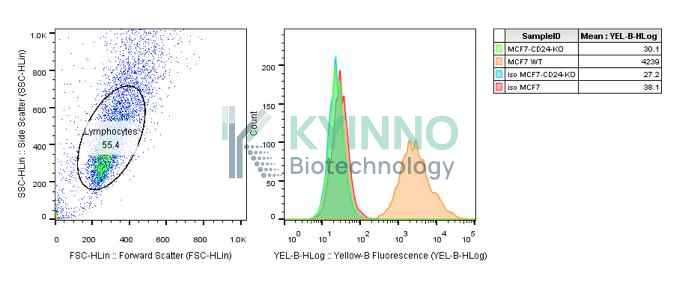
Figure 2: Characterization of MCF7-CD24-KO-2A1 cell line stable clone using FACS.

Cell Resuscitation

  1. Prewarm culture medium (EMEM + 10% FBS+0.01mg/ml insulin)in a 37°C water bath.
  2. Thaw the frozen vial in a 37°C water bath for 1-2 minutes.
  3. Transfer the vial into biosafety cabinet, and wipe the surface with 70% ethanol.
  4. Unscrew the top of the vial and transfer the cell suspension gently into a sterile centrifuge tube containing 9.0mL complete culture medium.
  5. Spin at ~ 125 × g for 5-7 minutes at room temperature, and discard the supernatant without disturbing the pellet.
  6. Resuspend cell pellet with the appropriate volume of complete medium and transfer the cell suspension into a T25 culture flask.
  7. Incubate the flask at 37°C, 5% CO2 incubator.
  8. Split saturated culture 1:3-1:6 every 2-3 days; seed out at about 1-3 × 10⁵ cells/mL.

Cell Freezing

  1. Prepare the freezing medium (70% EMEM + 20% FBS + 10% DMSO) fresh immediately before use.
  2. Keep the freezing medium on ice and label cryovials.
  3. Transfer cells to a sterile, conical centrifuge tube, and count the cells.
  4. Centrifuge the cells at 250×g for 5 minutes at room temperature and carefully aspirate off the medium.
  5. Resuspend the cells at a density of at least 3×10⁶ cells/mL in chilled freezing medium.
  6. Aliquot 1 mL of the cell suspension into each cryovial.
  7. Freeze cells in the CoolCell freezing container overnight in a -80°C freezer.
  8. Transfer vials to liquid nitrogen for long-term storage.

References

  1. K Pirruccello, S. J. & LeBien, T. W. The human B cell-associated antigen CD24 is a single chain sialoglycoprotein. J. Immunol. 136, 3779–3784 (1986).
  2. Chen, G. Y., Brown, N. K., Zheng, P. & Liu, Y. Siglec-G/10 in self–nonself discrimination of innate and adaptive immunity. Glycobiology 24, 800–806
    3.Amira A. Barkal, et al. CD24 signaling through macrophage Siglec-10 is a target for cancer immunotherapy. Nature research.2019.
Please enable JavaScript in your browser to complete this form.