KC-1798

293T-B2M-FCGRT Cell Line

×
Please enable JavaScript in your browser to complete this form.
22823
Home » 293T-B2M-FCGRT Cell Line

Background of 293T-B2M-FCGRT Cell Line

B2M (Beta-2-Microglobulin) is a Protein Coding gene, it encodes a serum protein found in association with the major histocompatibility complex (MHC) class I heavy chain on the surface of nearly all nucleated cells. The protein has a predominantly beta-pleated sheet structure that can form amyloid fibrils in some pathological conditions. Diseases associated with B2M include Immunodeficiency 43 and Amyloidosis, Hereditary Systemic 6.
FCGRT (Fc Gamma Receptor And Transporter) also known as FCRN. This gene encodes a receptor that binds the Fc region of monomeric immunoglobulin G. The encoded protein transfers immunoglobulin G antibodies from mother to fetus across the placenta. Diseases associated with FCGRT include Immunodeficiency 43 and Selective Igg Deficiency Disease.

Specifications

Catalog NumberKC-1798
Cell Line Name293T-B2M-FCGRT Cell Line
Host Cell Line293T
DescriptionStable 293T clone expressing exogenous human B2M and FCGRT gene
QuantityTwo vials of frozen cells (≥2-106/vial)
StabilityStable in culture over a minimum of 10 passages
ApplicationDrug screening and biological assays
Freezing Medium70% DMEM + 20% FBS + 10% DMSO
Propagation MediumDMEM + 10% FBS + 1μg/mL Puromycin
Selection MarkerPuromycin
MorphologyEpithelial
SubcultureSplit saturated culture 1:4-1:8 every 2-3 days; seed out at about 1-3 × 10⁵ cells/mL
Incubation37 °C with 5% CO2
StorageLiquid nitrogen immediately upon receiving
Doubling TimeApproximately 30 hours
Mycoplasma StatusNegative
In Vivo ValidationNA

Cell Line Generation

293T-B2M-FCGRT cell line was generated using a lentiviral vector expressing the human B2M and FCGRT sequence.

Characterization

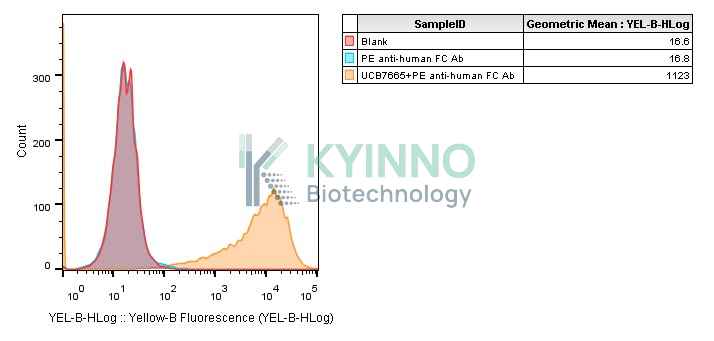
Figure 1: Characterization of human B2M and FCGRT overexpression in the 293T-B2M-FCGRT stable clone using FACS.

Cell Resuscitation

  1. Prewarm culture medium (DMEM supplemented with 10% FBS and 1μg/mL puromycin)in a 37°C water bath.
  2. Thaw the frozen vial in a 37°C water bath for 1-2 minutes.
  3. Transfer the vial into biosafety cabinet, and wipe the surface with 70% ethanol.
  4. Unscrew the top of the vial and transfer the cell suspension gently into a sterile centrifuge tube containing 9.0mL complete culture medium.
  5. Spin at ~ 125 × g for 5-7 minutes at room temperature, and discard the supernatant without disturbing the pellet.
  6. Resuspend cell pellet with the appropriate volume of complete medium and transfer the cell suspension into a T25 culture flask.
  7. Incubate the flask at 37°C, 5% CO2 incubator.
  8. Split saturated culture 1:4-1:8 every 2-3 days; seed out at about 1-3 × 10⁵ cells/mL.

Cell Freezing

  1. Prepare the freezing medium (70% DMEM + 20% FBS + 10% DMSO) fresh immediately before use.
  2. Keep the freezing medium on ice and label cryovials.
  3. Transfer cells to a sterile, conical centrifuge tube, and count the cells.
  4. Centrifuge the cells at 250×g for 5 minutes at room temperature and carefully aspirate off the medium.
  5. Resuspend the cells at a density of at least 3×10⁶ cells/mL in chilled freezing medium.
  6. Aliquot 1 mL of the cell suspension into each cryovial.
  7. Freeze cells in the CoolCell freezing container overnight in a -80°C freezer.
  8. Transfer vials to liquid nitrogen for long-term storage

References

  1. Narang D, Sharma PK, Mukhopadhyay S. Dynamics and dimension of an amyloidogenic disordered state of human β(2)-microglobulin. Eur Biophys J. 2013 Oct;42(10):767-76. doi: 10.1007/s00249-013-0923-z. Epub 2013 Aug 24. PMID: 23974249.
  2. Dalakas MC, Spaeth PJ. The importance of FcRn in neuro-immunotherapies: From IgG catabolism, FCGRT gene polymorphisms, IVIg dosing and efficiency to specific FcRn inhibitors. Ther Adv Neurol Disord. 2021 Feb 26;14:1756286421997381. doi: 10.1177/1756286421997381. PMID: 33717213; PMCID: PMC7917847.
  3. Ober RJ, Martinez C, Vaccaro C, Zhou J, Ward ES. Visualizing the site and dynamics of IgG salvage by the MHC class I-related receptor, FcRn. J Immunol. 2004 Feb 15;172(4):2021-9. doi: 10.4049/jimmunol.172.4.2021. PMID: 14764666.
Please enable JavaScript in your browser to complete this form.