
KC-1978

Ba/F3-IL7Ra-CRLF2-Cell-Line

×
Please enable JavaScript in your browser to complete this form.
23165
Home » 细胞系 » Ba/F3-IL7Ra-CRLF2-Cell-Line

Background of Ba/F3-IL7Ra-CRLF2-Cell-Line

Interleukin-7 receptor alpha (IL7RA) is a receptor subunit with dual roles. Upon association with the interleukin-2 receptor gamma (IL2Rγ) subunit, it forms the Interleukin-7 (IL7) receptor and when bound to cytokine receptor-like factor 2 (CRLF2) subunit, it constitutes the thymic stromal lymphopoietin (TSLP) receptor. Loss-of-function mutations in IL7RA are associated with absent B cells and T cells in mice but with the absence of only T cells in humans.

Specifications

Catalog NumberKC-1978
Cell Line NameBa/F3-IL7Ra-CRLF2-Cell-Line
Clone Number3#
Host Cell LineMouse Ba/F3 cell line
DescriptionStable Ba/F3 clone expressing exogenous IL7Ra and CRLF2 genes.
QuantityTwo vials of frozen cells (≥2-106/vial)
StabilityStable in culture over a minimum of 10 passages
ApplicationDrug screening and biological assays
Freezing Medium70% RPMI1640+20% FBS+10% DMSO
Propagation MediumRPMI1640+10%FBS+20ng/mL IL-7
Selection MarkerPuromycin
MorphologyMostly single, round (some polymorph) cells in suspension
SubcultureSplit saturated culture 1:10 every 3 days; seed out at about 1-3 × 10⁵ cells/mL
Incubation37 °C with 5% CO2
StorageLiquid nitrogen immediately upon receiving
Doubling TimeApproximately 30 hours
Mycoplasma StatusNegative
In Vivo ValidationNA

Cell Line Generation

Ba/F3-IL7Ra-CRLF2 cell Line was generated using retrovirus vector expressing human IL7Ra and CRLF2 sequence.

Characterization

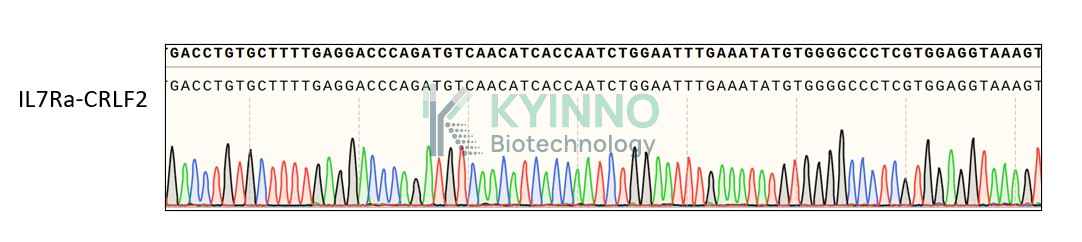
Figure 1: Characterization of IL7Ra and CRLF2 in the Ba/F3 stable clone using PCR sequencing.
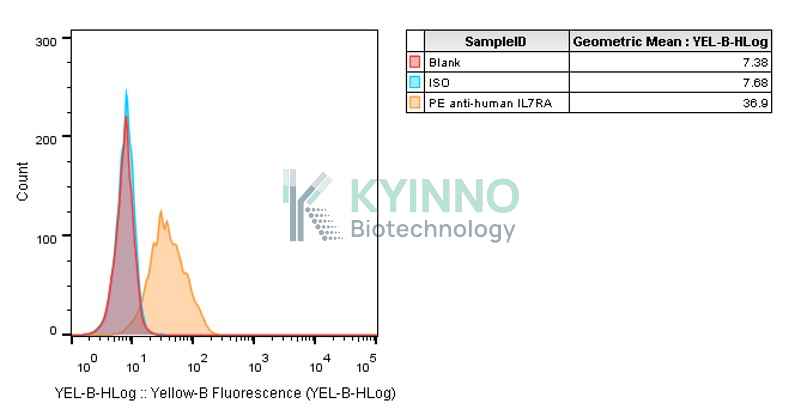
Figure 2: Characterization of IL7Ra overexpression in the Ba/F3 stable clone using FACS.
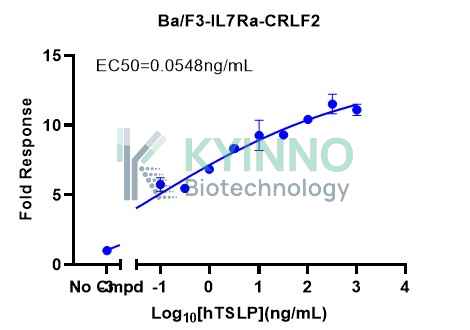
Figure 3: Ba/F3-IL7Ra-CRLF2 cell line was seeded into the 96-well plate, and treated with TSLP at a maximum concentration of 1μg/mL for 72 hours, then readout with CTG system.

Cell Resuscitation

  1. Prewarm culture medium (RPMI1640 + 10% FBS+20ng/mL IL-7)in a 37°C water bath.
  2. Thaw the frozen vial in a 37°C water bath for 1-2 minutes.
  3. Transfer the vial into biosafety cabinet, and wipe the surface with 70% ethanol.
  4. Unscrew the top of the vial and transfer the cell suspension gently into a sterile centrifuge tube containing 9.0mL complete culture medium.
  5. Spin at ~ 125 × g for 5-7 minutes at room temperature, and discard the supernatant without disturbing the pellet.
  6. Resuspend cell pellet with the appropriate volume of complete medium and transfer the cell suspension into a T25 culture flask.
  7. Incubate the flask at 37°C, 5% CO2 incubator.
  8. Split saturated culture 1:10 every 3 days; seed out at about 1-3 × 10⁵ cells/mL.

Cell Freezing

  1. Prepare the freezing medium (70% RPMI-1640 + 20% FBS + 10% DMSO) fresh immediately before use.
  2. Keep the freezing medium on ice and label cryovials.
  3. Transfer cells to a sterile, conical centrifuge tube, and count the cells.
  4. Centrifuge the cells at 250×g for 5 minutes at room temperature and carefully aspirate off the medium.
  5. Resuspend the cells at a density of at least 3×10⁶ cells/mL in chilled freezing medium.
  6. Aliquot 1 mL of the cell suspension into each cryovial.
  7. Freeze cells in the CoolCell freezing container overnight in a -80°C freezer.
  8. Transfer vials to liquid nitrogen for long-term storage.

References

  1. Scott LM. Lymphoid malignancies: Another face to the Janus kinases. Blood Rev. 2013 Mar;27(2):63-70. doi: 10.1016/j.blre.2012.12.004. Epub 2013 Jan 20. PMID: 23340138.
  2. Geron I, Savino AM, Fishman H, Tal N, Brown J, Turati VA, James C, Sarno J, Hameiri-Grossman M, Lee YN, Rein A, Maniriho H, Birger Y, Zemlyansky A, Muler I, Davis KL, Marcu-Malina V, Mattson N, Parnas O, Wagener R, Fischer U, Barata JT, Jamieson CHM, Müschen M, Chen CW, Borkhardt A, Kirsch IR, Nagler A, Enver T, Izraeli S. An instructive role for Interleukin-7 receptor α in the development of human B-cell precursor leukemia. Nat Commun. 2022 Feb 3;13(1):659. doi: 10.1038/s41467-022-28218-7. PMID: 35115489; PMCID: PMC8814001.
Please enable JavaScript in your browser to complete this form.