KC-2007

MC38 human KDR Cell Line

×
Please enable JavaScript in your browser to complete this form.
23219
Home » MC38 human KDR Cell Line

Background of MC38 human KDR Cell Line

KDR is a tyrosine protein kinase that plays an important role in angiogenesis, vascular development, vascular permeability and embryonic hematopoiesis. KDR also plays an important role in promoting endothelial cell proliferation, survival, migration and differentiation. Diseases associated with KDR include hemangioma, capillary infantile, and vascular disease. Studying the KDR gene may provide a promising new strategy for the treatment of these diseases.

Specifications

Catalog NumberKC-2007
Cell Line NameMC38 human KDR Cell Line
Host Cell LineMC38
DescriptionStable MC38 cell line expressing exogenous human KDR gene.
QuantityTwo vials of frozen cells (≥2-106/vial)
StabilityStable in culture over a minimum of 10 passages
ApplicationDrug screening and biological assays
Freezing Medium70% DMEM + 20% FBS + 10% DMSO
Propagation MediumDMEM + 10% FBS + 5μg/ml Puromycin
Selection MarkerPuromycin
MorphologyEpithelial
SubcultureSplit saturated culture 1:8-1:10 every 2-3 days; seed out at about 1-3 × 10⁵ cells/ml
Incubation37 °C with 5% CO2
StorageLiquid nitrogen immediately upon receiving
Doubling TimeApproximately 20 hours
Mycoplasma StatusNegative
In Vivo ValidationNA

Cell Line Generation

MC38 human KDR Cell Line was generated using a lentiviral vector expressing the human KDR sequence.

Characterization

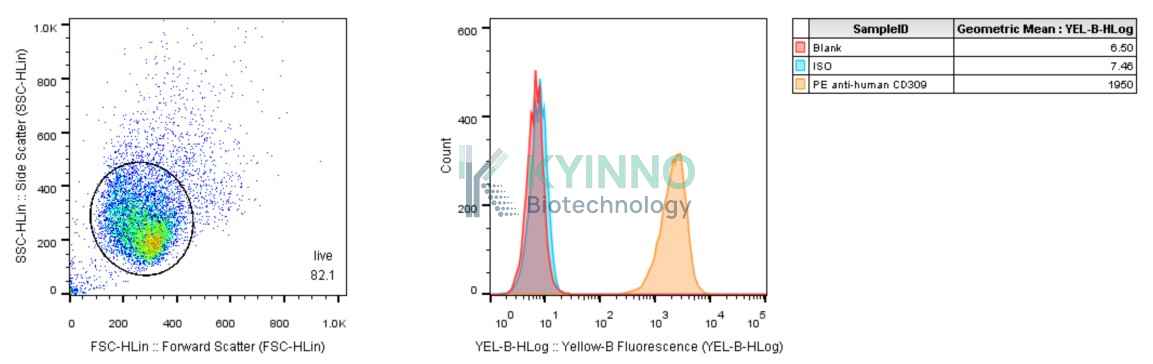
Figure 1: Characterization of human KDR overexpression in the MC38 human KDR stable clone using FACS.

Cell Resuscitation

  1. Prewarm culture medium (DMEM + 10% FBS + 5μg/ml Puromycin)in a 37°C water bath.
  2. Thaw the frozen vial in a 37°C water bath for 1-2 minutes.
  3. Transfer the vial into biosafety cabinet, and wipe the surface with 70% ethanol.
  4. Unscrew the top of the vial and transfer the cell suspension gently into a sterile centrifuge tube containing 9.0mL complete culture medium.
  5. Spin at ~ 125 × g for 5-7 minutes at room temperature, and discard the supernatant without disturbing the pellet.
  6. Resuspend cell pellet with the appropriate volume of complete medium and transfer the cell suspension into a T25 culture flask.
  7. Incubate the flask at 37°C, 5% CO2 incubator.
  8. Split saturated culture 1:8-1:10 every 2-3 days; seed out at about 1-3 × 10⁵ cells/mL.

Cell Freezing

  1. Prepare the freezing medium (70% DMEM + 20% FBS + 10% DMSO) fresh immediately before use.
  2. Keep the freezing medium on ice and label cryovials.
  3. Transfer cells to a sterile, conical centrifuge tube, and count the cells.
  4. Centrifuge the cells at 250×g for 5 minutes at room temperature and carefully aspirate off the medium.
  5. Resuspend the cells at a density of at least 3×10⁶ cells/mL in chilled freezing medium.
  6. Aliquot 1 mL of the cell suspension into each cryovial.
  7. Freeze cells in the CoolCell freezing container overnight in a -80°C freezer.
  8. Transfer vials to liquid nitrogen for long-term storage

References

  1. Mohammad Rezaei F, Hashemzadeh S, Ravanbakhsh Gavgani R, Hosseinpour Feizi M, Pouladi N, Samadi Kafil H, Rostamizadeh L, Kholghi Oskooei V, Taheri M, Sakhinia E. Dysregulated KDR and FLT1 Gene Expression in Colorectal Cancer Patients. Rep Biochem Mol Biol. 2019 Oct;8(3):244-252. PMID: 32274396; PMCID: PMC7103086.
  2. Whitlock RS, Ebare K, Cheng LS, Fishman DS, Mills JL, Nguyen HN, Nuchtern JG, Ruan W, Smith VE, Patel KA, Fisher KE, Vasudevan SA. Angiosarcoma of the Pancreas in a Pediatric Patient With an Activating KDR-Internal Tandem Duplication: A Case Report and Review of the Literature. J Pediatr Hematol Oncol. 2022 Apr 1;44(3):e751-e755. doi: 10.1097/MPH.0000000000002248. PMID: 34224514.
Please enable JavaScript in your browser to complete this form.