KC-2133

CHOK1-cyno-FGFR2-Cell-Line

×
Please enable JavaScript in your browser to complete this form.
23456
Home » CHOK1-cyno-FGFR2-Cell-Line

Background of CHOK1-cyno-FGFR2-Cell-Line

Fibroblast growth factor receptor 2 (FGFR2) is a Protein Coding gene, it is a membrane-spanning tyrosine kinase that mediates signaling for FGFs. The protein encoded by this gene is a member of the fibroblast growth factor receptor family. it plays an important role in embryonic development and tissue repair, especially bone and blood vessels after binding with its ligands. Mutations in the receptor tyrosine kinase gene fibroblast growth factor receptor 2 (FGFR2) occur at a high frequency in endometrial cancer (EC) and have been linked to advanced and recurrent disease. Diseases associated with FGFR2 include Pfeiffer Syndrome and Crouzon Syndrome.

Specifications

Catalog NumberKC-2133
Cell Line NameCHOK1-cyno-FGFR2-Cell-Line
Host Cell LineCHOK1
DescriptionStable CHOK1 cell line expressing exogenous cyno FGFR2 gene
QuantityTwo vials of frozen cells (≥2-106/vial)
StabilityStable in culture over a minimum of 10 passages
ApplicationDrug screening and biological assays
Freezing Medium70% RPMI1640 + 20% FBS + 10% DMSO
Propagation MediumRPMI1640 + 10% FBS + 10μg/ml Puromycin
Selection MarkerPuromycin
MorphologyEpithelial
SubcultureSplit saturated culture 1:4-1:8 every 2-3 days; seed out at about 1-3 × 10⁵ cells/ml
Incubation37 °C with 5% CO2
StorageLiquid nitrogen immediately upon receiving
Doubling TimeApproximately 24 hours
Mycoplasma StatusNegative
In Vivo ValidationNA

Cell Line Generation

CHOK1 cyno FGFR2 Cell Line was generated using a lentiviral vector expressing the cyno FGFR2 sequence.

Characterization

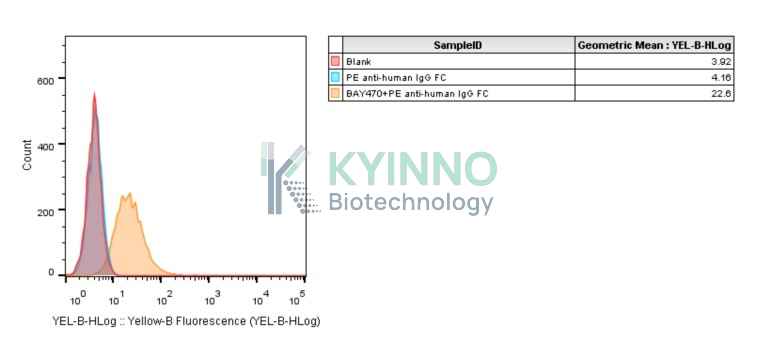
Figure 1: Characterization of endogenous cyno FGFR2 expression in CHOK1 cells using FACS.

Cell Resuscitation

  1. Prewarm culture medium (RPMI1640 supplemented with 10% FBS and 10μg/mL Puromycin)in a 37°C water bath.
  2. Thaw the frozen vial in a 37°C water bath for 1-2 minutes.
  3. Transfer the vial into biosafety cabinet, and wipe the surface with 70% ethanol.
  4. Unscrew the top of the vial and transfer the cell suspension gently into a sterile centrifuge tube containing 9.0mL complete culture medium.
  5. Spin at ~ 125 × g for 5-7 minutes at room temperature, and discard the supernatant without disturbing the pellet.
  6. Resuspend cell pellet with the appropriate volume of complete medium and transfer the cell suspension into a T25 culture flask.
  7. Incubate the flask at 37°C, 5% CO2 incubator.
  8. Split saturated culture 1:4-1:8 every 2-3 days; seed out at about 1-3 × 10⁵ cells/mL.

Cell Freezing

  1. Prepare the freezing medium (70% RPMI1640 + 20% FBS + 10% DMSO) fresh immediately before use.
  2. Keep the freezing medium on ice and label cryovials.
  3. Transfer cells to a sterile, conical centrifuge tube, and count the cells.
  4. Centrifuge the cells at 250×g for 5 minutes at room temperature and carefully aspirate off the medium.
  5. Resuspend the cells at a density of at least 3×10⁶ cells/mL in chilled freezing medium.
  6. Aliquot 1 mL of the cell suspension into each cryovial.
  7. Freeze cells in the CoolCell freezing container overnight in a -80°C freezer.
  8. Transfer vials to liquid nitrogen for long-term storage

References

  1. Dixit G, Gonzalez-Bosquet J, Skurski J, Devor EJ, Dickerson EB, Nothnick WB, Issuree PD, Leslie KK, Maretzky T. FGFR2 mutations promote endometrial cancer progression through dual engagement of EGFR and Notch signalling pathways. Clin Transl Med. 2023 May;13(5):e1223. doi: 10.1002/ctm2.1223. PMID: 37165578; PMCID: PMC10172618.
  2. Zhang E, St Charles R, Tulinsky A. Structure of extracellular tissue factor complexed with factor VIIa inhibited with a BPTI mutant. J Mol Biol. 1999 Feb 5;285(5):2089-104. doi: 10.1006/jmbi.1998.2452. PMID: 9925787.
  3. Zingg D, Bhin J, Yemelyanenko J, Kas SM, Rolfs F, Lutz C, Lee JK, Klarenbeek S, Silverman IM, Annunziato S, Chan CS, Piersma SR, Eijkman T, Badoux M, Gogola E, Siteur B, Sprengers J, de Klein B, de Goeij-de Haas RR, Riedlinger GM, Ke H, Madison R, Drenth AP, van der Burg E, Schut E, Henneman L, van Miltenburg MH, Proost N, Zhen H, Wientjens E, de Bruijn R, de Ruiter JR, Boon U, de Korte-Grimmerink R, van Gerwen B, Féliz L, Abou-Alfa GK, Ross JS, van de Ven M, Rottenberg S, Cuppen E, Chessex AV, Ali SM, Burn TC, Jimenez CR, Ganesan S, Wessels LFA, Jonkers J. Truncated FGFR2 is a clinically actionable oncogene in multiple cancers. Nature. 2022 Aug;608(7923):609-617. doi: 10.1038/s41586-022-05066-5. Epub 2022 Aug 10. Erratum in: Nature. 2022 Sep;609(7929):E13. doi: 10.1038/s41586-022-05287-8. PMID: 35948633; PMCID: PMC9436779.
Please enable JavaScript in your browser to complete this form.