KC-2179

293T-RANKL Cell Line

×
Please enable JavaScript in your browser to complete this form.
23542
Home » 293T-RANKL Cell Line

Background of 293T-RANKL Cell Line

Receptor activator of nuclear factor kappa-B ligand (RANKL), also known as tumor necrosis factor ligand superfamily member 11 (TNFSF11), TNF-related activation-induced cytokine (TRANCE), osteoprotegerin ligand (OPGL), and osteoclast differentiation factor (ODF), is known as a type II membrane protein and is a member of the tumor necrosis factor (TNF) superfamily. RANKL is synthesized in membranous or soluble form by the osteoblastic lineage cells, the immune cells, and some cancer cells. This factor links to the osteoclosteoclasts'e receptor, RANK, and stimulates bone resorption through osteoclastogenesis and the activation of multinucleated mature osteoclasts.
The RANK/RANKL/OPG system controls bone remodeling by inducing osteoblast synthesis of RANKL and downregulating OPG production, and it is also implicated in vascular calcification. A variety of drugs targeting this target are in the clinical stage.

Specifications

Catalog NumberKC-2179
Cell Line Name293T-RANKL Cell Line
NCBI/UniProt Accession NumberNM_003701.4
Clone NumberNA
Host Cell Line293T
DescriptionStable 293T cell line expressing exogenous RANKL gene
QuantityTwo vials of frozen cells (≥2-106/vial)
StabilityStable in culture over a minimum of 10 passages
ApplicationDrug screening and biological assays
Freezing Medium70% DMEM + 20% FBS + 10% DMSO
Propagation MediumDMEM + 10% FBS + 1μg/mL Puromycin
Selection MarkerPuromycin
MorphologyEpithelial
SubcultureSplit saturated culture 1:4-1:5 every 2-3 days; seed out at about 1-3 × 10⁵ cells/mL
Incubation37 °C with 5% CO2
StorageLiquid nitrogen immediately upon receiving
Doubling TimeApproximately 30 hours
Mycoplasma StatusNegative
In Vivo ValidationNA

Cell Line Generation

293T RANKL cell line was generated using lentiviral vector expressing RANKL sequence.

Characterization

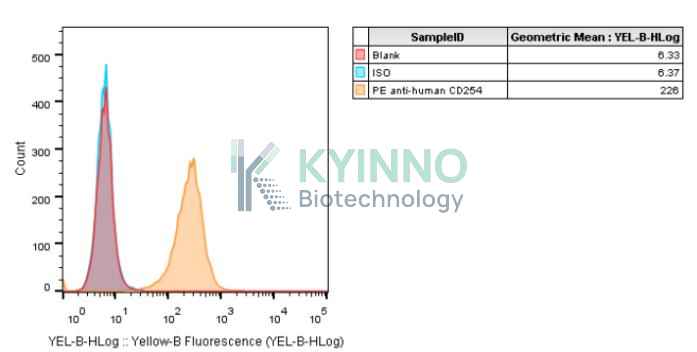
Figure 1: Characterization of RANKL overexpression in the 293T RANKL stable clone using FACS.

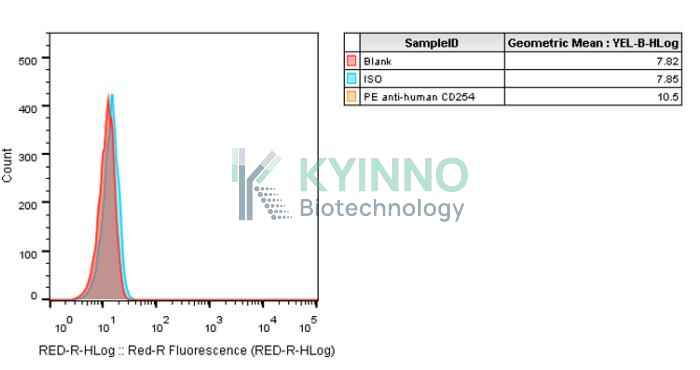
Figure 2: Characterization of RANKL in 293T using FACS.

Cell Resuscitation

1. Prewarm culture medium (DMEM + 10% FBS + 1μg/mL Puromycin)in a 37°C water bath.
2. Thaw the frozen vial in a 37°C water bath for 1-2 minutes.
3. Transfer the vial into biosafety cabinet, and wipe the surface with 70% ethanol.
4. Unscrew the top of the vial and transfer the cell suspension gently into a sterile centrifuge tube containing 9.0mL complete culture medium.
5. Spin at ~ 125 × g for 5-7 minutes at room temperature, and discard the supernatant without disturbing the pellet.
6. Resuspend cell pellet with the appropriate volume of complete medium and transfer the cell suspension into a T25 culture flask.
7. Incubate the flask at 37°C, 5% CO2 incubator.
8. Split saturated culture 1:4-1:5 every 2-3 days; seed out at about 1-3 × 10⁵ cells/mL.

Cell Freezing

1. Prepare the freezing medium (70% DMEM + 20% FBS + 10% DMSO) fresh immediately before use.
2. Keep the freezing medium on ice and label cryovials.
3. Transfer cells to a sterile, conical centrifuge tube, and count the cells.
4. Centrifuge the cells at 250×g for 5 minutes at room temperature and carefully aspirate off the medium.
5. Resuspend the cells at a density of at least 3×10⁶ cells/mL in chilled freezing medium.
6. Aliquot 1 mL of the cell suspension into each cryovial.
7. Freeze cells in the CoolCell freezing container overnight in a -80°C freezer.
8. Transfer vials to liquid nitrogen for long-term storage.

References

1.Takayanagi H. RANKL as the master regulator of osteoclast differentiation. J Bone Miner Metab. 2021 Jan;39(1):13-18.
2. Carrillo-López N, Martínez-Arias L, Fernández-Villabrille S, Ruiz-Torres MP, Dusso A, Cannata-Andía JB, NavesDíaz M, Panizo S; European Renal Osteodystrophy (EUROD) Workgroup. Role of the RANK/RANKL/OPG and Wnt/β-Catenin Systems in CKD Bone and Cardiovascular Disorders. Calcif Tissue Int. 2021 Apr;108(4):439-451.
Please enable JavaScript in your browser to complete this form.