KC-2180

CHOK1-mouse-CCR8-Cell-Line

×
Please enable JavaScript in your browser to complete this form.
23544
Home » CHOK1-mouse-CCR8-Cell-Line

Background of CHOK1-mouse-CCR8-Cell-Line

CCR8 (C-C Motif Chemokine Receptor 8) is a GPCR protein belonging to the beta chemokine receptor family, and is mainly expressed in the thymus. This gene encodes a member of the beta chemokine receptor family, which is predicted to be a seven transmembrane protein similar to G protein-coupled receptors. Diseases associated with CCR8 include Molluscum Contagiosum and Kaposi Sarcoma. Among its related pathways are Class A/1 (Rhodopsin-like receptors) and GPCR downstream signalling. Gene Ontology (GO) annotations related to this gene include G protein-coupled receptor activity and chemokine receptor activity. An important paralog of this gene is CCR4.

Specifications

Catalog NumberKC-2180
Cell Line NameCHOK1-mouse-CCR8-Cell-Line
Host Cell LineCHOK1
DescriptionStable CHOK1 cell line expressing exogenous mouse CCR8 gene
QuantityTwo vials of frozen cells (≥2-106/vial)
StabilityStable in culture over a minimum of 10 passages
ApplicationDrug screening and biological assays
Freezing Medium70% RPMI1640 + 20% FBS + 10% DMSO
Propagation MediumRPMI1640 + 10% FBS + 10μg/ml Puromycin
Selection MarkerPuromycin
MorphologyEpithelial
SubcultureSplit saturated culture 1:4-1:5 every 2-3 days; seed out at about 1-3 × 10⁵ cells/ml
Incubation37 °C with 5% CO2
StorageLiquid nitrogen immediately upon receiving
Doubling TimeApproximately 24 hours
Mycoplasma StatusNegative
In Vivo ValidationNA

Cell Line Generation

CHOK1 mouse CCR8 Cell Line was generated using a lentiviral vector expressing the mouse CCR8 sequence.

Characterization

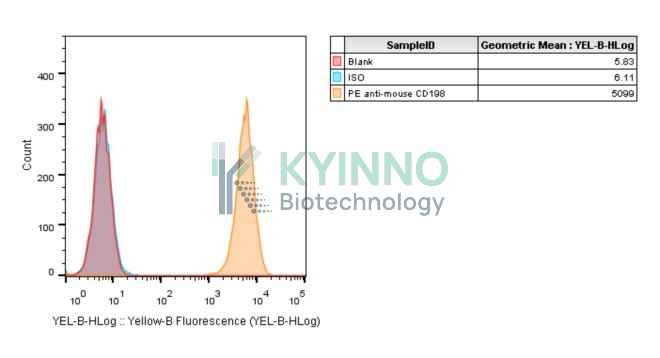
Figure 1: Characterization of mouse CCR8 overexpression in the CHO-K1 mouse CCR8 stable clone using FACS.

Figure 2: Characterization of mouse CCR8 overexpressing in CHOK1 stable clones using PCR sequencing.

Cell Resuscitation

  1. Prewarm culture medium (RPMI1640 supplemented with 10% FBS and 10μg/mL Puromycin)in a 37°C water bath.
  2. Thaw the frozen vial in a 37°C water bath for 1-2 minutes.
  3. Transfer the vial into biosafety cabinet, and wipe the surface with 70% ethanol.
  4. Unscrew the top of the vial and transfer the cell suspension gently into a sterile centrifuge tube containing 9.0mL complete culture medium.
  5. Spin at ~ 125 × g for 5-7 minutes at room temperature, and discard the supernatant without disturbing the pellet.
  6. Resuspend cell pellet with the appropriate volume of complete medium and transfer the cell suspension into a T25 culture flask.
  7. Incubate the flask at 37°C, 5% CO2 incubator.
  8. Split saturated culture 1:4-1:8 every 2-3 days; seed out at about 1-3 × 10⁵ cells/mL.

Cell Freezing

  1. Prepare the freezing medium (70% RPMI1640 + 20% FBS + 10% DMSO) fresh immediately before use.
  2. Keep the freezing medium on ice and label cryovials.
  3. Transfer cells to a sterile, conical centrifuge tube, and count the cells.
  4. Centrifuge the cells at 250×g for 5 minutes at room temperature and carefully aspirate off the medium.
  5. Resuspend the cells at a density of at least 3×10⁶ cells/mL in chilled freezing medium.
  6. Aliquot 1 mL of the cell suspension into each cryovial.
  7. Freeze cells in the CoolCell freezing container overnight in a -80°C freezer.
  8. Transfer vials to liquid nitrogen for long-term storage

References

  1. Roos RS, Loetscher M, Legler DF, Clark-Lewis I, Baggiolini M, Moser B. Identification of CCR8, the receptor for the human CC chemokine I-309. J Biol Chem. 1997 Jul 11;272(28):17251-4. doi: 10.1074/jbc.272.28.17251. PMID: 9211859.
  2. Wang M, Qin Z, Wan J, Yan Y, Duan X, Yao X, Jiang Z, Li W, Qin Z. Tumor-derived exosomes drive pre-metastatic niche formation in lung via modulating CCL1+ fibroblast and CCR8+ Treg cell interactions. Cancer Immunol Immunother. 2022 Nov;71(11):2717-2730. doi: 10.1007/s00262-022-03196-3. Epub 2022 Apr 15. PMID: 35428909; PMCID: PMC10992578.
  3. Moser B. Chemokine Receptor-Targeted Therapies: Special Case for CCR8. Cancers (Basel). 2022 Jan 20;14(3):511. doi: 10.3390/cancers14030511. PMID: 35158783; PMCID: PMC8833710.
Please enable JavaScript in your browser to complete this form.