KC-2532

CHOK1-PVRL1-Cell-Line

×
Please enable JavaScript in your browser to complete this form.
24250
Home » CHOK1-PVRL1-Cell-Line

Background of CHOK1-PVRL1-Cell-Line

PVRL1, Also known as Nectin1, it is a receptor like protein with an immunoglobulin like extracellular domain that plays a role in the initiation and maintenance of epithelial adhesion connections. There are four known types of nectin, Nectin1-4, each with an extracellular domain, transmembrane domain, and intracellular domain. PVRL1 is also one of the three known major receptors for alpha herpesvirus binding and entry Nectins and Necls are involved in the formation of various intercellular adhesions and play critical roles in various cellular functions, including cell movement, proliferation, survival, and differentiation. Therefore, nectins are crucial for the physiology and pathology of multicellular organisms.

Specifications

Catalog NumberKC-2532
Cell Line NameCHOK1-PVRL1-Cell-Line
Host Cell LineCHOK1
DescriptionStable CHOK1 clone expressing exogenous PVRL1 gene
QuantityTwo vials of frozen cells (≥2-106/vial)
StabilityStable in culture over a minimum of 10 passages
ApplicationDrug screening and biological assays
Freezing Medium70% 1640 + 20% FBS + 10% DMSO
Propagation Medium1640 + 10% FBS + 10μg/mL Puromycin
Selection MarkerPuromycin
MorphologyEpithelial
SubcultureSplit saturated culture 1:6-1:8 every 2-3 days; seed out at about 1-3 × 10⁵ cells/mL
Incubation37 °C with 5% CO2
StorageLiquid nitrogen immediately upon receiving
Doubling TimeApproximately 24 hours
Mycoplasma StatusNegative
In Vivo ValidationNA

Cell Line Generation

CHOK1-PVRL1-cell-line was generated using a lentiviral vector expressing the PVRL1 sequence.

Characterization

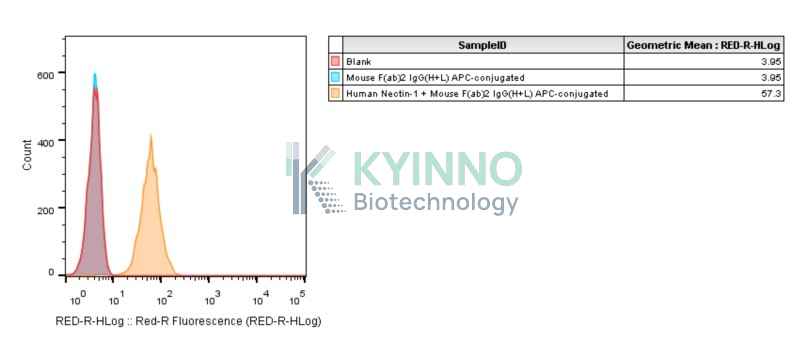
Figure 1: Characterization of PVRL1 overexpression in the CHOK1-PVRL1 stable clone using FACS

Cell Resuscitation

  1. Prewarm culture medium (1640 supplemented with 10% FBS and 10μg/mL puromycin)in a 37°C water bath.
  2. Thaw the frozen vial in a 37°C water bath for 1-2 minutes.
  3. Transfer the vial into biosafety cabinet, and wipe the surface with 70% ethanol.
  4. Unscrew the top of the vial and transfer the cell suspension gently into a sterile centrifuge tube containing 9.0mL complete culture medium.
  5. Spin at ~ 125 × g for 5-7 minutes at room temperature, and discard the supernatant without disturbing the pellet.
  6. Resuspend cell pellet with the appropriate volume of complete medium and transfer the cell suspension into a T25 culture flask.
  7. Incubate the flask at 37°C, 5% CO2 incubator.
  8. Split saturated culture 1:6-1:8 every 2-3 days; seed out at about 1-3 × 10⁵ cells/mL.

Cell Freezing

  1. Prepare the freezing medium (70% 1640 + 20% FBS + 10% DMSO) fresh immediately before use.
  2. Keep the freezing medium on ice and label cryovials.
  3. Transfer cells to a sterile, conical centrifuge tube, and count the cells.
  4. Centrifuge the cells at 250×g for 5 minutes at room temperature and carefully aspirate off the medium.
  5. Resuspend the cells at a density of at least 3×10⁶ cells/mL in chilled freezing medium.
  6. Aliquot 1 mL of the cell suspension into each cryovial.
  7. Freeze cells in the CoolCell freezing container overnight in a -80°C freezer.
  8. Transfer vials to liquid nitrogen for long-term storage

References

  1. Avila JR, Jezewski PA, Vieira AR, Orioli IM, Castilla EE, Christensen K, Daack-Hirsch S, Romitti PA, Murray JC. PVRL1 variants contribute to non-syndromic cleft lip and palate in multiple populations. Am J Med Genet A. 2006 Dec 1;140(23):2562-70. doi: 10.1002/ajmg.a.31367. PMID: 17089422; PMCID: PMC1885468.
  2. Ogita H, Rikitake Y, Miyoshi J, Takai Y. Cell adhesion molecules nectins and associating proteins: Implications for physiology and pathology. Proc Jpn Acad Ser B Phys Biol Sci. 2010;86(6):621-9. doi: 10.2183/pjab.86.621. PMID: 20551598; PMCID: PMC3081173.
Please enable JavaScript in your browser to complete this form.