KC-2539

CHOK1-CD36 Cell Line

×
Please enable JavaScript in your browser to complete this form.
24264
Home » 细胞系 » CHOK1-CD36 Cell Line

Background of CHOK1-CD36 Cell Line

CD36 encoded by this gene is the fourth major glycoprotein of the platelet surface and serves as a receptor for thrombospondin in platelets and various cell lines. Since thrombospondins are widely distributed proteins involved in a variety of adhesive processes, this protein may have important functions as a cell adhesion molecule. It binds to collagen, thrombospondin, anionic phospholipids and oxidized LDL. It directly mediates cytoadherence of Plasmodium falciparum parasitized erythrocytes and it binds long chain fatty acids and may function in the transport and/or as a regulator of fatty acid transport. Mutations in this gene cause platelet glycoprotein deficiency.

Specifications

Catalog NumberKC-2539
Cell Line NameCHOK1-CD36 Cell Line
NCBI/UniProt Accession NumberNM_000072.3
Clone NumberNA
Host Cell LineCHOK1
DescriptionStable CHOK1 cell line expressing exogenous CD36 gene
QuantityTwo vials of frozen cells (≥2-106/vial)
StabilityStable in culture over a minimum of 10 passages
ApplicationDrug screening and biological assays
Freezing Medium70% RPMI1640+20% FBS+10% DMSO
Propagation MediumRPMI1640+10% FBS +10μg/mL Puromycin
Selection MarkerPuromycin
MorphologyEpithelial
SubcultureSplit saturated culture 1:4-1:8 every 2-3 days; seed out at about 1-3 × 10⁵ cells/mL
Incubation37 °C with 5% CO2
StorageLiquid nitrogen immediately upon receiving
Doubling TimeApproximately 30 hours
Mycoplasma StatusNegative
In Vivo ValidationNA

Cell Line Generation

CHOK1-CD36 cell line was generated using lentivirus expressing CD36 sequence.

Characterization

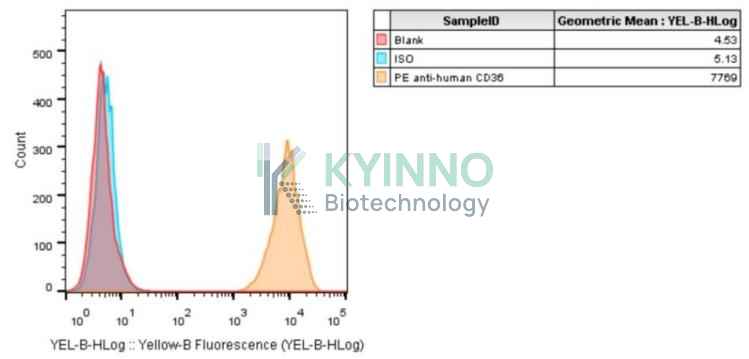
Figure 1. Characterization of CD36 over-expression in the CHOK1-CD36 stable clone using FACS.

Cell Resuscitation

  1. Prewarm culture medium (RPMI1640+10% FBS +10μg/mL Puromycin)in a 37°C water bath.
  2. Thaw the frozen vial in a 37°C water bath for 1-2 minutes.
  3. Transfer the vial into biosafety cabinet, and wipe the surface with 70% ethanol.
  4. Unscrew the top of the vial and transfer the cell suspension gently into a sterile centrifuge tube containing 9.0mL complete culture medium.
  5. Spin at ~ 125 × g for 5-7 minutes at room temperature, and discard the supernatant without disturbing the pellet.
  6. Resuspend cell pellet with the appropriate volume of complete medium and transfer the cell suspension into a T25 culture flask.
  7. Incubate the flask at 37°C, 5% CO2 incubator.
  8. Split saturated culture 1:4-1:8 every 2-3 days; seed out at about 1-3 × 10⁵ cells/mL.

Cell Freezing

  1. Prepare the freezing medium (70% RPMI1640 + 20% FBS + 10% DMSO) fresh immediately before use.
  2. Keep the freezing medium on ice and label cryovials.
  3. Transfer cells to a sterile, conical centrifuge tube, and count the cells.
  4. Centrifuge the cells at 250×g for 5 minutes at room temperature and carefully aspirate off the medium.
  5. Resuspend the cells at a density of at least 3×10⁶ cells/mL in chilled freezing medium.
  6. Aliquot 1 mL of the cell suspension into each cryovial.
  7. Freeze cells in the CoolCell freezing container overnight in a -80°C freezer.
  8. Transfer vials to liquid nitrogen for long-term storage.

References

  1. Liao X, Yan S, Li J, Jiang C, Huang S, Liu S, Zou X, Zhang G, Zou J, Liu Q. CD36 and Its Role in Regulating the Tumor Microenvironment. Curr Oncol. 2022 Oct 27;29(11):8133-8145. doi: 10.3390/curroncol29110642. PMID: 36354702; PMCID: PMC9688853.
  2. Gadagkar SG, Lalancette-Hébert M, Thammisetty SS, Vexler ZS, Kriz J. CD36 neutralisation blunts TLR2-IRF7 but not IRF3 pathway in neonatal mouse brain and immature human microglia following innate immune challenge. Sci Rep. 2023 Feb 9;13(1):2304. doi: 10.1038/s41598-023-29423-0. PMID: 36759676; PMCID: PMC9911392.
Please enable JavaScript in your browser to complete this form.