
KC-2612

293T-STAT3-Luc2 Cell Line

×
Please enable JavaScript in your browser to complete this form.
24406
Home » 293T-STAT3-Luc2 Cell Line

Background of 293T-STAT3-Luc2 Cell Line

As the converging point of numerous oncogenic signaling pathways, signal transducer and activator of transcription 3 (STAT3) play a central role in regulating antitumor immune responses. STAT3 is extensively overactivated in both cancerous and non-cancerous cells within the tumor ecosystem and plays a vital role in suppressing the expression of key immune activation regulators and promoting the production of immunosuppressive factors. Mutations in human STAT3 are associated with diseases such as immunodeficiency, autoimmunity, and cancer. In recent years, many studies have shown that STAT3 is closely related to the occurrence and development of liver fibrosis caused by various factors. Activation of STAT3 may play an anti- or pro-inflammatory role in the pathogenesis of liver fibrosis. Furthermore, mitochondrial translocation of STAT3 inhibits oxidative stress-induced autophagy and may effectively protect mitochondria from degradation by mitophagy. Strikingly, however, either overactivation or inactivation of STAT3 leads to human disease, suggesting that tightly regulated STAT3 function is critical for health. Therefore, targeting the STAT3 signaling pathway has emerged as a promising therapeutic strategy for many cancers.

Specifications

Catalog NumberKC-2612
Cell Line Name293T-STAT3-Luc2 Cell Line
Host Cell LineHuman HEK293T cell line
DescriptionStable 293T cell line expressing exogenous luciferase gene under the control of STAT3 signaling pathway.
QuantityTwo vials of frozen cells (≥2-106/vial)
StabilityStable in culture over a minimum of 10 passages
ApplicationDrug screening and biological assays
Freezing Medium70% DMEM+20% FBS+10% DMSO
Propagation MediumDMEM+10%FBS+100μg/mL Hygromycin
Selection MarkerHygromycinB
MorphologyEpithelial
SubcultureSplit saturated culture 1:3-1:6 every 3 days; seed out at about 1-3 × 10⁵ cells/mL
Incubation37 °C with 5% CO2
StorageLiquid nitrogen immediately upon receiving
Doubling TimeApproximately 30 hours
Mycoplasma StatusNegative
In Vivo ValidationNA

Cell Line Generation

293T-STAT3-luciferase cell line was generated using lentivirus methods.

Characterization

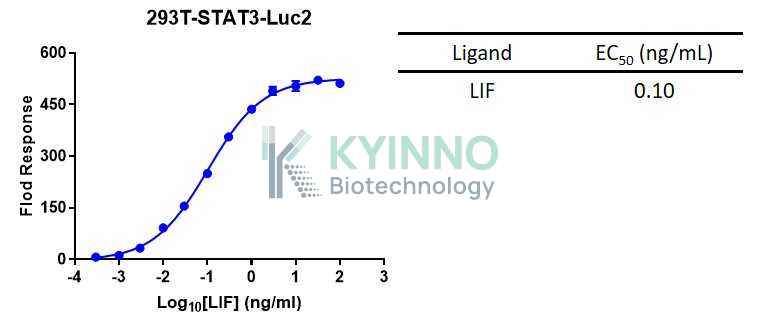
Figure 1. 293T-STAT3-Luc2 cell line was seeded into the 96-well plate, and treated with LIF at a maximum concentration of 100ng/ml diluted 3.16-fold for 6 hours, then readout with Bright-Glo system.
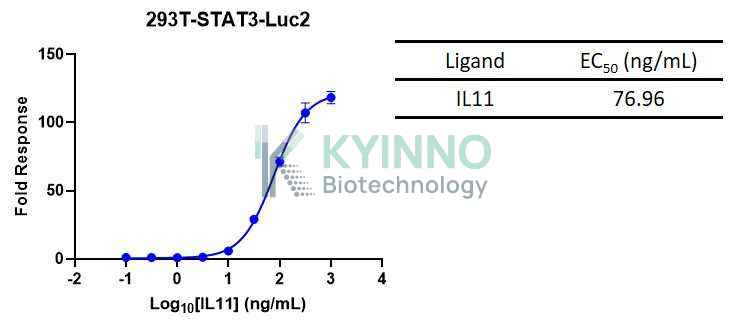
Figure 2. 293T-STAT3-Luc2 cell line was seeded into the 96-well plate, and treated with IL11 at a maximum concentration of 1000ng/ml diluted 3.16-fold for 6 hours, then readout with Bright-Glo system.
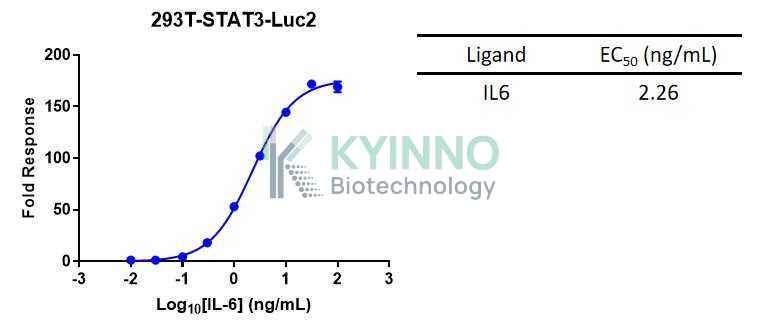
Figure 3. 293T-STAT3-Luc2 cell line was seeded into the 96-well plate, and treated with IL-6 at a maximum concentration of 100ng/ml diluted 3.16-fold for 6 hours, then readout with Bright-Glo system.
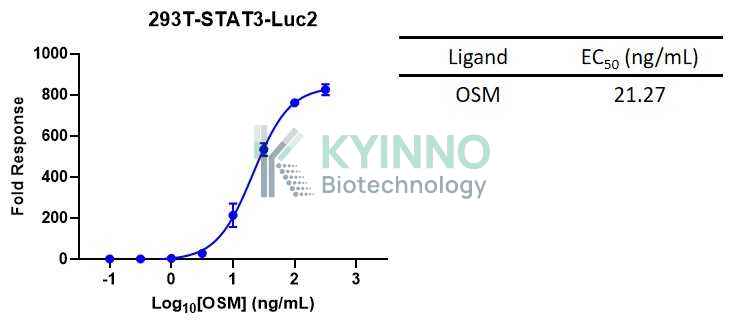
Figure 4. 293T-STAT3-Luc2 cell line was seeded into the 96-well plate, and treated with OSM at a maximum concentration of 316ng/ml diluted 3.16-fold for 6 hours, then readout with Bright-Glo system.
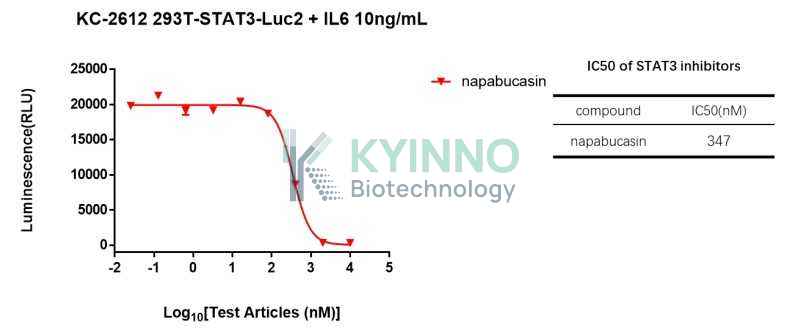
Figure 5. 293T-STAT3-Luc2 cell line was seeded into the 96-well plate, and treated with napabucasin at a maximum concentration of 10μM for 0.5 hours, then treated with IL-6 at a maximum concentration of 10ng/ml for 6 hours, then readout with Bright-Glo system.

Cell Resuscitation

  1. Prewarm culture medium (DMEM + 10% FBS + 100µg/mL HygromycinB) in a 37°C water bath.
  2. Thaw the frozen vial in a 37°C water bath for 1-2 minutes.
  3. Transfer the vial into biosafety cabinet, and wipe the surface with 70% ethanol.
  4. Unscrew the top of the vial and transfer the cell suspension gently into a sterile centrifuge tube containing 9.0mL complete culture medium.
  5. Spin at ~ 125 × g for 5-7 minutes at room temperature, and discard the supernatant without disturbing the pellet.
  6. Resuspend cell pellet with the appropriate volume of complete medium and transfer the cell suspension into a T25 culture flask.
  7. Incubate the flask at 37°C, 5% CO2 incubator.
  8. Split saturated culture 1:3-1:6 every 3 days; seed out at about 1-3 × 10⁵ cells/mL.

Cell Freezing

  1. Prepare the freezing medium (70% DMEM + 20% FBS + 10% DMSO) fresh immediately before use.
  2. Keep the freezing medium on ice and label cryovials.
  3. Transfer cells to a sterile, conical centrifuge tube, and count the cells.
  4. Centrifuge the cells at 250×g for 5 minutes at room temperature and carefully aspirate off the medium.
  5. Resuspend the cells at a density of at least 3×10⁶ cells/mL in chilled freezing medium.
  6. Aliquot 1 mL of the cell suspension into each cryovial.
  7. Freeze cells in the CoolCell freezing container overnight in a -80°C freezer.
  8. Transfer vials to liquid nitrogen for long-term storage

References

  1. Zou S, Tong Q, Liu B, Huang W, Tian Y, Fu X. Targeting STAT3 in Cancer Immunotherapy. Mol Cancer. 2020 Sep 24.
  2. Hillmer EJ, Zhang H, Li HS, Watowich SS. STAT3 signaling in immunity. Cytokine Growth Factor Rev. 2016 Oct.
  3. You L, Wang Z, Li H, Shou J, Jing Z, Xie J, Sui X, Pan H, Han W. The role of STAT3 in autophagy. Autophagy. 2015.
  4. Zhao J, Qi YF, Yu YR. STAT3: A key regulator in liver fibrosis. Ann Hepatol. 2021 Mar-Apr.
Please enable JavaScript in your browser to complete this form.