KC-3564

293T-cyno-CLDN1-Cell-Line

×
Please enable JavaScript in your browser to complete this form.
26405
Home » 293T-cyno-CLDN1-Cell-Line

Background of 293T-cyno-CLDN1-Cell-Line

The CLDN1 gene is a crucial "barrier gene." It encodes the Claudin-1 protein, which is essential for forming tight junctions between cells, acting like a "smart wall" that protects our body's internal environment. Whether it functions properly is directly related to skin health, liver function, and the ability to resist pathogens and cancer invasion. In-depth research on it not only helps us understand the pathogenesis of various diseases but also provides important targets for developing new treatments.

Specifications

Catalog NumberKC-3564
Cell Line Name293T-cyno-CLDN1-Cell-Line
Clone Number1#
Host Cell Line293T
DescriptionStable 293T clone expressing exogenous cyno-CLDN1 gene.
QuantityTwo vials of frozen cells (≥2-106/vial)
StabilityStable in culture over a minimum of 10 passages
ApplicationDrug screening and biological assays
Freezing Medium70% DMEM + 20% FBS + 10% DMSO
Propagation MediumDMEM + 10% FBS + 1μg/mL Puromycin
Selection MarkerPuromycin
MorphologyEpithelial
SubcultureSplit saturated culture 1:4-1:8 every 2-3 days; seed out at about 1-3 × 10⁵ cells/mL
Incubation37 °C with 5% CO2
StorageLiquid nitrogen immediately upon receiving
Doubling TimeApproximately 30 hours
Mycoplasma StatusNegative
In Vivo ValidationNA

Cell Line Generation

293T-cyno-CLDN1-cell-line was generated using a lentiviral vector expressing the cyno-CLDN1 sequence.

Characterization

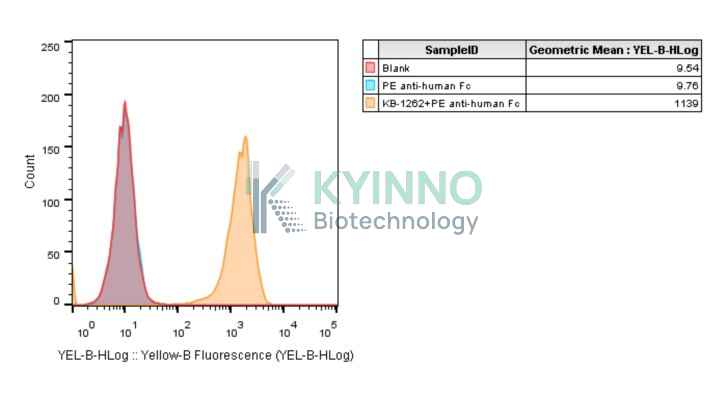
Figure 1: Characterization of cyno-CLDN1 overexpression in the 293T-cyno-CLDN1 stable clone using FACS.

Figure 2: Characterization of cyno-CLDN1 in the 293T-cyno-CLDN1 stable clone using PCR sequencing.

Cell Resuscitation

1. Prewarm culture medium (DMEM supplemented with 10% FBS and 1μg/mL puromycin)in a 37°C water bath.
2. Thaw the frozen vial in a 37°C water bath for 1-2 minutes.
3. Transfer the vial into biosafety cabinet, and wipe the surface with 70% ethanol.
4. Unscrew the top of the vial and transfer the cell suspension gently into a sterile centrifuge tube containing 9.0mL complete culture medium.
5. Spin at ~ 125 × g for 5-7 minutes at room temperature, and discard the supernatant without disturbing the pellet.
6. Resuspend cell pellet with the appropriate volume of complete medium and transfer the cell suspension into a T25 culture flask.
7. Incubate the flask at 37°C, 5% CO2 incubator.
8. Split saturated culture 1:4-1:8 every 2-3 days; seed out at about 1-3 × 10⁵ cells/mL.

Cell Freezing

1. Prepare the freezing medium (70% DMEM + 20% FBS + 10% DMSO) fresh immediately before use.
2. Keep the freezing medium on ice and label cryovials.
3. Transfer cells to a sterile, conical centrifuge tube, and count the cells.
4. Centrifuge the cells at 250×g for 5 minutes at room temperature and carefully aspirate off the medium.
5. Resuspend the cells at a density of at least 3×10⁶ cells/mL in chilled freezing medium.
6. Aliquot 1 mL of the cell suspension into each cryovial.
7. Freeze cells in the CoolCell freezing container overnight in a -80°C freezer.
8. Transfer vials to liquid nitrogen for long-term storage.

References

1. Ghosh U, Agrawal A, Srinivasan VM, Manisha R, Shukla U, Jain V, Nilay M, Kumar H. Neonatal ichthyosis-sclerosing cholangitis syndrome caused by a novel CLDN1 mutation: a case report and literature review. Clin Exp Pediatr. 2025 Oct 2. doi: 10.3345/cep.2025.00906. Epub ahead of print. PMID: 41035246.
2.Boichuk S, Bikinieva F, Dunaev P, Galembikova A, Mikheeva E, Valeeva E, Mani S, Khromova N, Kopnin P, Shigapova L, Deviatiiarov R, Shagimardanova E, Ryzhkin S, Sabirov A. Claudin-1 Contributes to Gastrointestinal Stromal Tumors (GIST) Resistance to Imatinib Mesylate (IM) via Regulation of FGFR-Signaling. Int J Mol Sci. 2025 Aug 22;26(17):8138. doi: 10.3390/ijms26178138. PMID: 40943068; PMCID: PMC12428531.
3. Qu Y, Li Z, Tian L, Zhang X, Wang G, Liu R. Claudin-1, a Biomarker of Epithelial-Mesenchymal Transformation, Enhances Lipid Metabolism in Colorectal Cancer Cells to Promote Tumor Metastasis. J Gene Med. 2025 Sep;27(9):e70034. doi: 10.1002/jgm.70034. PMID: 40890958.

Please enable JavaScript in your browser to complete this form.