KC-3061

293T-cyno-IGF1R-Low Cell Line

×
Please enable JavaScript in your browser to complete this form.
26619
Home » 293T-cyno-IGF1R-Low Cell Line

Background of 293T-cyno-IGF1R-Low Cell Line

IGF1R, also known as CD221. The insulin-like growth factors (IGFs) are a family of secreted peptide hormones with important roles in different cellular and organism functions. The biological activities of the IGFs are mediated by the IGF1 receptor (IGF1R), a cell surface, tyrosine kinase-containing heterotetramer that is linked to numerous cytoplasmic signaling cascades. The IGF1R displays potent antiapoptotic, pro-survival capacities and plays a key role in malignant transformation. Research has shown that extravascular administration of IGF1R antagonists may have translational potential for treating abdominal aortic aneurysm(AAA).

Specifications

Catalog NumberKC-3061
Cell Line Name293T-cyno-IGF1R-Low Cell Line
Host Cell Line293T
DescriptionStable 293T clone expressing exogenous cyno IGF1R gene in low level
QuantityTwo vials of frozen cells (≥2-106/vial)
StabilityStable in culture over a minimum of 10 passages
ApplicationDrug screening and biological assays
Freezing Medium70% DMEM + 20% FBS + 10% DMSO
Propagation MediumDMEM + 10% FBS + 1μg/mL Puromycin
Selection MarkerPuromycin
MorphologyEpithelial
SubcultureSplit saturated culture 1:4-1:6 every 2-3 days; seed out at about 1-3 × 10⁵ cells/mL
Incubation37 °C with 5% CO2
StorageLiquid nitrogen immediately upon receiving
Doubling TimeApproximately 30 hours
Mycoplasma StatusNegative
In Vivo ValidationNA

Cell Line Generation

293T cyno IGF1R-high cell line was generated using a lentiviral vector expressing the cyno IGF1R sequence.

Characterization

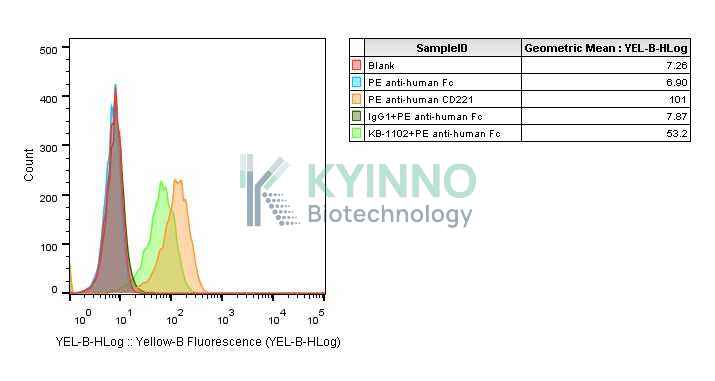
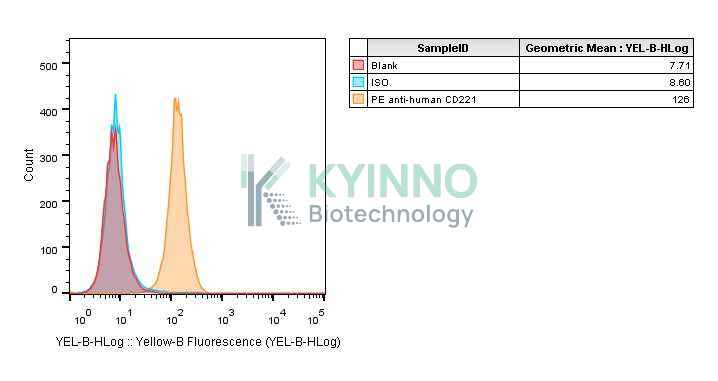
Figure 1: Characterization of endogenous IGF1R expression in 293T cells using FACS.

Figure 2: Characterization of cyno IGF1R overexpression in the 293T cyno IGF1R stable clone using FACS.

Cell Resuscitation

1. Prewarm culture medium (DMEM supplemented with 10% FBS and 1μg/mL puromycin)in a 37°C water bath.
2. Thaw the frozen vial in a 37°C water bath for 1-2 minutes.
3. Transfer the vial into biosafety cabinet, and wipe the surface with 70% ethanol.
4. Unscrew the top of the vial and transfer the cell suspension gently into a sterile centrifuge tube containing 9.0mL complete culture medium.
5. Spin at ~ 125 × g for 5-7 minutes at room temperature, and discard the supernatant without disturbing the pellet.
6. Resuspend cell pellet with the appropriate volume of complete medium and transfer the cell suspension into a T25 culture flask.
7. Incubate the flask at 37°C, 5% CO2 incubator.
8. Split saturated culture 1:4-1:6 every 2-3 days; seed out at about 1-3 × 10⁵ cells/mL.

Cell Freezing

1. Prepare the freezing medium (70% DMEM + 20% FBS + 10% DMSO) fresh immediately before use.
2. Keep the freezing medium on ice and label cryovials.
3. Transfer cells to a sterile, conical centrifuge tube, and count the cells.
4. Centrifuge the cells at 250×g for 5 minutes at room temperature and carefully aspirate off the medium.
5. Resuspend the cells at a density of at least 3×10⁶ cells/mL in chilled freezing medium.
6. Aliquot 1 mL of the cell suspension into each cryovial.
7. Freeze cells in the CoolCell freezing container overnight in a -80°C freezer.
8. Transfer vials to liquid nitrogen for long-term storage

References

1. Werner H, Sarfstein R, Bruchim I. Investigational IGF1R inhibitors in early stage clinical trials for cancer therapy. Expert Opin Investig Drugs. 2019 Dec;28(12):1101-1112. doi: 10.1080/13543784.2019.1694660. Epub 2019 Nov 23. PMID: 31731883.
2. Wei Y, Jiang H, Li F, Chai C, Xu Y, Xing M, Deng W, Wang H, Zhu Y, Yang S, Yu Y, Wang W, Wei Y, Guo Y, Tian J, Du J, Guo Z, Wang Y, Zhao Q. Extravascular administration of IGF1R antagonists protects against aortic aneurysm in rodent and porcine models. Sci Transl Med. 2024 May;16(745):eadh1763.

Please enable JavaScript in your browser to complete this form.