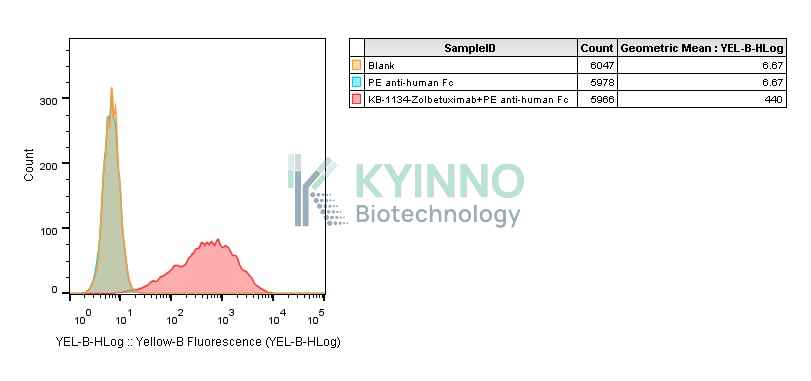
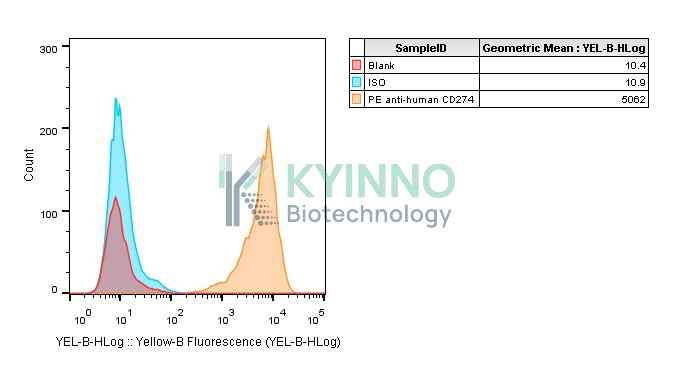
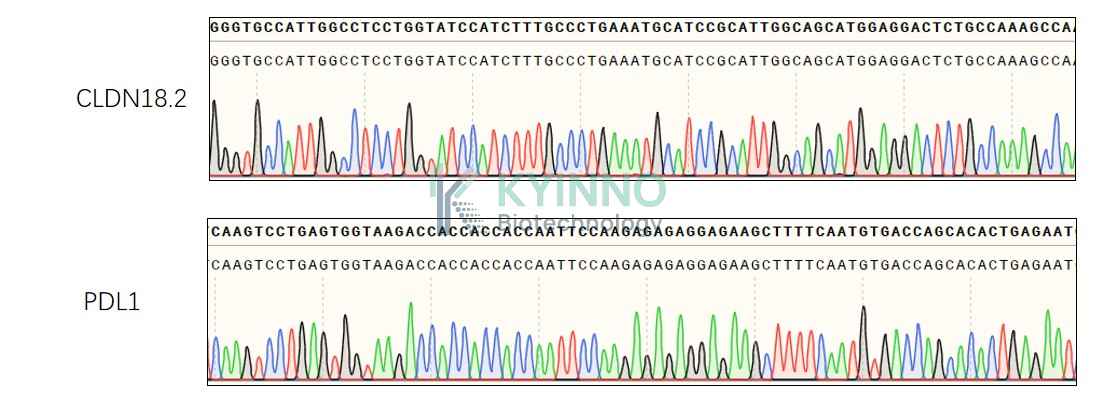
The claudin18.2 (CLDN18.2) protein, an isoform of claudin18, a member of the tight junction protein family, is a highly selective biomarker with limited expression in normal tissues and often abnormal expression during the occurrence and development of various primary malignant tumors, such as gastric cancer/gastroesophageal junction (GC/GEJ) cancer, breast cancer, colon cancer, liver cancer, head and neck cancer, bronchial cancer and non-small-cell lung cancer. CLDN18.2 participates in the proliferation, differentiation and migration of tumor cells. Recent studies have identified CLDN18.2 expression as a potential specific marker for the diagnosis and treatment of these tumors. Zolbetuximab (claudiximab, IMAB362), a monoclonal antibody (mAb) against CLDN18.2, have been developed. The engagement of programmed cell death protein 1 (PD-1; encoded by the PDCD1 gene) receptor expressed on activated T cells and its ligand programmed death-ligand 1 (PD-L1; encoded by the CD274 gene) is a major co-inhibitory checkpoint signaling that controls T-cell activities. Various types of cancers express high levels of PD-L1 and exploit the PD-L1/PD-1 signaling to evade T-cell immunity. Blocking the PD-L1/PD-1 pathway has consistently shown remarkable anti-tumor effects in patients with advanced cancers and is recognized as the gold standard for developing new immune checkpoint blockade (ICB) and combination therapies.