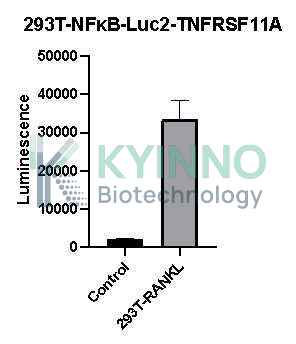
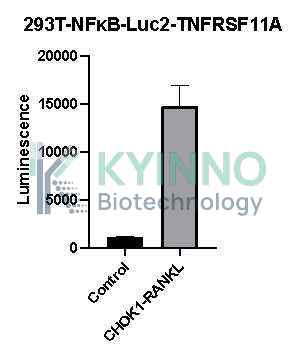
Four heterozygous in-frame tandem duplications of different lengths in TNFRSF11A, the gene that encodes receptor activator of nuclear factor κB (RANK), constitutively activate RANK and lead to high turnover skeletal disease.In humans, monogenic disruption of RANKL/OPG/RANK/NF-κB signaling leads to several extremely rare skeletal disorders that illustrate the importance of this regulatory mechanism [6–11]. Among them, four autosomal dominant seemingly distinctive disorders result from heterozygous in-frame tandem duplications (12-, 15-, 18-, or 27-bp) within exon 1 of TNFRSF11A that encodes the signal peptide of RANK.