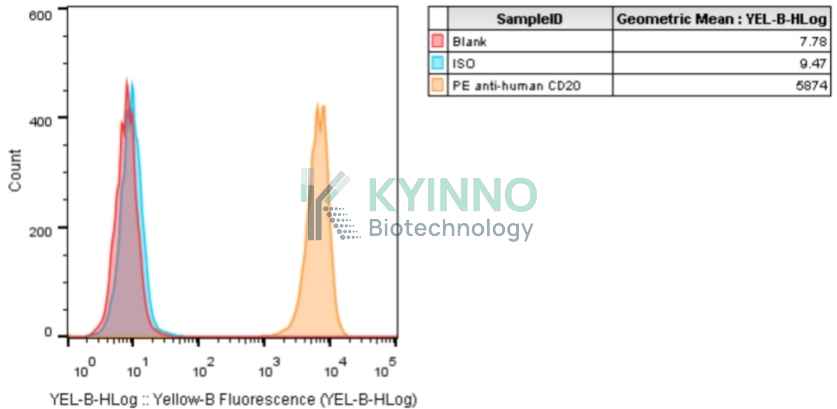
CD20, also known as MS4A1, CVID5, encodes a member of the membrane-spanning 4A gene family, members of which are characterized by common structural features and similar intron/exon splice boundaries and display unique expression patterns among hematopoietic cells and nonlymphoid tissues. This gene encodes a B-lymphocyte surface molecule which plays a role in the development and differentiation of B-cells into plasma cells. Researches have shown that anti-CD20 monoclonal antibodies selectively deplete CD20+ B and CD20+ T cells and efficiently suppress inflammatory disease activity and constitute immunotherapies for the treatment of B cell malignancies and autoimmune diseases.