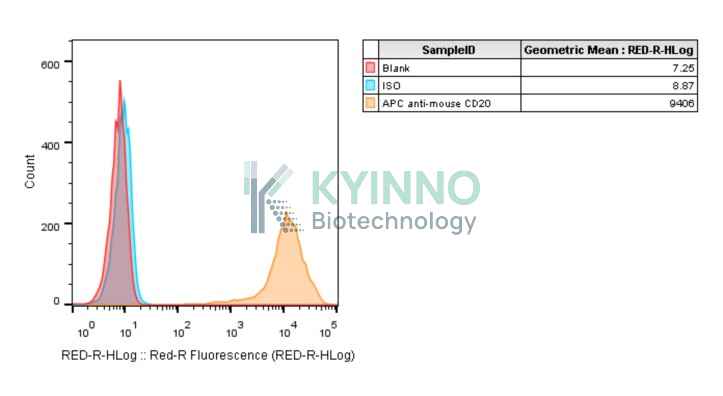
B-lymphocyte antigen CD20 is also known as B-lymphocyte surface antigen B1, Leukocyte surface antigen Leu-16, Membrane-spanning 4-domains subfamily A member 1 and MS4A1, is a 33-37 kDa non-glycosylated protein expressed on the surface of normal and malignant B lymphocytes, and belongs to the MS4A (membrane-spanning 4-domain family A) protein family. CD20 is a general B-cell marker expressed by the majority of B cells starting from late pre-B lymphocytes (it is not expressed by pro-B lymphocytes), and its expression is lost in terminally differentiated plasmablasts and plasma cells. CD20 is part of a B cell surface complex involved in transmembrane Ca2+ transport. It is found on B-cell lymphomas, hairy cell leukemia, B-cell chronic lymphocytic leukemia, and melanoma cancer stem cells. The protein has no known natural ligand and its function is to enable optimal B-cell immune response, specifically against T-independent antigens. CD20 / MS4A1 is the target of the monoclonal antibodies (mAb) rituximab, Ibritumomab tiuxetan, and tositumomab, which are all active agents in the treatment of all B cell lymphomas and leukemias.