KC-0925

293T-ROR1-KO-1A1-Cell-Line

×
Please enable JavaScript in your browser to complete this form.
27135
Home » 293T-ROR1-KO-1A1-Cell-Line

Background of 293T-ROR1-KO-1A1-Cell-Line

The Receptor Tyrosine Kinase-like Orphan Receptor 1 (ROR1) gene, located on chromosome 1p31.3, plays a multifaceted role in both normal development and pathogenesis of various malignancies. ROR1 belongs to the ROR family of receptors implicated in Wnt signaling and is primarily expressed during embryonic development but is largely absent in adult tissues. Its re-emergence in numerous cancer types, including leukemia, lymphoma, and solid tumors like breast and lung cancer, highlights ROR1 as a compelling therapeutic target. In normal physiological contexts, ROR1 is crucial for the development of the nervous and skeletal systems. However, in cancer cells, ROR1 overexpression promotes tumorigenesis by enhancing cell survival, proliferation, migration, and resistance to therapy. Its involvement in cancer stem cell maintenance and epithelial-to-mesenchymal transition (EMT) further underscores its oncogenic potential.

Specifications

Catalog NumberKC-0925
Cell Line Name293T-ROR1-KO-1A1-Cell-Line
Host Cell Line293T
DescriptionStable 293T clone with human ROR1 gene knockout, No.1A1
QuantityTwo vials of frozen cells (≥2-106/vial)
StabilityStable in culture over a minimum of 10 passages
ApplicationDrug screening and biological assays
Freezing MediumDMEM+20% FBS+10% DMSO
Propagation MediumDMEM+10% FBS
Selection MarkerN/A
MorphologyEpithelial
SubcultureSplit saturated culture 1:5-1:10 every 2-3 days; seed out at about 1-3 × 10⁵ cells/mL
Incubation37 °C with 5% CO2
StorageLiquid nitrogen immediately upon receiving
Doubling TimeApproximately 30 hours
Mycoplasma StatusNegative
In Vivo ValidationNA

Cell Line Generation

293T-ROR1-KO-1A1 cell line was generated using the CRISPR method.

Characterization

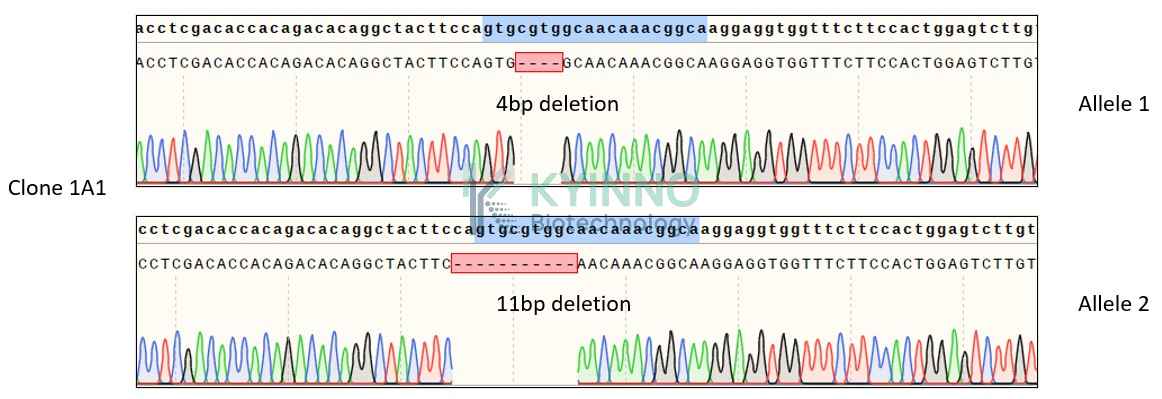
Figure 1: Characterization of 293T-ROR1-KO-1A1 cell line stable clone using PCR sequencing.

Figure 2: Characterization of 293T-ROR1-KO-1A1 cell line stable clone using RT-PCR sequencing.

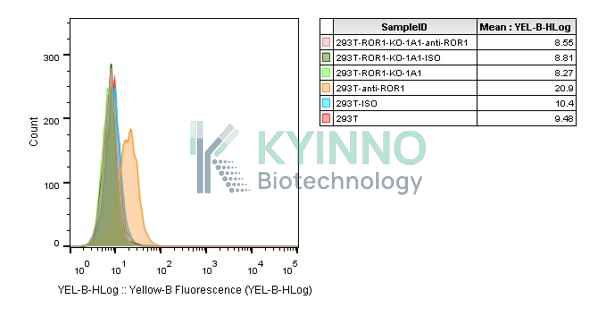
Figure 3: Characterization of 293T-ROR1-KO-1A1 cell line stable clone using FACS.

Cell Resuscitation

  1. Prewarm culture medium (DMEM + 10% FBS)in a 37°C water bath.
  2. Thaw the frozen vial in a 37°C water bath for 1-2 minutes.
  3. Transfer the vial into biosafety cabinet, and wipe the surface with 70% ethanol.
  4. Unscrew the top of the vial and transfer the cell suspension gently into a sterile centrifuge tube containing 9.0mL complete culture medium.
  5. Spin at ~ 125 × g for 5-7 minutes at room temperature, and discard the supernatant without disturbing the pellet.
  6. Resuspend cell pellet with the appropriate volume of complete medium and transfer the cell suspension into a T25 culture flask.
  7. Incubate the flask at 37°C, 5% CO2 incubator.
  8. Split saturated culture 1:5-1:10 every 2-3 days; seed out at about 1-3 × 10⁵ cells/mL.

Cell Freezing

  1. Prepare the freezing medium (70% DMEM + 20% FBS + 10% DMSO) fresh immediately before use.
  2. Keep the freezing medium on ice and label cryovials.
  3. Transfer cells to a sterile, conical centrifuge tube, and count the cells.
  4. Centrifuge the cells at 250×g for 5 minutes at room temperature and carefully aspirate off the medium.
  5. Resuspend the cells at a density of at least 3×10⁶ cells/mL in chilled freezing medium.
  6. Aliquot 1 mL of the cell suspension into each cryovial.
  7. Freeze cells in the CoolCell freezing container overnight in a -80°C freezer.
  8. Transfer vials to liquid nitrogen for long-term storage

References

  1. Kipps TJ. ROR1: an orphan becomes apparent. Blood. 2022 Oct 6;140(14):1583-1591. doi: 10.1182/blood.2021014760. PMID: 35580162; PMCID: PMC10653015.
  2. Quezada MJ, Lopez-Bergami P. The signaling pathways activated by ROR1 in cancer. Cell Signal. 2023 Apr;104:110588. doi: 10.1016/j.cellsig.2023.110588. Epub 2023 Jan 5. PMID: 36621728.
  3. Zhao Y, Zhang D, Guo Y, Lu B, Zhao ZJ, Xu X, Chen Y. Tyrosine Kinase ROR1 as a Target for Anti-Cancer Therapies. Front Oncol. 2021 May 28;11:680834. doi: 10.3389/fonc.2021.680834. PMID: 34123850; PMCID: PMC8193947.
  4. Borcherding N, Kusner D, Liu GH, Zhang W. ROR1, an embryonic protein with an emerging role in cancer biology. Protein Cell. 2014 Jul;5(7):496-502. doi: 10.1007/s13238-014-0059-7. Epub 2014 Apr 22. PMID: 24752542; PMCID: PMC4085287.
  5. https://www.ncbi.nlm.nih.gov/gene/4919
Please enable JavaScript in your browser to complete this form.