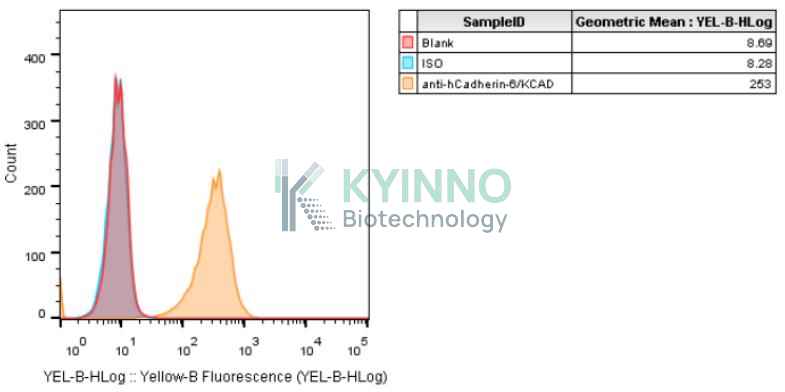
CDH6 (Cadherin-6), a type II calcium-dependent adhesion molecule, functions as an oncofetal antigen with dual roles in cancer. Normally restricted to embryonic kidney/thyroid development, it becomes aberrantly overexpressed (>60% cases) in clear cell renal cell carcinoma (ccRCC), ovarian cancer, and HCC through promoter demethylation. CDH6 promotes metastasis by activating Src/FAK signaling and disrupting E-cadherin-mediated adhesion, while simultaneously serving as a promising therapeutic target due to its exposed extracellular domains. Its clinical significance is highlighted as: (1) a diagnostic biomarker (urinary sCDH6 shows 82% sensitivity for early ccRCC), and (2) an emerging target for novel therapies – including CDH6-directed ADCs (e.g., HKT288 inducing complete responses in PDX models) and CAR-T cells showing efficacy in ovarian cancer preclinical studies. Notably, CDH6 exhibits tissue-context-dependent functions, demonstrating tumor-suppressive effects in papillary thyroid carcinoma, necessitating further investigation using engineered models to dissect its microenvironment-regulated signaling networks.