KB-1396

HFB200301-hIgG1

×
Please enable JavaScript in your browser to complete this form.
33717
Home » Antibodies » HFB200301-hIgG1

Background of HFB200301-hIgG1

TNFR2, belonging to the TNFR family of costimulatory molecules, presents an appealing target for T-cell co-stimulation due to its expression on tumor-infiltrating lymphocytes across a diverse spectrum of tumors. HFB200301, a pioneering agonistic anti-TNFR2 antibody, exhibits potent and selective binding to TNFR2, prompting the activation of CD4 T cells, CD8 T cells, and NK cells. Distinguished by its unique mechanism of action, HFB200301 relies predominantly on its agonistic activity across various effector cell types within the tumor microenvironment. We anticipate that this novel approach will yield benefits for a patient population identified by a distinctive biomarker signature.

Specifications

Catalog NumberKB-1396
Antibody NameHFB200301-hIgG1
IsotypeHuman IgG1,kappa
TargetTNFR2
Species ReactivityHuman
Host Cell LineEXPI CHO
Purification MethodAffinity purified
Concentration>2 mg/mL
Formulation50 mM sodium citrate,150mM NaCl,pH5.5
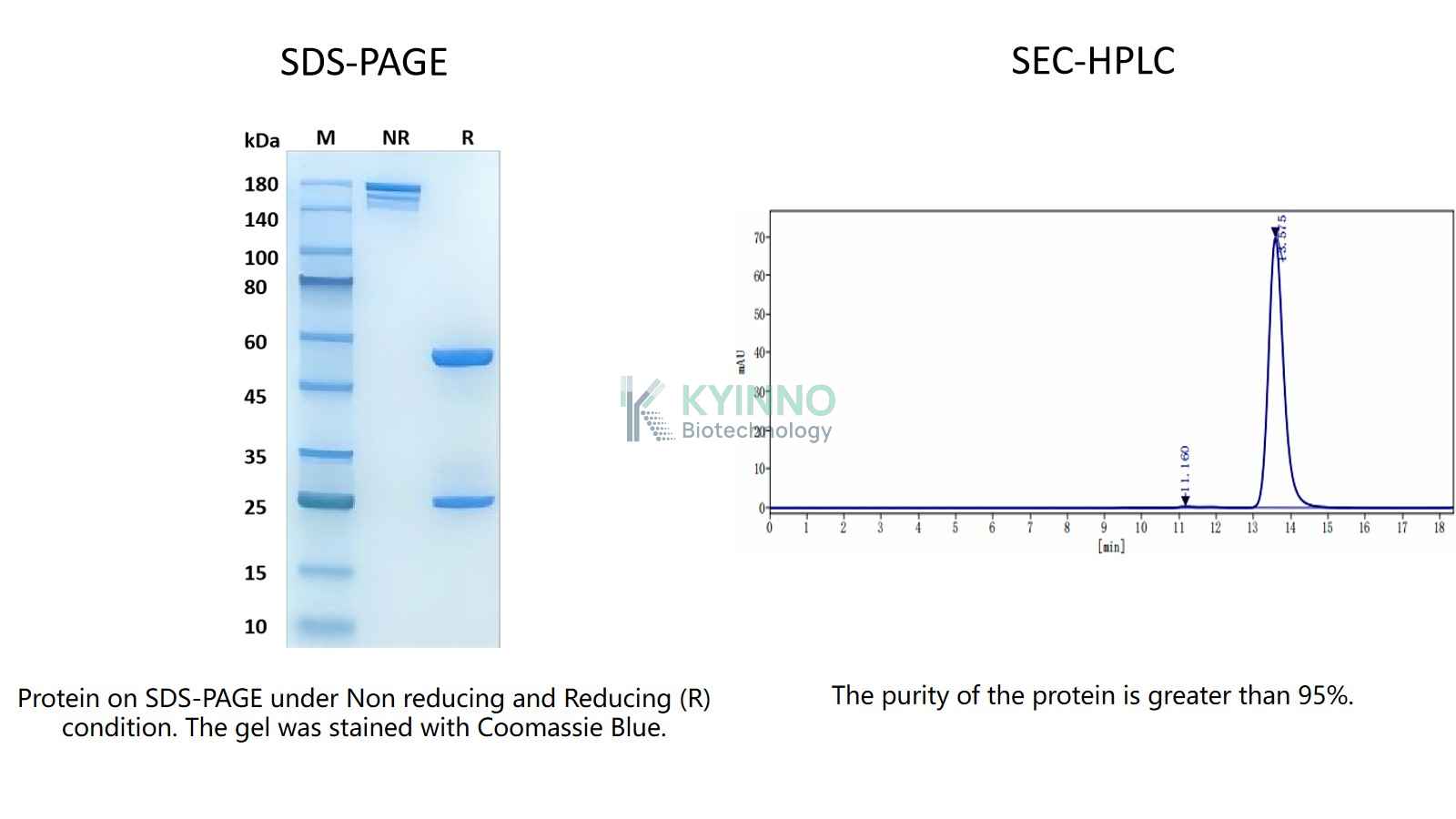
Purity>95% by SDS-PAGE and SEC-HPLC
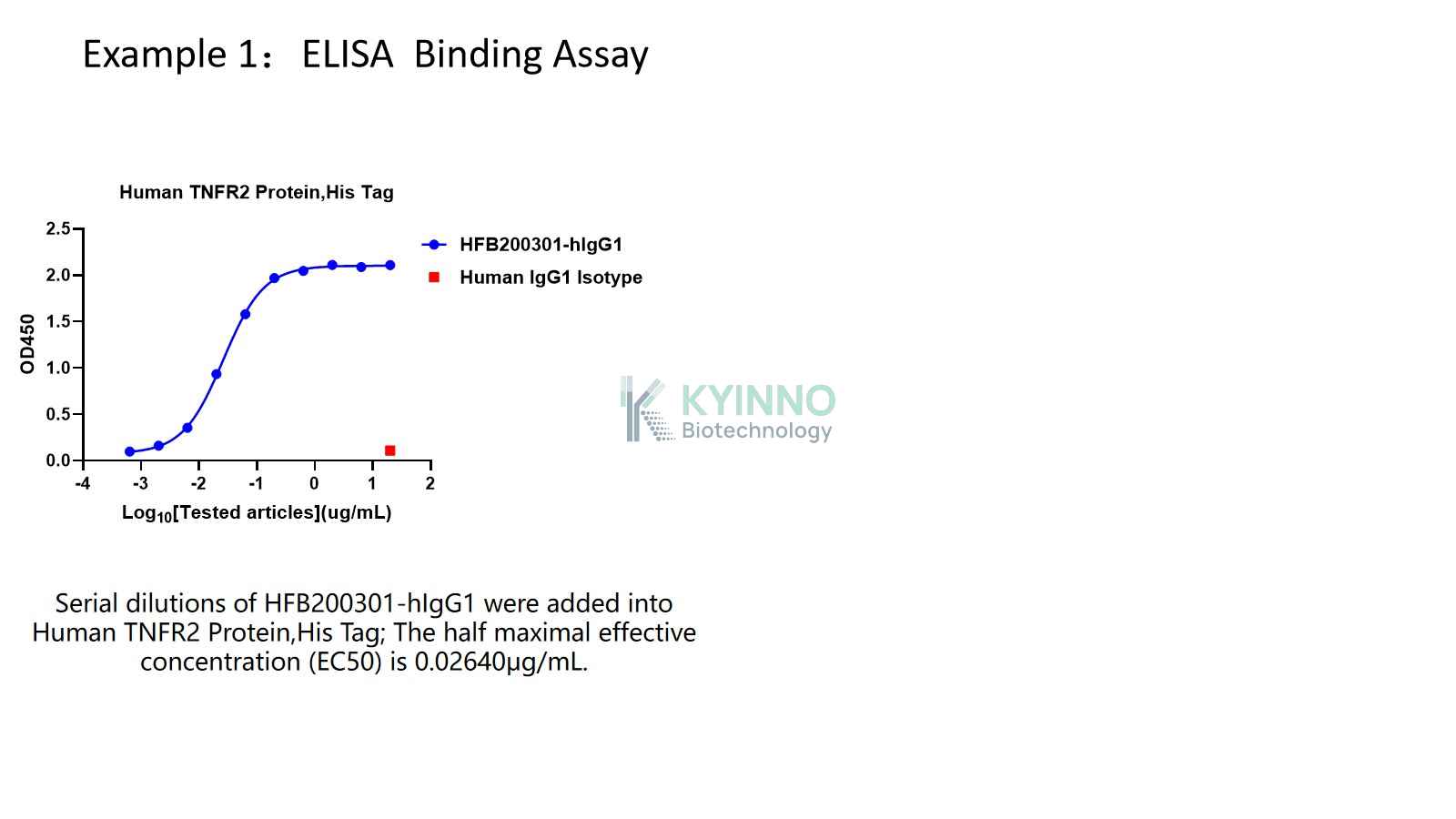
ValidationELISA
Endotoxin Level<0.2 EU/mg as determined by the LAL method
Sterility0.2μm filtered
StorageIt is recommended that the protein should be aliquoted for optimal storage.
Avoid repeated freeze-thaw cycles.
StabilityStable for twelve months from date of receipt when stored at -20°C to -80°C;
Stored at 2-8°C for one month without detectable loss of activity.

Characterization

Application

References

  1. Rauert H, Wicovsky A, Muller N, Siegmund D, Spindler V, Waschke J, et al.. Membrane Tumor Necrosis Factor (TNF) Induces P100 Processing via TNF Receptor-2 (TNFR2). J Biol Chem (2010) 285:7394–404.
  2. Shamdani S, Uzan G, Naserian S. TNFalpha-TNFR2 Signaling Pathway in Control of the Neural Stem/Progenitor Cell Immunosuppressive Effect: Different Experimental Approaches to Assess This Hypothetical Mechanism Behind Their Immunological Function. Stem Cell Res Ther (2020) 11:307.
Please enable JavaScript in your browser to complete this form.