

KC-3725

293T-GPC3-KO-1C3-Cell-Line

×
Please enable JavaScript in your browser to complete this form.
33902
Home » 293T-GPC3-KO-1C3-Cell-Line

Background of 293T-GPC3-KO-1C3-Cell-Line

GPC3 (Glypican 3) is a Protein Coding gene. Diseases associated with GPC3 include Simpson-Golabi-Behmel Syndrome, Type 1 and Wilms Tumor 1. Among its related pathways are Chondroitin sulfate/dermatan sulfate metabolism and Defective EXT2 causes exostoses 2. Gene Ontology (GO) annotations related to this gene include heparan sulfate proteoglycan binding and peptidyl-dipeptidase inhibitor activity.

Specifications

Catalog NumberKC-3725
Cell Line Name293T-GPC3-KO-1C3-Cell-Line
Host Cell Line293T
DescriptionStable 293T clone with human GPC3 gene knockout, No.1C3
QuantityTwo vials of frozen cells (≥2-106/vial)
StabilityStable in culture over a minimum of 10 passages
ApplicationDrug screening and biological assays
Freezing MediumDMEM+20% FBS+10% DMSO
Propagation MediumDMEM+10% FBS
Selection MarkerN/A
MorphologyEpithelial
SubcultureSplit saturated culture 1:4-1:5 every 2-3 days; seed out at about 1-3 × 10⁵ cells/mL
Incubation37 °C with 5% CO2
StorageLiquid nitrogen immediately upon receiving
Doubling TimeApproximately 30 hours
Mycoplasma StatusNegative
In Vivo ValidationNA

Cell Line Generation

293T-GPC3-KO-1C3 cell line was generated using the CRISPR method.

Characterization

Figure 1: Characterization of 293T-GPC3-KO-1C3 cell line stable clone using PCR sequencing.

Figure 2: Characterization of 293T-GPC3-KO-1C3 cell line stable clone using RT-PCR sequencing.
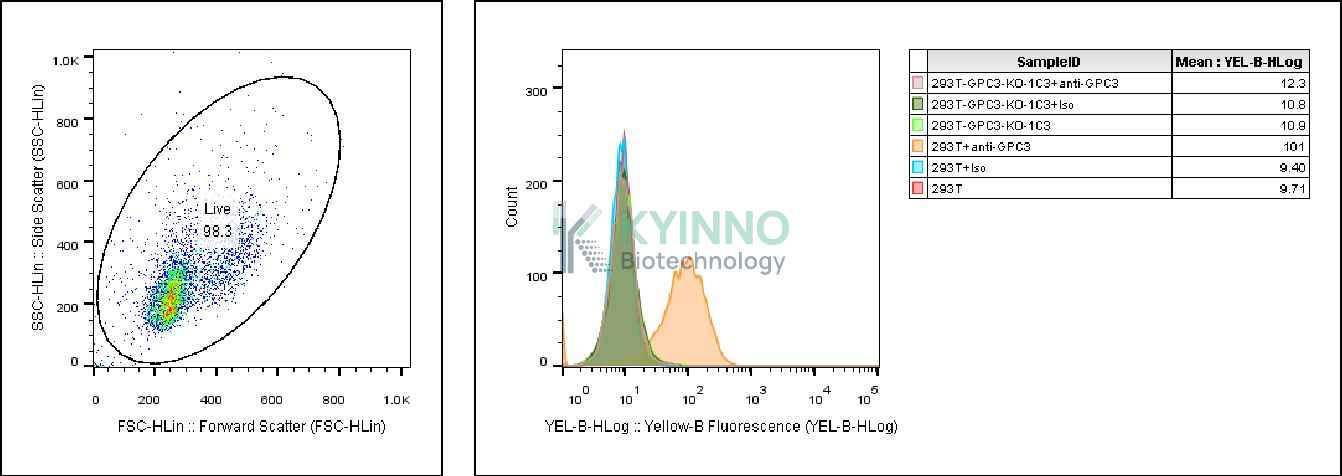
Figure 3: Characterization of 293T-GPC3-KO-1C3 cell line stable clone using FACS.

Cell Resuscitation

  1. Prewarm culture medium (DMEM + 10% FBS)in a 37°C water bath.
  2. Thaw the frozen vial in a 37°C water bath for 1-2 minutes.
  3. Transfer the vial into biosafety cabinet, and wipe the surface with 70% ethanol.
  4. Unscrew the top of the vial and transfer the cell suspension gently into a sterile centrifuge tube containing 9.0mL complete culture medium.
  5. Spin at ~ 125 × g for 5-7 minutes at room temperature, and discard the supernatant without disturbing the pellet.
  6. Resuspend cell pellet with the appropriate volume of complete medium and transfer the cell suspension into a T25 culture flask.
  7. Incubate the flask at 37°C, 5% CO2 incubator.
  8. Split saturated culture 1:3-1:6 every 2-3 days; seed out at about 1-3 × 10⁵ cells/mL.

Cell Freezing

  1. Prepare the freezing medium (70% DMEM + 20% FBS + 10% DMSO) fresh immediately before use.
  2. Keep the freezing medium on ice and label cryovials.
  3. Transfer cells to a sterile, conical centrifuge tube, and count the cells.
  4. Centrifuge the cells at 250×g for 5 minutes at room temperature and carefully aspirate off the medium.
  5. Resuspend the cells at a density of at least 3×10⁶ cells/mL in chilled freezing medium.
  6. Aliquot 1 mL of the cell suspension into each cryovial.
  7. Freeze cells in the CoolCell freezing container overnight in a -80°C freezer.
  8. Transfer vials to liquid nitrogen for long-term storage

References

  1. Samson N, Ablasser A. The cGAS-STING pathway and cancer. Nat Cancer. 2022 Dec;3(12):1452-1463. doi: 10.1038/s43018-022-00468-w. Epub 2022 Dec 12. PMID: 36510011.
  2. Xie J, Li Y, Shen X, Goh G, Zhu Y, Cui J, Wang LF, Shi ZL, Zhou P. Dampened STING-Dependent Interferon Activation in Bats. Cell Host Microbe. 2018 Mar 14;23(3):297-301.e4. doi: 10.1016/j.chom.2018.01.006. Epub 2018 Feb 22. PMID: 29478775; PMCID: PMC7104992.
  3. Tretiakova M, Zynger DL, Luan C, Andeen NK, Finn LS, Kocherginsky M, Teh BT, Yang XJ. Glypican 3 overexpression in primary and metastatic Wilms tumors. Virchows Arch. 2015 Jan;466(1):67-76. doi: 10.1007/s00428-014-1669-4. Epub 2014 Nov 4. PMID: 25366870.
Please enable JavaScript in your browser to complete this form.