KC-2752

293T-Cat-CCR8-Cell-Line

×
Please enable JavaScript in your browser to complete this form.
33934
Home » 293T-Cat-CCR8-Cell-Line

Background of 293T-Cat-CCR8-Cell-Line

CCR8, also known as CY6, this gene encodes a member of the beta chemokine receptor family, which is predicted to be a seven transmembrane protein similar to G protein-coupled receptors. Chemokines and their receptors are important for the migration of various cell types into the inflammatory sites. This receptor protein preferentially expresses in the thymus. I-309, thymus activation-regulated cytokine (TARC) and macrophage inflammatory protein-1 beta (MIP-1 beta) have been identified as ligands of this receptor. Studies of this receptor and its ligands suggested its role in regulation of monocyte chemotaxis and thymic cell apoptosis. More specifically, this receptor may contribute to the proper positioning of activated T cells within the antigenic challenge sites and specialized areas of lymphoid tissues. This gene is located at the chemokine receptor gene cluster region.

Specifications

Catalog NumberKC-2752
Cell Line Name293T-Cat-CCR8-Cell-Line
Host Cell Line293T
DescriptionStable 293T clone expressing exogenous cat-CCR8 gene
QuantityTwo vials of frozen cells (≥2-106/vial)
StabilityStable in culture over a minimum of 10 passages
ApplicationDrug screening and biological assays
Freezing Medium70% DMEM+20% FBS+10% DMSO
Propagation MediumDMEM+10%FBS+1μg/mL Puromycin
Selection MarkerPuromycin
MorphologyEpithelial
SubcultureSplit saturated culture 1:4-1:8 every 2-3 days; seed out at about 1-3 × 10⁵ cells/mL
Incubation37 °C with 5% CO2
StorageLiquid nitrogen immediately upon receiving
Doubling TimeApproximately 30 hours
Mycoplasma StatusNegative
In Vivo ValidationNA

Cell Line Generation

293T-cat-CCR8-cell-line was generated using a lentiviral vector expressing the cat-CCR8 sequence.

Characterization

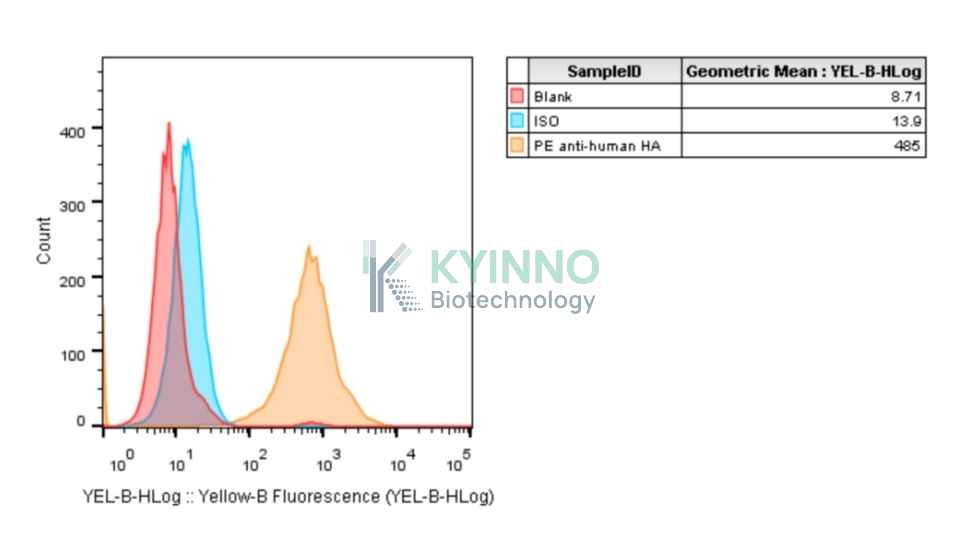
Figure 1: Characterization of cat-CCR8 overexpression in the 293T-cat-CCR8 stable clone using FACS.

Cell Resuscitation

1. Prewarm culture medium (DMEM supplemented with 10% FBS and 1μg/mL puromycin)in a 37°C water bath.
2. Thaw the frozen vial in a 37°C water bath for 1-2 minutes.
3. Transfer the vial into biosafety cabinet, and wipe the surface with 70% ethanol.
4. Unscrew the top of the vial and transfer the cell suspension gently into a sterile centrifuge tube containing 9.0mL complete culture medium.
5. Spin at ~ 125 × g for 5-7 minutes at room temperature, and discard the supernatant without disturbing the pellet.
6. Resuspend cell pellet with the appropriate volume of complete medium and transfer the cell suspension into a T25 culture flask.
7. Incubate the flask at 37°C, 5% CO2 incubator.
8. Split saturated culture 1:4-1:8 every 2-3 days; seed out at about 1-3 × 10⁵ cells/mL.

Cell Freezing

1. Prepare the freezing medium (70% DMEM + 20% FBS + 10% DMSO) fresh immediately before use.
2. Keep the freezing medium on ice and label cryovials.
3. Transfer cells to a sterile, conical centrifuge tube, and count the cells.
4. Centrifuge the cells at 250×g for 5 minutes at room temperature and carefully aspirate off the medium.
5. Resuspend the cells at a density of at least 3×10⁶ cells/mL in chilled freezing medium.
6. Aliquot 1 mL of the cell suspension into each cryovial.
7. Freeze cells in the CoolCell freezing container overnight in a -80°C freezer.
8. Transfer vials to liquid nitrogen for long-term storage.

References

1.McCully ML, Ladell K, Andrews R, Jones RE, Miners KL, Roger L, Baird DM, Cameron MJ, Jessop ZM, Whitaker IS, Davies EL, Price DA, Moser B. CCR8 Expression Defines Tissue-Resident Memory T Cells in Human Skin. J Immunol. 2018 Mar 1;200(5):1639-1650.
2.Li HL, Wang LH, Hu YL, Feng Y, Li XH, Liu YF, Li P, Mao QS, Xue WJ. Clinical and prognostic significance of CC chemokine receptor type 8 protein expression in gastrointestinal stromal tumors. World J Gastroenterol. 2020 Aug 21;26(31):4656-4668.
3.The human CC chemokine receptor 8 (CCR8) is an emerging therapeutic target for cancer immunotherapy and autoimmune diseases. Understanding the molecular recognition of CCR8, particularly with nonpeptide ligands, is valuable for drug development.

Please enable JavaScript in your browser to complete this form.