KC-3079

293T-LILRA4-High Cell Line

×
Please enable JavaScript in your browser to complete this form.
34098
Home » 293T-LILRA4-High Cell Line

Background of 293T-LILRA4-High Cell Line

LILRA4 encodes an immunoglobulin-like cell surface protein that is expressed predominantly on plasmacytoid dendritic cells (PDCs) and modulates the function of these cells in the immune response. Expression of this gene is downregulated by interleukin 3 (IL3).Functions coreceptor to limit the innate immune responses to viral infections; signaling occurs via FCER1G. Down-regulates the production of IFNA1, IFNA2, IFNA4, IFNB1 and TNF by plasmacytoid dendritic cells that have been exposed to influenza virus or cytidine-phosphate-guanosine (CpG) dinucleotides, indicating it functions as a negative regulator of TLR7 and TLR9 signaling cascades. Down-regulates interferon production in response to interaction with BST2 on HIV-1 infected cells. Activates a signaling cascade in complex with FCER1G that results in phosphorylation of Src family and Syk kinases and thereby triggers mobilization of intracellular Ca(2+). Does not interfere with the differentiation of plasmacytoid dendritic cells into antigen-presenting cells.

Specifications

Catalog NumberKC-3079
Cell Line Name293T-LILRA4-High Cell Line
Host Cell Line293T
DescriptionStable 293T cell line expressing exogenous LILRA4 genes
QuantityTwo vials of frozen cells (≥2-106/vial)
StabilityStable in culture over a minimum of 10 passages
ApplicationDrug screening and biological assays
Freezing Medium70% DMEM + 20% FBS + 10% DMSO
Propagation MediumDMEM + 10% FBS + 1ug/mL Puromycin
Selection MarkerPuromycin
MorphologyEpithelial
SubcultureSplit saturated culture 1:4-1:5 every 2-3 days; seed out at about 1-3 × 10⁵ cells/mL
Incubation37 °C with 5% CO2
StorageLiquid nitrogen immediately upon receiving
Doubling TimeApproximately 30 hours
Mycoplasma StatusNegative
In Vivo ValidationNA

Cell Line Generation

293T LILRA4 cell line was generated using a lentiviral vector expressing the LILRA4 sequence.

Characterization

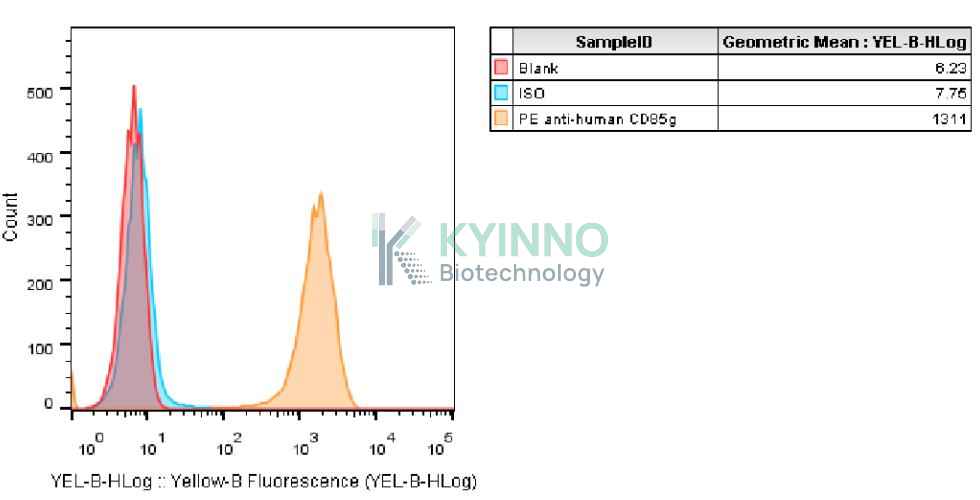
Figure 1: Characterization of LILRA4 overexpression in the 293T LILRA4 stable clone using FACS.

Cell Resuscitation

1. Prewarm culture medium (DMEM + 10% FBS + 1ug/mL Puromycin)in a 37°C water bath.
2. Thaw the frozen vial in a 37°C water bath for 1-2 minutes.
3. Transfer the vial into biosafety cabinet, and wipe the surface with 70% ethanol.
4. Unscrew the top of the vial and transfer the cell suspension gently into a sterile centrifuge tube containing 9.0mL complete culture medium.
5. Spin at ~ 125 × g for 5-7 minutes at room temperature, and discard the supernatant without disturbing the pellet.
6. Resuspend cell pellet with the appropriate volume of complete medium and transfer the cell suspension into a T25 culture flask.
7. Incubate the flask at 37°C, 5% CO2 incubator.
8. Split saturated culture 1:4-1:5 every 2-3 days; seed out at about 1-3 × 10⁵ cells/mL.

Cell Freezing

1. Prepare the freezing medium (70% DMEM + 20% FBS + 10% DMSO) fresh immediately before use.
2. Keep the freezing medium on ice and label cryovials.
3. Transfer cells to a sterile, conical centrifuge tube, and count the cells.
4. Centrifuge the cells at 250×g for 5 minutes at room temperature and carefully aspirate off the medium.
5. Resuspend the cells at a density of at least 3×10⁶ cells/mL in chilled freezing medium.
6. Aliquot 1 mL of the cell suspension into each cryovial.
7. Freeze cells in the CoolCell freezing container overnight in a -80°C freezer.
8. Transfer vials to liquid nitrogen for long-term storage.

References

1.Palma G, De Laurenzi V, De Marco M, Barbieri A, Petrillo A, Turco MC, Arra C. Plasmacytoids dendritic cells are a therapeutic target in anticancer immunity. Biochim Biophys Acta. 2012 Dec;1826(2):407-14.
2. Cao W, Bover L. Signaling and ligand interaction of ILT7: receptor-mediated regulatory mechanisms for plasmacytoid dendritic cells. Immunol Rev. 2010 Mar;234(1):163-76.

Please enable JavaScript in your browser to complete this form.