KC-3108

293T-TMPRSS6 Cell Line

×
请在浏览器中启用JavaScript来完成此表单。
34140
Home » 细胞系 » 293T-TMPRSS6 Cell Line

Background of 293T-TMPRSS6 Cell Line

TMPRSS6, also known as MT2, the protein encoded by this gene is a type II transmembrane serine proteinase that is found attached to the cell surface. The encoded protein may be involved in matrix remodeling processes in the liver. Matriptase-2 is a hepatic membrane serine protease that regulates iron homeostasis. Defects in matriptase-2 cause iron deficiency anemia. SNP rs855791 of TMPRSS6 responded to α-globin deletions for sustaining RBC sizes and haemoglobinisation in α-thal carriers.

Specifications

Catalog NumberKC-3108
Cell Line Name293T-TMPRSS6 Cell Line
NCBI/UniProt Accession NumberNM_001289000.2
Clone Number6#
Host Cell Line293T
DescriptionStable 293T cell line expressing exogenous TMPRSS6 gene
QuantityTwo vials of frozen cells (≥2-106/vial)
StabilityStable in culture over a minimum of 10 passages
ApplicationDrug screening and biological assays
Freezing Medium70% DMEM + 20% FBS + 10% DMSO
Propagation MediumDMEM + 10% FBS + 1μg/mL Puromycin
Selection MarkerPuromycin
MorphologyEpithelial
SubcultureSplit saturated culture 1:4-1:6 every 2-3 days; seed out at about 1-3 × 10⁵ cells/mL
Incubation37 °C with 5% CO2
StorageLiquid nitrogen immediately upon receiving
Doubling TimeApproximately 30 hours
Mycoplasma StatusNegative
In Vivo ValidationNA

Cell Line Generation

293T-TMPRSS6 cell line was generated using a lentiviral vector expressing the TMPRSS6 sequence.

Characterization

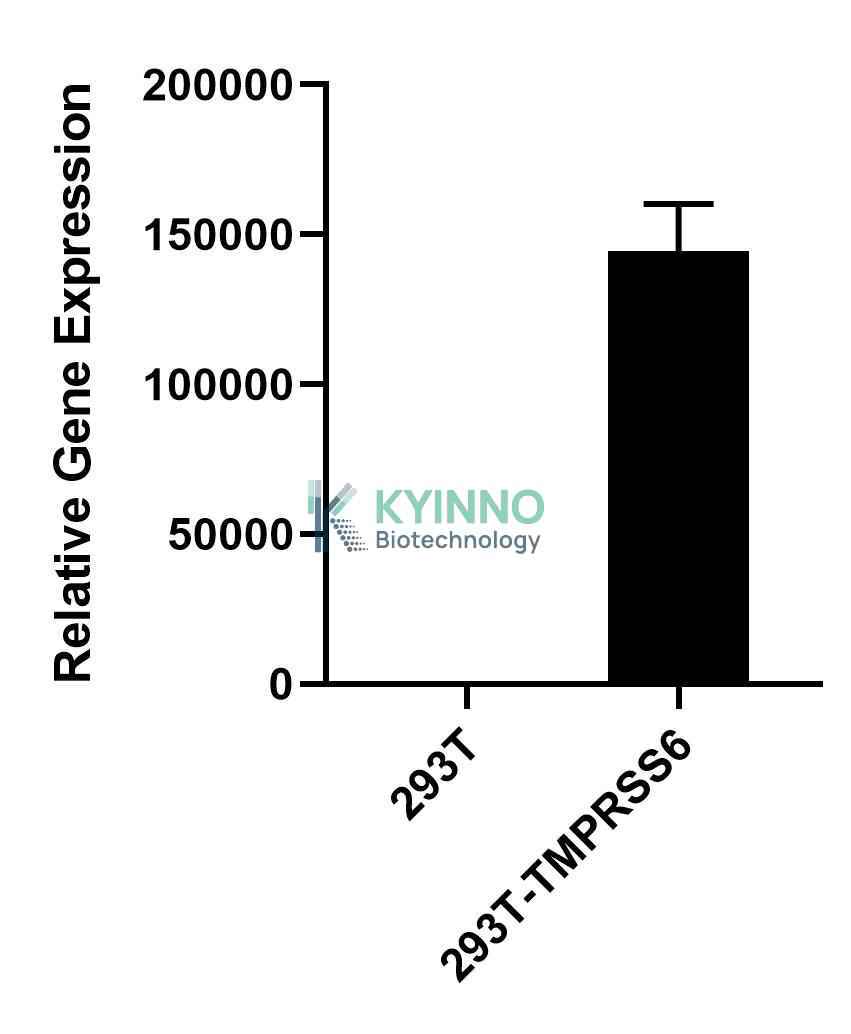
Figure 1: Characterization of TMPRSS6 overexpression in the 293T-TMPRSS6 stable clones using qPCR.

Cell Resuscitation

  1. Prewarm culture medium (DMEM + 10% FBS + 1μg/mL Puromycin) in a 37°C water bath.
  2. Thaw the frozen vial in a 37°C water bath for 1-2 minutes.
  3. Transfer the vial into biosafety cabinet, and wipe the surface with 70% ethanol.
  4. Unscrew the top of the vial and transfer the cell suspension gently into a sterile centrifuge tube containing 9.0mL complete culture medium.
  5. Spin at ~ 125 × g for 5-7 minutes at room temperature, and discard the supernatant without disturbing the pellet.
  6. Resuspend cell pellet with the appropriate volume of complete medium and transfer the cell suspension into a T25 culture flask.
  7. Incubate the flask at 37°C, 5% CO2 incubator.
  8. Split saturated culture 1:4-1:6 every 2-3 days; seed out at about 1-3 × 10⁵ cells/mL.

Cell Freezing

  1. Prepare the freezing medium (70% DMEM + 20% FBS + 10% DMSO) fresh immediately before use.
  2. Keep the freezing medium on ice and label cryovials.
  3. Transfer cells to a sterile, conical centrifuge tube, and count the cells.
  4. Centrifuge the cells at 250×g for 5 minutes at room temperature and carefully aspirate off the medium.
  5. Resuspend the cells at a density of at least 3×10⁶ cells/mL in chilled freezing medium.
  6. Aliquot 1 mL of the cell suspension into each cryovial.
  7. Freeze cells in the CoolCell freezing container overnight in a -80°C freezer.
  8. Transfer vials to liquid nitrogen for long-term storage.

References

  1. Suksangpleng T, Glomglao W, Viprakasit V. Common Single Nucleotide Polymorphism of TMPRSS6, an Iron Regulation Gene, Associated with Variable Red Blood Cell Indices in Deletional α-Globin Genotypes. Genes (Basel). 2022 Aug 23;13(9):1502.
  2. Dion SP, Désilets A, Lemieux G, Leduc R. Functionally impaired isoforms regulate TMPRSS6 proteolytic activity. PLoS One. 2022 Aug 31;17(8):e0273825.
  3. Jiang J, Yang J, Feng P, Zuo B, Dong N, Wu Q, He Y. N-glycosylation is required for matriptase-2 autoactivation and ectodomain shedding. J Biol Chem. 2014 Jul 11;289(28):19500-7.

Use License Agreement

Research Use Only.
Not for use in diagnostic procedures or therapeutic applications.
Redistribution of the cell line or its derivatives is prohibited without prior written permission from Kyinno Biotechnology.
请在浏览器中启用JavaScript来完成此表单。