KC-3255

293T-mouse-VISTA Cell Line

×
Please enable JavaScript in your browser to complete this form.
34262
Home » 293T-mouse-VISTA Cell Line

Background of 293T-mouse-VISTA Cell Line

VISTA also belongs to the B7 family of molecules and shows significant homology to PD-L1 and PD-L2. Unlike other immune checkpoint molecules, VISTA is constitutively expressed on naïve T cells, which are lost during the immune response, and on the surface of antigen-presenting cells in addition to T cells, and inhibits T cell activation through both intra- and extra-T cellular mechanisms. In short, VISTA is a unique negative checkpoint regulator on initial T-cells and is essential for maintaining their resting and peripheral immune tolerance steady state.

Specifications

Catalog NumberKC-3255
Cell Line Name293T-mouse-VISTA Cell Line
NCBI/UniProt Accession NumberNM_028732.4
Clone NumberNA
Host Cell Line293T
DescriptionStable 293T cell line expressing exogenous mouse VISTA gene
QuantityTwo vials of frozen cells (≥2-106/vial)
StabilityStable in culture over a minimum of 10 passages
ApplicationDrug screening and biological assays
Freezing Medium70% DMEM + 20% FBS + 10% DMSO
Propagation MediumDMEM + 10% FBS + 1μg/mL Puromycin
Selection MarkerPuromycin
MorphologyEpithelial
SubcultureSplit saturated culture 1:4-1:5 every 2-3 days; seed out at about 1-3 × 10⁵ cells/mL
Incubation37 °C with 5% CO2
StorageLiquid nitrogen immediately upon receiving
Doubling TimeApproximately 30 hours
Mycoplasma StatusNegative
In Vivo ValidationNA

Cell Line Generation

293T-mouse-VISTA cell line was generated using a lentiviral vector expressing the mouse VISTA sequence.

Characterization

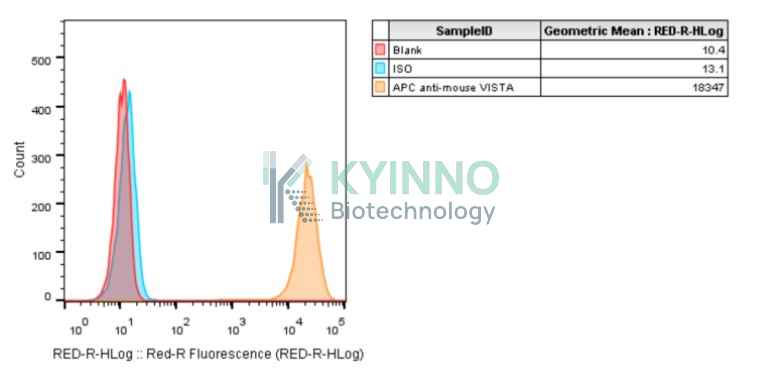
Figure 1: Characterization of mouse VISTA overexpression in the 293T-mouse-VISTA stable clone using FACS.

Figure 2: Characterization of mouse VISTA in the 293T stable clone using PCR sequencing.

Cell Resuscitation

1. Prewarm culture medium (DMEM + 10% FBS + 1μg/mL Puromycin)in a 37°C water bath.
2. Thaw the frozen vial in a 37°C water bath for 1-2 minutes.
3. Transfer the vial into biosafety cabinet, and wipe the surface with 70% ethanol.
4. Unscrew the top of the vial and transfer the cell suspension gently into a sterile centrifuge tube containing 9.0mL complete culture medium.
5. Spin at ~ 125 × g for 5-7 minutes at room temperature, and discard the supernatant without disturbing the pellet.
6. Resuspend cell pellet with the appropriate volume of complete medium and transfer the cell suspension into a T25 culture flask.
7. Incubate the flask at 37°C, 5% CO2 incubator.
8. Split saturated culture 1:4-1:5 every 2-3 days; seed out at about 1-3 × 10⁵ cells/mL.

Cell Freezing

1. Prepare the freezing medium (70% DMEM + 20% FBS + 10% DMSO) fresh immediately before use.
2. Keep the freezing medium on ice and label cryovials.
3. Transfer cells to a sterile, conical centrifuge tube, and count the cells.
4. Centrifuge the cells at 250×g for 5 minutes at room temperature and carefully aspirate off the medium.
5. Resuspend the cells at a density of at least 3×10⁶ cells/mL in chilled freezing medium.
6. Aliquot 1 mL of the cell suspension into each cryovial.
7. Freeze cells in the CoolCell freezing container overnight in a -80°C freezer.
8. Transfer vials to liquid nitrogen for long-term storage

References

1. Mulati, Kumuluzi, Junzo Hamanishi, Noriomi Matsumura, Kenji Chamoto, Nathan Mise, Kaoru Abiko, Tsukasa Baba et al. 2019. VISTA expressed in tumour cells regulates T cell function. British journal of cancer 120(1):115-127.
2. Gabr, Moustafa T., and Sanjiv S. Gambhir. 2020. Discovery and Optimization of Small-Molecule Ligands for V-Domain Ig Suppressor of T-Cell Activation (VISTA). Journal of the American Chemical Society 142(38):16194-16198.
3. ElTanbouly, Mohamed A., Yanding Zhao, Elizabeth Nowak, Jiannan Li, Evelien Schaafsma, Isabelle Le Mercier, Sabrina Ceeraz et al. 2020. VISTA is a checkpoint regulator for naive T cell quiescence and peripheral tolerance. Science 367(6475).

Please enable JavaScript in your browser to complete this form.