KC-3497

CHOK1-hACVR2B Cell Line

Stable CHO-K1 cell line expressing exogenous human ACVR2B gene

×
Please enable JavaScript in your browser to complete this form.
34430
Home » CHOK1-hACVR2B Cell Line

Background of CHOK1-hACVR2B Cell Line

Activin receptor type-2B (ACVR2B), also known as ActR-IIB and MGC116908, is an activin type 2 receptor. Activins are dimeric growth and differentiation factors which belong to the transforming growth factor-beta (TGF-beta) superfamily of structurally related signaling proteins. Activins signal through a heteromeric complex of receptor serine kinases. ACVR2B binds to activin and growth differentiation factor (GDF), which in turn activates the type I receptor, thereby activating the downstream molecule SMAD2/3. At present, the drugs under development of this target include BIIB-110, Bimagrumab and STM-434, all of which are in the clinical verification stage.

Specifications

Catalog NumberKC-3497
Cell Line NameCHOK1-hACVR2B Cell Line
Clone Number3#
Host Cell LineCHOK1
DescriptionStable CHOK1 clone expressing exogenous human ACVR2B gene
QuantityTwo vials of frozen cells (≥2-106/vial)
StabilityStable in culture over a minimum of 10 passages
ApplicationDrug screening and biological assays
Freezing Medium70% RPMI1640 + 20% FBS + 10% DMSO
Propagation MediumRPMI1640+ 10% FBS + 10μg/mL Puromycin
Selection MarkerPuromycin
MorphologyEpithelial
SubcultureSplit saturated culture 1:4-1:8 every 2-3 days; seed out at about 1-3 × 10⁵ cells/mL
Incubation37 °C with 5% CO2
StorageLiquid nitrogen immediately upon receiving
Doubling TimeApproximately 24 hours
Mycoplasma StatusNegative
In Vivo ValidationNA

Cell Line Generation

CHO-K1 human ACVR2B cell line was generated using a lentiviral vector expressing the human ACVR2B sequence.

Characterization

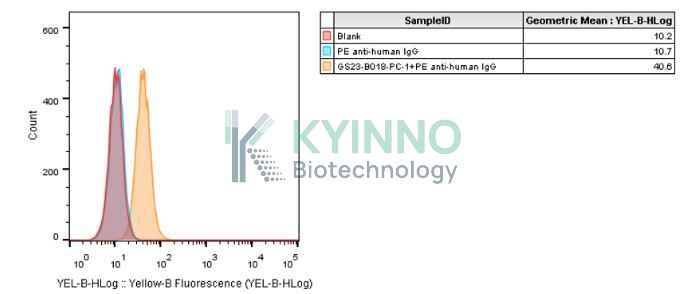
Figure 1: Characterization of ACVR2B in CHOK1 using FACS.

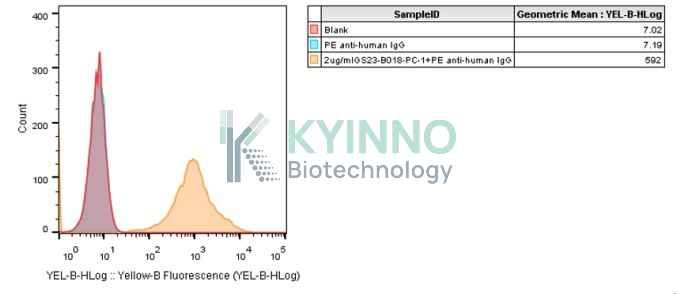
Figure 2: Characterization of ACVR2B overexpression in CHOK1 stable clones using FACS.

Figure 3: Characterization of CHOK1-Human-ACVR2B cell line stable clone using PCR sequencing

Cell Resuscitation

1. Prewarm culture medium (RPMI1640+ 10% FBS + 10μg/mL Puromycin)in a 37°C water bath.
2. Thaw the frozen vial in a 37°C water bath for 1-2 minutes.
3. Transfer the vial into biosafety cabinet, and wipe the surface with 70% ethanol.
4. Unscrew the top of the vial and transfer the cell suspension gently into a sterile centrifuge tube containing 9.0mL complete culture medium.
5. Spin at ~ 125 × g for 5-7 minutes at room temperature, and discard the supernatant without disturbing the pellet.
6. Resuspend cell pellet with the appropriate volume of complete medium and transfer the cell suspension into a T25 culture flask.
7. Incubate the flask at 37°C, 5% CO2 incubator.
8. Split saturated culture 1:4-1:8 every 2-3 days; seed out at about 1-3 × 10⁵ cells/mL.

Cell Freezing

1. Prepare the freezing medium (70% RPMI1640 + 20% FBS + 10% DMSO) fresh immediately before use.
2. Keep the freezing medium on ice and label cryovials.
3. Transfer cells to a sterile, conical centrifuge tube, and count the cells.
4. Centrifuge the cells at 250×g for 5 minutes at room temperature and carefully aspirate off the medium.
5. Resuspend the cells at a density of at least 3×10⁶ cells/mL in chilled freezing medium.
6. Aliquot 1 mL of the cell suspension into each cryovial.
7. Freeze cells in the CoolCell freezing container overnight in a -80°C freezer.
8. Transfer vials to liquid nitrogen for long-term storage.

References

1. Hermawan A, Putri H. Bioinformatics Analysis of the Genetic and Epigenetic Alterations of Bone Morphogenetic Protein Receptors in Metastatic Breast Cancer. Biochem Genet. 2023 Jul 24. doi: 10.1007/s10528-023-10445-2. Epub ahead of print. PMID: 37486509.
2. Huot JR, Pin F, Narasimhan A, Novinger LJ, Keith AS, Zimmers TA, Willis MS, Bonetto A. ACVR2B antagonism as a countermeasure to multi-organ perturbations in metastatic colorectal cancer cachexia. J Cachexia Sarcopenia Muscle. 2020 Dec;11(6):1779-1798. doi: 10.1002/jcsm.12642. Epub 2020 Nov 16. PMID: 33200567; PMCID: PMC7749603.
3. Szabó Z, Vainio L, Lin R, Swan J, Hulmi JJ, Rahtu-Korpela L, Serpi R, Laitinen M, Pasternack A, Ritvos O, Kerkelä R, Magga J. Systemic blockade of ACVR2B ligands attenuates muscle wasting in ischemic heart failure without compromising cardiac function. FASEB J. 2020 Aug; 34(8): 9911-9924.

Please enable JavaScript in your browser to complete this form.