kc-3529

293T-ACVR2A Cell Line

Stable HEK293T cell line expressing exogenous human ACVR2A gene

×
Please enable JavaScript in your browser to complete this form.
34466
Home » 细胞系 » 293T-ACVR2A Cell Line

Background of 293T-ACVR2A Cell Line

This gene encodes a receptor that mediates the functions of activins, which are members of the transforming growth factor-beta (TGF-beta) superfamily involved in diverse biological processes. The encoded protein is a transmembrane serine-threonine kinase receptor which mediates signaling by forming heterodimeric complexes with various combinations of type I and type II receptors and ligands in a cell-specific manner. The encoded type II receptor is primarily involved in ligand-binding and includes an extracellular ligand-binding domain, a transmembrane domain and a cytoplasmic serine-threonine kinase domain. This gene may be associated with susceptibility to preeclampsia, a pregnancy-related disease which can result in maternal and fetal morbidity and mortality. Alternative splicing results in multiple transcript variants of this gene.

Specifications

Catalog Numberkc-3529
Cell Line Name293T-ACVR2A Cell Line
NCBI/UniProt Accession NumberNM_001616.5
Clone Number2#
Host Cell Line293T
DescriptionStable 293T cell line expressing exogenous ACVR2A gene
QuantityTwo vials of frozen cells (≥2-106/vial)
StabilityStable in culture over a minimum of 10 passages
ApplicationDrug screening and biological assays
Freezing Medium70% DMEM+20% FBS+10% DMSO
Propagation MediumDMEM+10% FBS +1μg/mL Puromycin
Selection MarkerPuromycin
MorphologyEpithelial
SubcultureSplit saturated culture 1:4-1:8 every 2-3 days; seed out at about 1-3 × 10⁵ cells/mL
Incubation37 °C with 5% CO2
StorageLiquid nitrogen immediately upon receiving
Doubling TimeApproximately 30 hours
Mycoplasma StatusNegative
In Vivo ValidationNA

Cell Line Generation

293T-ACVR2A cell line was generated using lentivirus expressing ACVR2A sequence.

Characterization

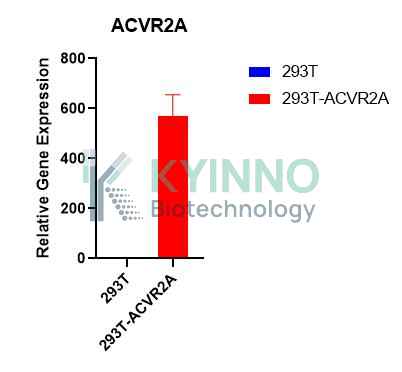
Figure 1. Characterization of ACVR2A over-expression in the 293T-ACVR2A stable clone using qPCR.

Figure 2. Characterization of ACVR2A over-expression in the 293T-ACVR2A stable clone using PCR.

Cell Resuscitation

  1. Prewarm culture medium (DMEM supplemented with 10% FBS, 1μg/mL Puromycin)in a 37°C water bath.
  2. Thaw the frozen vial in a 37°C water bath for 1-2 minutes.
  3. Transfer the vial into biosafety cabinet, and wipe the surface with 70% ethanol.
  4. Unscrew the top of the vial and transfer the cell suspension gently into a sterile centrifuge tube containing 9.0mL complete culture medium.
  5. Spin at ~ 125 × g for 5-7 minutes at room temperature, and discard the supernatant without disturbing the pellet.
  6. Resuspend cell pellet with the appropriate volume of complete medium and transfer the cell suspension into a T25 culture flask.
  7. Incubate the flask at 37°C, 5% CO2 incubator.
  8. Split saturated culture 1:4-1:8 every 2-3 days; seed out at about 1-3 × 10⁵ cells/mL.

Cell Freezing

  1. Prepare the freezing medium (70% DMEM + 20% FBS + 10% DMSO) fresh immediately before use.
  2. Keep the freezing medium on ice and label cryovials.
  3. Transfer cells to a sterile, conical centrifuge tube, and count the cells.
  4. Centrifuge the cells at 250×g for 5 minutes at room temperature and carefully aspirate off the medium.
  5. Resuspend the cells at a density of at least 3×10⁶ cells/mL in chilled freezing medium.
  6. Aliquot 1 mL of the cell suspension into each cryovial.
  7. Freeze cells in the CoolCell freezing container overnight in a -80°C freezer.
  8. Transfer vials to liquid nitrogen for long-term storage.

References

  1. Yong HEJ, Murthi P, Kalionis B, Keogh RJ, Brennecke SP. Decidual ACVR2A regulates extravillous trophoblast functions of adhesion, proliferation, migration and invasion in vitro. Pregnancy Hypertens. 2018 Apr;12:189-193. doi: 10.1016/j.preghy.2017.11.002. Epub 2017 Nov 14. PMID: 29203340.
  2. Inui M, Montagner M, Ben-Zvi D, Martello G, Soligo S, Manfrin A, Aragona M, Enzo E, Zacchigna L, Zanconato F, Azzolin L, Dupont S, Cordenonsi M, Piccolo S. Self-regulation of the head-inducing properties of the Spemann organizer. Proc Natl Acad Sci U S A. 2012 Sep 18;109(38):15354-9. doi: 10.1073/pnas.1203000109. Epub 2012 Sep 4. PMID: 22949641; PMCID: PMC3458350.
Please enable JavaScript in your browser to complete this form.