KC-3708

Jurkat-TIGIT Cell Line

×
Please enable JavaScript in your browser to complete this form.
34636
Home » 细胞系 » Jurkat-TIGIT Cell Line

Background of Jurkat-TIGIT Cell Line

TIGIT (T Cell Immunoreceptor With Ig And ITIM Domains) also known as VSTM3, it is a Protein Coding gene. This gene encodes a member of the PVR (poliovirus receptor) family of immunoglobin proteins. The product of this gene is expressed on several classes of T cells including follicular B helper T cells (TFH). TIGIT interacts with CD155 expressed on antigen-presenting cells or tumour cells to down-regulate T cell and natural killer (NK) cell functions. TIGIT has emerged as a key inhibitor of anti-tumour responses that can hinder multiple steps of the cancer immunity cycle. Diseases associated with TIGIT include Endocervical Carcinoma and Chromophobe Renal Cell Carcinoma.

Specifications

Catalog NumberKC-3708
Cell Line NameJurkat-TIGIT Cell Line
Host Cell LineJurkat
DescriptionStable Jurkat cell line expressing exogenous human TIGIT gene
QuantityTwo vials of frozen cells (≥2-106/vial)
StabilityStable in culture over a minimum of 10 passages
ApplicationDrug screening and biological assays
Freezing Medium70% RPMI1640 + 20% FBS + 10% DMSO
Propagation MediumRPMI1640 + 10% FBS + 1μg/ml Puromycin
Selection MarkerPuromycin
MorphologyMostly single, round (some polymorph) cells in suspension
SubcultureSplit saturated culture 1:4-1:5 every 2-3 days; seed out at about 1-3 × 10⁵ cells/ml
Incubation37 °C with 5% CO2
StorageLiquid nitrogen immediately upon receiving
Doubling TimeApproximately 30 hours
Mycoplasma StatusNegative
In Vivo ValidationNA

Cell Line Generation

Jurkat-TIGIT Cell Line was generated using a lentiviral vector expressing the human TIGIT sequence

Characterization

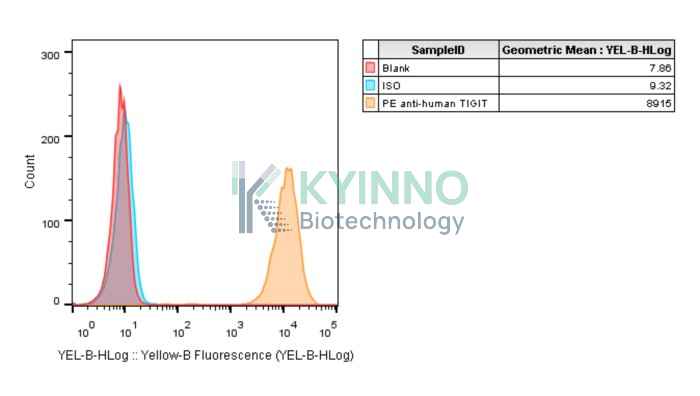
Figure 1: Characterization of human TIGIT overexpression in the Jurkat-TIGIT stable clone using FACS.

Figure 2: Characterization of human TIGIT in the Jurkat-TIGIT stable clone using PCR sequencing.

Cell Resuscitation

1. Prewarm culture medium (RPMI1640 supplemented with 10% FBS and 1μg/mL Puromycin)in a 37°C water bath. 2. Thaw the frozen vial in a 37°C water bath for 1-2 minutes. 3. Transfer the vial into biosafety cabinet, and wipe the surface with 70% ethanol. 4. Unscrew the top of the vial and transfer the cell suspension gently into a sterile centrifuge tube containing 9.0mL complete culture medium. 5. Spin at ~ 125 × g for 5-7 minutes at room temperature, and discard the supernatant without disturbing the pellet. 6. Resuspend cell pellet with the appropriate volume of complete medium and transfer the cell suspension into a T25 culture flask. 7. Incubate the flask at 37°C, 5% CO2 incubator. 8. Split saturated culture 1:4-1:5 every 2-3 days; seed out at about 1-3 × 10⁵ cells/mL.

Cell Freezing

1. Prepare the freezing medium (70% RPMI1640 + 20% FBS + 10% DMSO) fresh immediately before use. 2. Keep the freezing medium on ice and label cryovials. 3. Transfer cells to a sterile, conical centrifuge tube, and count the cells. 4. Centrifuge the cells at 250×g for 5 minutes at room temperature and carefully aspirate off the medium. 5. Resuspend the cells at a density of at least 3×10⁶ cells/mL in chilled freezing medium. 6. Aliquot 1 mL of the cell suspension into each cryovial. 7. Freeze cells in the CoolCell freezing container overnight in a -80°C freezer. 8. Transfer vials to liquid nitrogen for long-term storage.

References

1. Harjunpää H, Guillerey C. TIGIT as an emerging immune checkpoint. Clin Exp Immunol. 2020 May;200(2):108-119. doi: 10.1111/cei.13407. Epub 2019 Dec 25. PMID: 31828774; PMCID: PMC7160651. 2. Chauvin JM, Zarour HM. TIGIT in cancer immunotherapy. J Immunother Cancer. 2020 Sep;8(2):e000957. doi: 10.1136/jitc-2020-000957. PMID: 32900861; PMCID: PMC7477968. 3. Freed-Pastor WA, Lambert LJ, Ely ZA, Pattada NB, Bhutkar A, Eng G, Mercer KL, Garcia AP, Lin L, Rideout WM 3rd, Hwang WL, Schenkel JM, Jaeger AM, Bronson RT, Westcott PMK, Hether TD, Divakar P, Reeves JW, Deshpande V, Delorey T, Phillips D, Yilmaz OH, Regev A, Jacks T. The CD155/TIGIT axis promotes and maintains immune evasion in neoantigen-expressing pancreatic cancer. Cancer Cell. 2021 Oct 11;39(10):1342-1360.e14. doi: 10.1016/j.ccell.2021.07.007. Epub 2021 Aug 5. PMID: 34358448; PMCID: PMC8511341.

Please enable JavaScript in your browser to complete this form.