KC-3719

CHOK1-cyno-dectin1b-Cell-Line

×
Please enable JavaScript in your browser to complete this form.
34658
Home » 细胞系 » CHOK1-cyno-dectin1b-Cell-Line

Background of CHOK1-cyno-dectin1b-Cell-Line

dectin1, also known as CD369, this gene encodes a member of the C-type lectin/C-type lectin-like domain (CTL/CTLD) superfamily. The encoded glycoprotein is a small type II membrane receptor with an extracellular C-type lectin-like domain fold and a cytoplasmic domain with an immunoreceptor tyrosine-based activation motif. It functions as a pattern-recognition receptor that recognizes a variety of beta-1,3-linked and beta-1,6-linked glucans from fungi and plants, and in this way plays a role in innate immune response. Alternate transcriptional splice variants, encoding different isoforms, have been characterized. This gene is closely linked to other CTL/CTLD superfamily members on chromosome 12p13 in the natural killer gene complex region.Research has shown that clec7a was involved in Parkinson\'s disease (PD) pathogenesis, and its inhibition might protect rats from PD by depressing neuroinflammation through microglial polarization.

Specifications

Catalog NumberKC-3719
Cell Line NameCHOK1-cyno-dectin1b-Cell-Line
Clone Number1
Host Cell LineCHOK1
DescriptionStable CHOK1 clone expressing exogenous cyno-dectin1b gene
QuantityTwo vials of frozen cells (≥2-106/vial)
StabilityStable in culture over a minimum of 10 passages
ApplicationDrug screening and biological assays
Freezing Medium70%RPMI 1640 + 20% FBS + 10% DMSO
Propagation MediumRPMI 1640 + 10% FBS + 10μg/mL Puromycin
Selection MarkerPuromycin
MorphologyEpithelial
SubcultureSplit saturated culture 1:6-1:8 every 2-3 days; seed out at about 1-3 × 10⁵ cells/mL
Incubation37 °C with 5% CO2
StorageLiquid nitrogen immediately upon receiving
Doubling TimeApproximately 24 hours
Mycoplasma StatusNegative
In Vivo ValidationNA

Cell Line Generation

CHOK1-cyno-dectin1b-cell-line was generated using a lentiviral vector expressing the cyno-dectin1b sequence.

Characterization

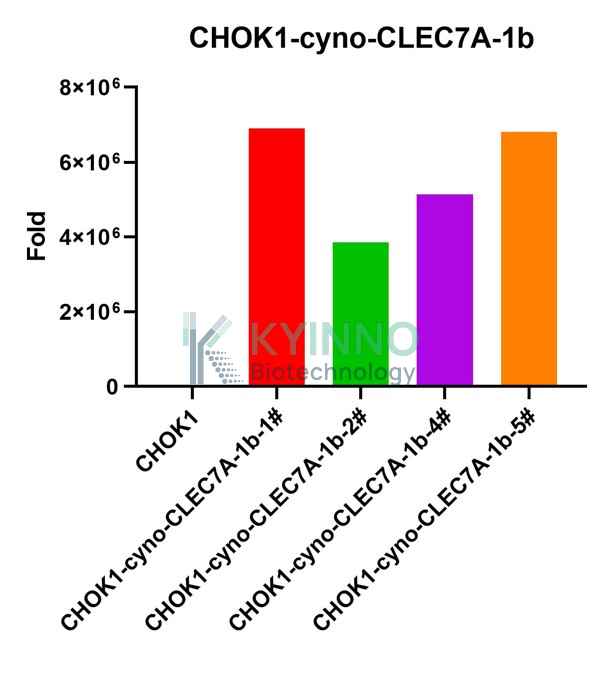
Figure 1: Characterization of cyno-dectin1b overexpression in the CHOK1-cyno-dectin1b stable clone using qPCR.

Figure 2: Characterization of cyno-dectin1b in the CHOK1-cyno-dectin1b stable clone using PCR sequencing.

Cell Resuscitation

1. Prewarm culture medium (RPMI 1640 supplemented with 10% FBS and 10μg/mL puromycin)in a 37°C water bath. 2. Thaw the frozen vial in a 37°C water bath for 1-2 minutes. 3. Transfer the vial into biosafety cabinet, and wipe the surface with 70% ethanol. 4. Unscrew the top of the vial and transfer the cell suspension gently into a sterile centrifuge tube containing 9.0mL complete culture medium. 5. Spin at ~ 125 × g for 5-7 minutes at room temperature, and discard the supernatant without disturbing the pellet. 6. Resuspend cell pellet with the appropriate volume of complete medium and transfer the cell suspension into a T25 culture flask. 7. Incubate the flask at 37°C, 5% CO2 incubator. 8. Split saturated culture 1:6-1:8 every 2-3 days; seed out at about 1-3 × 10⁵ cells/mL.

Cell Freezing

1. Prepare the freezing medium (70%RPMI 1640 + 20% FBS + 10% DMSO) fresh immediately before use. 2. Keep the freezing medium on ice and label cryovials. 3. Transfer cells to a sterile, conical centrifuge tube, and count the cells. 4. Centrifuge the cells at 250×g for 5 minutes at room temperature and carefully aspirate off the medium. 5. Resuspend the cells at a density of at least 3×10⁶ cells/mL in chilled freezing medium. 6. Aliquot 1 mL of the cell suspension into each cryovial. 7. Freeze cells in the CoolCell freezing container overnight in a -80°C freezer. 8. Transfer vials to liquid nitrogen for long-term storage.

References

1.He P, Jiang S, Ma M, Wang Y, Li R, Fang F, Tian G, Zhang Z. Trophoblast glycoprotein promotes pancreatic ductal adenocarcinoma cell metastasis through Wnt/planar cell polarity signaling. Mol Med Rep. 2015 Jul;12(1):503-9. 2.Spencer HL, Jover E, Cathery W, Avolio E, Rodriguez-Arabaolaza I, Thomas AC, Alvino VV, Sala-Newby G, Dang Z, Fagnano M, Reni C, Rowlinson J, Vono R, Spinetti G, Beltrami AP, Gargioli C, Caporali A, Angelini G, Madeddu P. Role of TPBG (Trophoblast Glycoprotein) Antigen in Human Pericyte Migratory and Angiogenic Activity. Arterioscler Thromb Vasc Biol. 2019 Jun;39(6):1113-1124. 3.Alam SMK, Jasti S, Kshirsagar SK, Tannetta DS, Dragovic RA, Redman CW, Sargent IL, Hodes HC, Nauser TL, Fortes T, Filler AM, Behan K, Martin DR, Fields TA, Petroff BK, Petroff MG. Trophoblast Glycoprotein (TPGB/5T4) in Human Placenta: Expression, Regulation, and Presence in Extracellular Microvesicles and Exosomes. Reprod Sci. 2018 Feb;25(2):185-197.

Please enable JavaScript in your browser to complete this form.