KC-3761

293T-ALPP Cell Line

×
Please enable JavaScript in your browser to complete this form.
34730
Home » 细胞系 » 293T-ALPP Cell Line

Background of 293T-ALPP Cell Line

ALPP (Alkaline Phosphatase, Placental), also known as PLAP, is a well-characterized oncofetal antigen. It is normally expressed in the placenta during pregnancy but is significantly silenced in most healthy adult tissues. Its pathophysiological importance arises from its frequent re-expression in various malignancies, most notably in seminomas and non-seminomatous germ cell tumors, as well as in specific subtypes of ovarian, cervical, and lung cancers. This tumor-restricted expression profile has established ALPP as a classic serum biomarker for diagnosing and monitoring germ cell tumors. Furthermore, its prominent cell-surface localization makes it a compelling and actively investigated target for antibody-based therapeutic modalities, including antibody-drug conjugates (ADCs) and CAR-T cell strategies, aiming to selectively target cancer cells.

Specifications

Catalog NumberKC-3761
Cell Line Name293T-ALPP Cell Line
Clone Number3#
Host Cell Line293T
DescriptionStable 293T cell line expressing exogenous ALPP gene
QuantityTwo vials of frozen cells (≥2-106/vial)
StabilityStable in culture over a minimum of 10 passages
ApplicationDrug screening and biological assays
Freezing Medium70% DMEM+20% FBS+10% DMSO
Propagation MediumDMEM+10% FBS +1μg/mL Puromycin
Selection MarkerPuromycin
MorphologyEpithelial
SubcultureSplit saturated culture 1:4-1:8 every 2-3 days; seed out at about 1-3 × 10⁵ cells/mL
Incubation37 °C with 5% CO2
StorageLiquid nitrogen immediately upon receiving
Doubling TimeApproximately 30 hours
Mycoplasma StatusNegative
In Vivo ValidationNA

Cell Line Generation

293T-ALPP cell line was generated using lentivirus expressing ALPP sequence.

Characterization

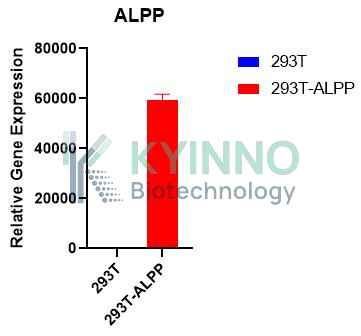
Figure 1. Characterization of ALPP over-expression in the 293T-ALPP stable clone using qPCR.

Cell Resuscitation

  1. Prewarm culture medium (DMEM supplemented with 10% FBS, 1μg/mL Puromycin)in a 37°C water bath.
  2. Thaw the frozen vial in a 37°C water bath for 1-2 minutes.
  3. Transfer the vial into biosafety cabinet, and wipe the surface with 70% ethanol.
  4. Unscrew the top of the vial and transfer the cell suspension gently into a sterile centrifuge tube containing 9.0mL complete culture medium.
  5. Spin at ~ 125 × g for 5-7 minutes at room temperature, and discard the supernatant without disturbing the pellet.
  6. Resuspend cell pellet with the appropriate volume of complete medium and transfer the cell suspension into a T25 culture flask.
  7. Incubate the flask at 37°C, 5% CO2 incubator.
  8. Split saturated culture 1:4-1:8 every 2-3 days; seed out at about 1-3 × 10⁵ cells/mL.

Cell Freezing

  1. Prepare the freezing medium (70% DMEM + 20% FBS + 10% DMSO) fresh immediately before use.
  2. Keep the freezing medium on ice and label cryovials.
  3. Transfer cells to a sterile, conical centrifuge tube, and count the cells.
  4. Centrifuge the cells at 250×g for 5 minutes at room temperature and carefully aspirate off the medium.
  5. Resuspend the cells at a density of at least 3×10⁶ cells/mL in chilled freezing medium.
  6. Aliquot 1 mL of the cell suspension into each cryovial.
  7. Freeze cells in the CoolCell freezing container overnight in a -80°C freezer.
  8. Transfer vials to liquid nitrogen for long-term storage.

References

  1. Chakraborty R, Das SR, Roy M, Mukherjee BN, Das SK. The effect of parity on placental weight and birth weight: interaction with placental alkaline phosphatase polymorphism. Ann Hum Biol. 1975 Jul;2(3):227-34. doi: 10.1080/03014467500000801. PMID: 16431676.
  2. Borosky GL. Catalytic activity of human placental alkaline phosphatase (PLAP): insights from a computational study. J Phys Chem B. 2014 Dec 11;118(49):14302-13. doi: 10.1021/jp511221c. Epub 2014 Nov 26. PMID: 25409280.
Please enable JavaScript in your browser to complete this form.