

KC-3827

LNCaP-CRBN-KO-2A3 Cell Line

×
Please enable JavaScript in your browser to complete this form.
34856
Home » 细胞系 » LNCaP-CRBN-KO-2A3 Cell Line

Background of LNCaP-CRBN-KO-2A3 Cell Line

Cereblon is a protein that in humans is encoded by the CRBN gene. The gene that encodes the cereblon protein is found on the human chromosome 3, on the short arm at position p26.3 from base pair 3,190,676 to base pair 3,221,394. CRBN orthologs are highly conserved from plants to humans. Cereblon forms an E3 ubiquitin ligase complex with damaged DNA binding protein 1 (DDB1), Cullin-4A (CUL4A), and regulator of cullins 1 (ROC1).

Specifications

Catalog NumberKC-3827
Cell Line NameLNCaP-CRBN-KO-2A3 Cell Line
Host Cell LineLNCaP
DescriptionStable LNCaP clone with human CRBN gene knockout, No.2A3
QuantityTwo vials of frozen cells (≥2-106/vial)
StabilityStable in culture over a minimum of 10 passages
ApplicationDrug screening and biological assays
Freezing MediumRPMI1640+20% FBS+10% DMSO
Propagation MediumRPMI1640+10% FBS
Selection MarkerNA
MorphologyEpithelial
SubcultureSplit saturated culture 1:4-1:5 every 3-4 days; seed out at about 1-3 × 10⁵ cells/mL
Incubation37 °C with 5% CO2
StorageLiquid nitrogen immediately upon receiving
Doubling TimeApproximately 60 hours
Mycoplasma StatusNegative
In Vivo ValidationNA

Cell Line Generation

LNCaP-CRBN-KO-2A3 cell line was generated using the CRISPR method.

Characterization

Figure 1: Characterization of LNCaP-CRBN-KO-2A3 cell line stable clone using PCR sequencing.
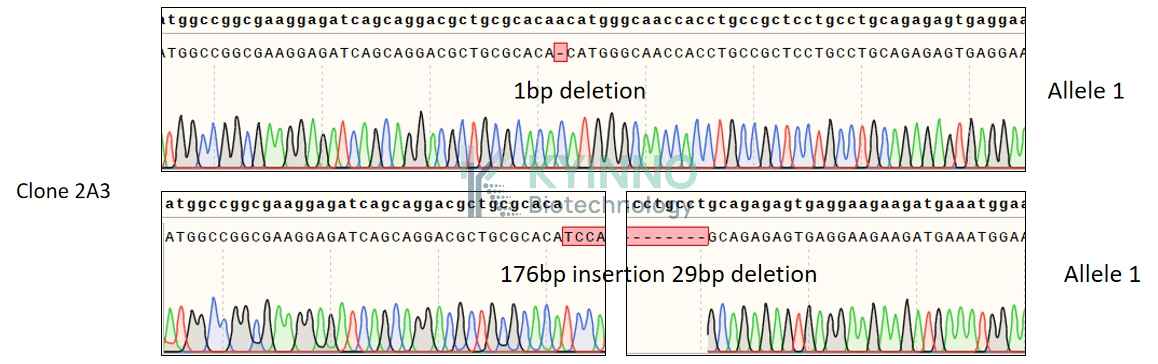
Figure 2: Characterization of LNCaP-CRBN-KO-2A3 cell line stable clone using RT-PCR sequencing.
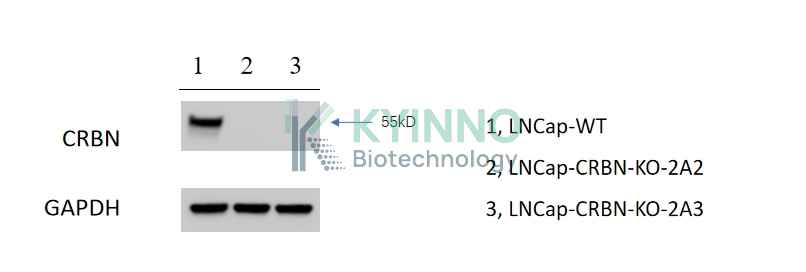
Figure 3: Characterization of LNCaP-CRBN-KO-2A3 cell line stable clone using western blot.

Cell Resuscitation

  1. Prewarm culture medium (RPMI1640 + 10% FBS) in a 37°C water bath.
  2. Thaw the frozen vial in a 37°C water bath for 1-2 minutes.
  3. Transfer the vial into biosafety cabinet, and wipe the surface with 70% ethanol.
  4. Unscrew the top of the vial and transfer the cell suspension gently into a sterile centrifuge tube containing 9.0mL complete culture medium.
  5. Spin at ~ 125 × g for 5-7 minutes at room temperature, and discard the supernatant without disturbing the pellet.
  6. Resuspend cell pellet with the appropriate volume of complete medium and transfer the cell suspension into a T25 culture flask.
  7. Incubate the flask at 37°C, 5% CO2 incubator.
  8. Split saturated culture 1:4-1:5 every 3-4 days; seed out at about 1-3 × 10⁵ cells/mL.

Cell Freezing

  1. Prepare the freezing medium (70% RPMI-1640 + 20% FBS + 10% DMSO) fresh immediately before use.
  2. Keep the freezing medium on ice and label cryovials.
  3. Transfer cells to a sterile, conical centrifuge tube, and count the cells.
  4. Centrifuge the cells at 250×g for 5 minutes at room temperature and carefully aspirate off the medium.
  5. Resuspend the cells at a density of at least 3×10⁶ cells/mL in chilled freezing medium.
  6. Aliquot 1 mL of the cell suspension into each cryovial.
  7. Freeze cells in the CoolCell freezing container overnight in a -80°C freezer.
  8. Transfer vials to liquid nitrogen for long-term storage.

References

  1. Higgins JJ, Pucilowska J, Lombardi RQ, Rooney JP. A mutation in a novel ATP - dependent Lon protease gene in a kindred with mild mental retardation. Neurology. 2004 Nov;63(10):1927–1931.doi:10.1212/01.wnl.0000146196.01316.a2. PMID: 15557513; PMCID: PMC1201536.
  2. Angers S, Li T, Yi X, MacCoss MJ, Moon RT, Zheng N. Molecular architecture and assembly of the DDB1 - CUL4A ubiquitin ligase machinery. Nature. 2006 Oct;443(7111):590–593. doi:10.1038/nature05175. PMID 16964244.
Please enable JavaScript in your browser to complete this form.