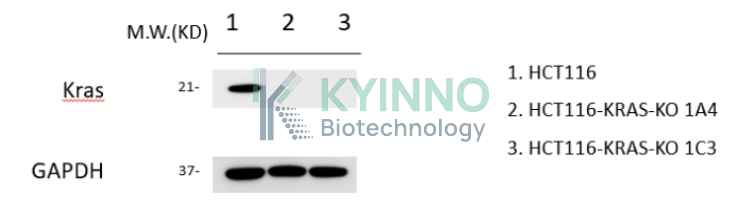
KRAS has been identified as a KRAS-1 pseudogene on short arm of chromosome 6 and KRAS-2 gene, located on the short arm of chromosome 12 (12p11.1-12p12.1). KRAS-2 coding region spans across six exons and measures over 45 kB. The two protein isoforms of KRAS-2, KRAS-4A and KRAS-4B are produced due to alternative splicing on its fourth exon, leading to 188 and 189 monomeric amino acid sequences, respectively. For clinical and research purposes, the term KRAS refers to KRAS-4B, which constitutes the major transcriptomic product in human cells.
Mutations in KRAS are among the most frequent aberrations in cancer, including colon cancer. KRAS direct targeting is daunting due to KRAS protein resistance to small molecule inhibition. Moreover, its elevated affinity to cellular guanosine triphosphate (GTP) has made the design of specific drugs challenging. Indeed, KRAS was considered 'undruggable'.Drugs targeted to block KRAS effector pathways could be combined with direct KRAS inhibitors, immunotherapy or T cell-targeting approaches in KRAS-mutant tumors. The development of valuable combination regimens will be essential against potential mechanisms of resistance that may arise during treatment.