KC-4115

CHOK1 rat CDH3 Cell Line

×
Please enable JavaScript in your browser to complete this form.
41462
Home » CHOK1 rat CDH3 Cell Line

Background of CHOK1 rat CDH3 Cell Line

Placental-Cadherin (CDH3), a cell adhesion molecule, is associated with the function of cells to bind with other cells and the extracellular matrix (ECM). CDH3 is highly expressed in many malignancies, and has been proved it could be a serum marker to monitor colorectal cancer.CDH3 is a glycoprotein with a single-span transmembrane domain that mediates cell-to-cell adhesion. Abnormal expression of CDH3 is associated with a poor prognosis in patients with breast, thyroid, colorectal carcinomas and glioblastoma.

Specifications

Catalog NumberKC-4115
Cell Line NameCHOK1 rat CDH3 Cell Line
Host Cell LineCHOK1
DescriptionStable CHOK1 cell line expressing exogenous rat-CDH3 gene
QuantityTwo vials of frozen cells (≥2-106/vial)
StabilityStable in culture over a minimum of 10 passages
ApplicationDrug screening and biological assays
Freezing Medium70% RPMI1640 + 20% FBS + 10% DMSO
Propagation MediumRPMI1640 + 10% FBS + 10μg/ml Puromycin
Selection MarkerPuromycin
MorphologyEpithelial
SubcultureSplit saturated culture 1:4-1:5 every 2-3 days; seed out at about 1-3 × 10⁵ cells/ml
Incubation37 °C with 5% CO2
StorageLiquid nitrogen immediately upon receiving
Doubling TimeApproximately 30 hours
Mycoplasma StatusNegative
In Vivo ValidationNA

Cell Line Generation

Characterization

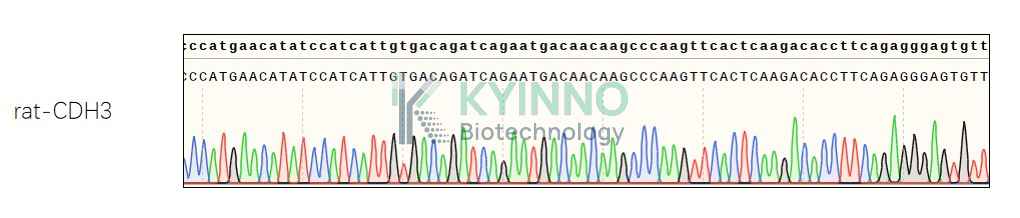
Figure 1: Characterization of rat CDH3 overexpression in the CHO-K1 rat CDH3 stable clone using PCR sequence

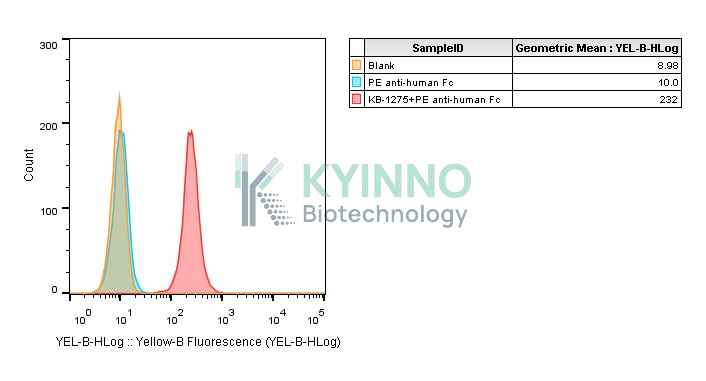
Figure 3: Characterization of rat CDH3 overexpression in the CHO-K1 rat CDH3 stable clone using FACS.

Cell Resuscitation

Cell Freezing

References

  1. Zhou Y, Chi Y, Bhandari A, Xia E, Thakur PC, Qu J, Wang O, Zhang X. Downregulated CDH3 decreases proliferation, migration, and invasion in thyroid cancer. Am J Transl Res. 2020 Jun 15;12(6):
  2. Ma W, Hu J. Downregulated CDH3 is correlated with a better prognosis for LUAD and decreases proliferation and migration of lung cancer cells. Genes Genomics. 2024 Jun;46(6):713-731.
Please enable JavaScript in your browser to complete this form.