KC-4146

A549-AQR-KO-1A2-Cell-Line

×
Please enable JavaScript in your browser to complete this form.
42189
Home » A549-AQR-KO-1A2-Cell-Line

Background of A549-AQR-KO-1A2-Cell-Line

The AQR (also known as Aquarius) gene has garnered significant attention within the scientific community for its pivotal role in RNA splicing and processing . Located on human chromosome 1q41, AQR encodes a member of the RNA-binding proteins family, specifically involved in the final stages of messenger RNA (mRNA) maturation. It functions as a component of the spliceosome, ensuring accurate intron removal and exon joining. Perturbations in AQR expression or function have been implicated in a spectrum of diseases, including cancer, where dysregulated splicing events can lead to oncogenic transformations. For instance, studies have linked AQR misregulation to altered splicing patterns observed in leukemia, emphasizing its potential as a therapeutic target. Moreover, AQR's participation in the assembly and dynamics of R-loops—RNA:DNA hybrids that can both facilitate and obstruct genomic processes—underscores its broader implications in maintaining genomic stability.

Specifications

Catalog NumberKC-4146
Cell Line NameA549-AQR-KO-1A2-Cell-Line
Host Cell LineA549
DescriptionStable A549 clone with human AQR gene knockout, No.1A2
QuantityTwo vials of frozen cells (≥2-106/vial)
StabilityStable in culture over a minimum of 10 passages
ApplicationDrug screening and biological assays
Freezing MediumMcCoy's 5A+20% FBS+10% DMSO
Propagation MediumMcCoy's 5A+10%FBS+L-Glutamax
Selection MarkerN/A
MorphologyEpithelial
SubcultureSplit saturated culture 1:5-1:10 every 2-3 days; seed out at about 1-3 × 10⁵ cells/mL
Incubation37 °C with 5% CO2
StorageLiquid nitrogen immediately upon receiving
Doubling TimeApproximately 18 hours
Mycoplasma StatusNegative
In Vivo ValidationNA

Cell Line Generation

Characterization

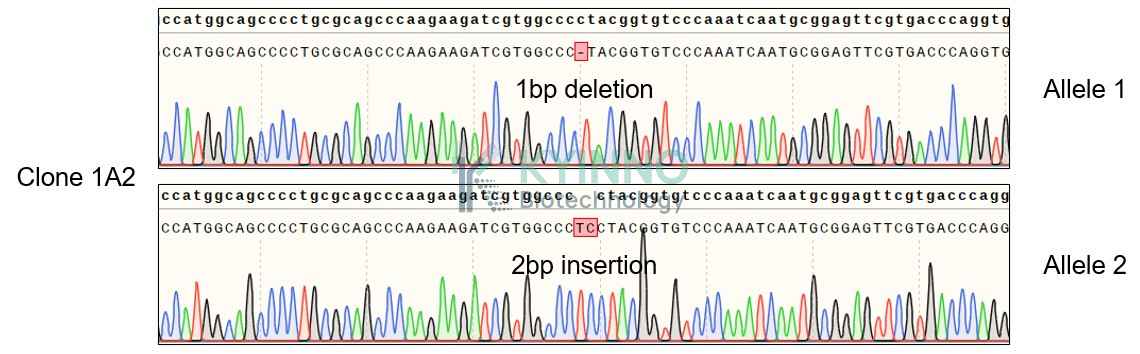
Figure 1: Characterization of A549-AQR-KO-1A2 cell line stable clone using PCR sequencing.

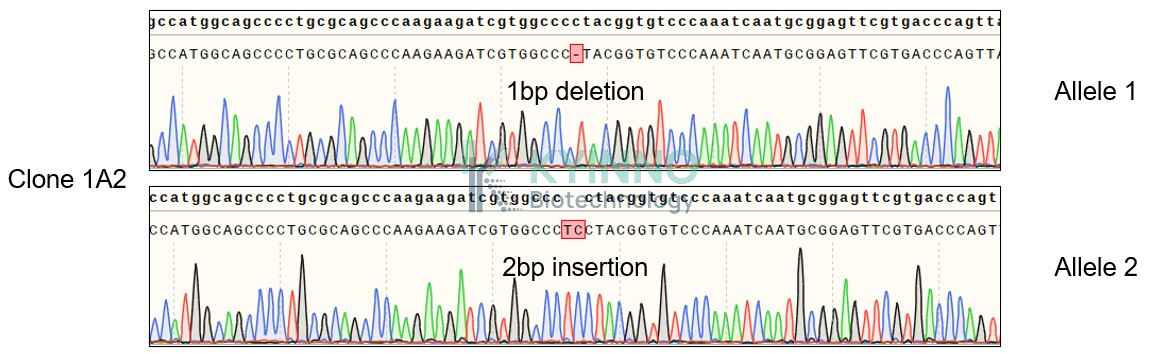
Figure 2: Characterization of A549-AQR-KO-1A2 cell line stable clone using RT-PCR sequencing.

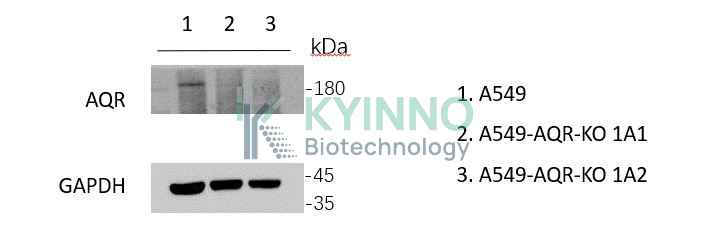
Figure 3: Characterization of A549-AQR-KO-1A1 cell line stable clone using western blot.

Cell Resuscitation

  1. Prewarm culture medium (McCoy's 5A+10%FBS+L-Glutamax)in a 37°C water bath.
  2. Thaw the frozen vial in a 37°C water bath for 1-2 minutes.
  3. Transfer the vial into biosafety cabinet, and wipe the surface with 70% ethanol.
  4. Unscrew the top of the vial and transfer the cell suspension gently into a sterile centrifuge tube containing 9.0mL complete culture medium.
  5. Spin at ~ 125 × g for 5-7 minutes at room temperature, and discard the supernatant without disturbing the pellet.
  6. Resuspend cell pellet with the appropriate volume of complete medium and transfer the cell suspension into a T25 culture flask.
  7. Incubate the flask at 37°C, 5% CO2 incubator.
  8. Split saturated culture 1:5-1:10 every 2-3 days; seed out at about 1-3 × 10⁵ cells/mL.

Cell Freezing

  1. Prepare the freezing medium (70% McCoy's 5A + 20% FBS + 10% DMSO) fresh immediately before use.
  2. Keep the freezing medium on ice and label cryovials.
  3. Transfer cells to a sterile, conical centrifuge tube, and count the cells.
  4. Centrifuge the cells at 250×g for 5 minutes at room temperature and carefully aspirate off the medium.
  5. Resuspend the cells at a density of at least 3×10⁶ cells/mL in chilled freezing medium.
  6. Aliquot 1 mL of the cell suspension into each cryovial.
  7. Freeze cells in the CoolCell freezing container overnight in a -80°C freezer.
  8. Transfer vials to liquid nitrogen for long-term storage

References

  1. Wahl, M.C., et al. (2011). The spliceosome: design principles of a dynamic RNP machine. Cell, 145(6), 12–24. 2. Will, C.L., & Luhrmann, R. (2011). Spliceosome structure and function. Cold Spring Harbor Perspectives in Biology, 3(7), a003707. 3. David, C.J., & Manley, J.L. (2010). Alternative pre-mRNA splicing regulation in cancer: from aberrant splicing to new therapeutic opportunities. Nature Reviews Cancer, 10(11), 749–761. 4. Song C, Yan H, Wang H, Zhang Y, Cao H, Wan Y, Kong L, Chen S, Xu H, Pan B, Zhang J, Fan G, Xin H, Liang Z, Jia W, Tian XL. AQR is a novel type 2 diabetes-associated gene that regulates signaling pathways critical for glucose metabolism. J Genet Genomics. 2018 Feb 20;45(2):111-120. doi: 10.1016/j.jgg.2017.11.007. Epub 2018 Feb 14. PMID: 29502958. 5.De I, Bessonov S, Hofele R, dos Santos K, Will CL, Urlaub H, Lührmann R, Pena V. The RNA helicase Aquarius exhibits structural adaptations mediating its recruitment to spliceosomes. Nat Struct Mol Biol. 2015 Feb;22(2):138-44. doi: 10.1038/nsmb.2951. Epub 2015 Jan 19. PMID: 25599396. 6.Sakasai R, Isono M, Wakasugi M, Hashimoto M, Sunatani Y, Matsui T, Shibata A, Matsunaga T, Iwabuchi K. Aquarius is required for proper CtIP expression and homologous recombination repair. Sci Rep. 2017 Oct 23;7(1):13808. doi: 10.1038/s41598-017-13695-4. PMID: 29061988; PMCID: PMC5653829. 7.De I, Bessonov S, Hofele R, dos Santos K, Will CL, Urlaub H, Lührmann R, Pena V. The RNA helicase Aquarius exhibits structural adaptations mediating its recruitment to spliceosomes. Nat Struct Mol Biol. 2015 Feb;22(2):138-44. doi: 10.1038/nsmb.2951. Epub 2015 Jan 19. PMID: 25599396. 8.https://www.ncbi.nlm.nih.gov/gene/9716
Please enable JavaScript in your browser to complete this form.