kc-4190

293T-VPAC2 Cell Line

×
Please enable JavaScript in your browser to complete this form.
42619
Home » 293T-VPAC2 Cell Line

Background of 293T-VPAC2 Cell Line

VIPR2 (Vasoactive Intestinal Peptide Receptor 2) also known as VPAC2, it is a Protein Coding gene. Vasoactive intestinal peptide (VIP) receptors are a group of Gs-protein-coupled receptors, it is a small neuropeptide composing of 28 amino acids, can stimulate glucose-dependent insulin secretion, particularly by binding to VPAC2 receptors. The vasoactive intestinal peptide receptor 2 (VPAC2) is widely distributed throughout the body and is also overexpressed in a variety of human neoplastic tissues. VPAC2 has diverse biological actions including promotion of neuronal survival, regulation of glycogen metabolism, and inhibition of IL-2-mediated T-cell proliferation.

Specifications

Catalog Numberkc-4190
Cell Line Name293T-VPAC2 Cell Line
Host Cell Line293T
DescriptionStable 293T clone expressing exogenous human VPAC2 gene
QuantityTwo vials of frozen cells (≥2-106/vial)
StabilityStable in culture over a minimum of 10 passages
ApplicationDrug screening and biological assays
Freezing Medium70% DMEM + 20% FBS + 10% DMSO
Propagation MediumDMEM + 10% FBS + 1μg/mL Puromycin
Selection MarkerPuromycin
MorphologyEpithelial
SubcultureSplit saturated culture 1:4-1:8 every 2-3 days; seed out at about 1-3 × 10⁵ cells/mL
Incubation37 °C with 5% CO2
StorageLiquid nitrogen immediately upon receiving
Doubling TimeApproximately 30 hours
Mycoplasma StatusNegative
In Vivo ValidationNA

Cell Line Generation

Characterization

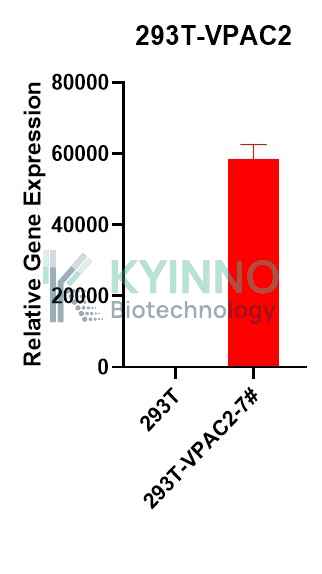
Figure 1: Characterization of VPAC2 overexpression in the 293T VPAC2 stable clone using QPCR.

Figure 2: Characterization of VPAC2 in the 293T VPAC2 stable clone using PCR sequencing.

Cell Resuscitation

  1. Prewarm culture medium (DMEM supplemented with 10% FBS and 1μg/mL puromycin)in a 37°C water bath.
  2. Thaw the frozen vial in a 37°C water bath for 1-2 minutes.
  3. Transfer the vial into biosafety cabinet, and wipe the surface with 70% ethanol.
  4. Unscrew the top of the vial and transfer the cell suspension gently into a sterile centrifuge tube containing 9.0mL complete culture medium.
  5. Spin at ~ 125 × g for 5-7 minutes at room temperature, and discard the supernatant without disturbing the pellet.
  6. Resuspend cell pellet with the appropriate volume of complete medium and transfer the cell suspension into a T25 culture flask.
  7. Incubate the flask at 37°C, 5% CO2 incubator.
  8. Split saturated culture 1:4-1:8 every 2-3 days; seed out at about 1-3 × 10⁵ cells/mL.

Cell Freezing

  1. Prepare the freezing medium (70% DMEM + 20% FBS + 10% DMSO) fresh immediately before use.
  2. Keep the freezing medium on ice and label cryovials.
  3. Transfer cells to a sterile, conical centrifuge tube, and count the cells.
  4. Centrifuge the cells at 250×g for 5 minutes at room temperature and carefully aspirate off the medium.
  5. Resuspend the cells at a density of at least 3×10⁶ cells/mL in chilled freezing medium.
  6. Aliquot 1 mL of the cell suspension into each cryovial.
  7. Freeze cells in the CoolCell freezing container overnight in a -80°C freezer.
  8. Transfer vials to liquid nitrogen for long-term storage

References

  1. Zhao X, Deng L, Ren L, Yang H, Wang B, Zhu X, Zhang X, Guo C, Zhang Y, Liu Y. VPAC2 receptor mediates VIP-potentiated insulin secretion via ion channels in rat pancreatic β cells. Exp Cell Res. 2023 Feb 15;423(2):113471. doi: 10.1016/j.yexcr.2023.113471. Epub 2023 Jan 13. PMID: 36642263.
  2. Schulz S, Mann A, Novakhov B, Piggins HD, Lupp A. VPAC2 receptor expression in human normal and neoplastic tissues: evaluation of the novel MAB SP235. Endocr Connect. 2015 Mar;4(1):18-26. doi: 10.1530/EC-14-0051. Epub 2014 Dec 11. PMID: 25504760; PMCID: PMC4285768.
  3. Hou X, Yang D, Yang G, Li M, Zhang J, Zhang J, Zhang Y, Liu Y. Therapeutic potential of vasoactive intestinal peptide and its receptor VPAC2 in type 2 diabetes. Front Endocrinol (Lausanne). 2022 Sep 20;13:984198. doi: 10.3389/fendo.2022.984198. PMID: 36204104; PMCID: PMC9531956.
Please enable JavaScript in your browser to complete this form.