KC-4144

LoVo-LGR4-LGR5-KO-5A4-Cell-Line

×
Please enable JavaScript in your browser to complete this form.
42775
Home » LoVo-LGR4-LGR5-KO-5A4-Cell-Line

Background of LoVo-LGR4-LGR5-KO-5A4-Cell-Line

LGR4, LGR5 (Leucine-rich repeat-containing G-protein- coupled receptor 4 and 5) are two related membrane receptors with pleotropic functions in organ development and tumorigenesis. Loss-of-function mutations in LGR4 in humans is associated with low bone density, abnormal female reproductive systems and other traits while knockout of Lgr4 in the mouse led to developmental defects with phenotypes similar to those of human mutation. Knockout of Lgr5 in the mouse led to neonatal lethality due to tongue defects. In adult tissues, LGR4 is widely expressed in epithelial tissues, particularly in proliferating cells, whereas LGR5 is expressed mostly in stem cells in the gastrointestinal tract and the skin. Both Lgr4 and Lgr5 are expressed in mouse intestinal stem cells, yet only Lgr4 is essential for the survival and self-renewal of the stem cells and the integrity of the intestine. In some tissues, deletion of Lgr5 alone had no effect but enhanced the effect of Lgr4 knockout, suggesting that Lgr4 and Lgr5 plays similar roles in organ development and tissue maintenance with Lgr4 having a dominating role.

Specifications

Catalog NumberKC-4144
Cell Line NameLoVo-LGR4-LGR5-KO-5A4-Cell-Line
Host Cell LineLoVo
DescriptionStable LoVo cell line with human LGR4 and LGR5 gene knockout, No.5A4
QuantityTwo vials of frozen cells (≥2-106/vial)
StabilityStable in culture over a minimum of 10 passages
ApplicationDrug screening and biological assays
Freezing Medium70% Ham's F12K + 20% FBS + 10% DMSO
Propagation MediumHam's F12K + 10% FBS
Selection MarkerN/A
MorphologyFibroblastoid cells growing as a monolayer
SubcultureSplit the saturated culture at a ratio of 1:3~1:4 every 2~3 days; seed out at about 1-3 x 10⁵ cells/ml
Incubation37 °C with 5% CO2
StorageLiquid nitrogen immediately upon receiving
Doubling TimeApproximately 30 hours
Mycoplasma StatusNegative
In Vivo ValidationNA

Cell Line Generation

LoVo-LGR4-LGR5-KO 5A4 cell line was generated using the CRISPR method.

Characterization

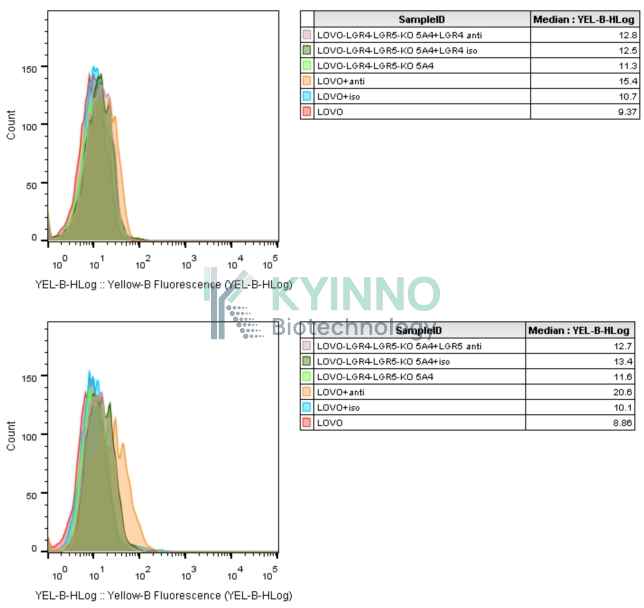
Figure 1: Characterization of LoVo-LGR4-LGR5-KO 5A4 Cell Line stable clone using FACS.

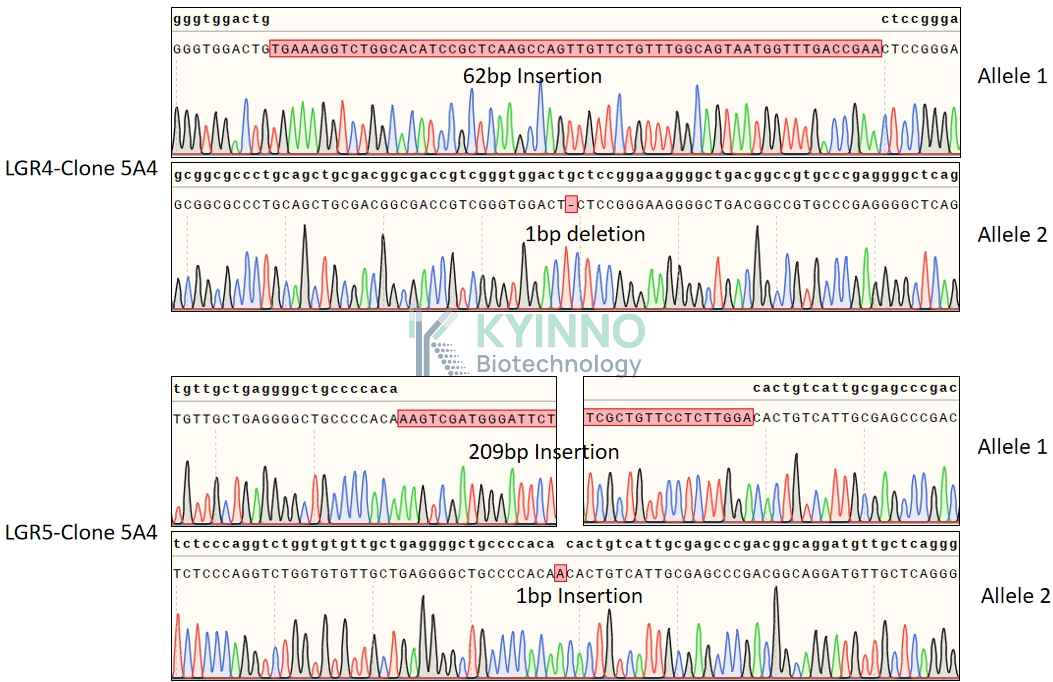
Figure 2: Characterization of LoVo-LGR4-LGR5-KO 5A4 Cell Line stable clone using PCR sequencing.

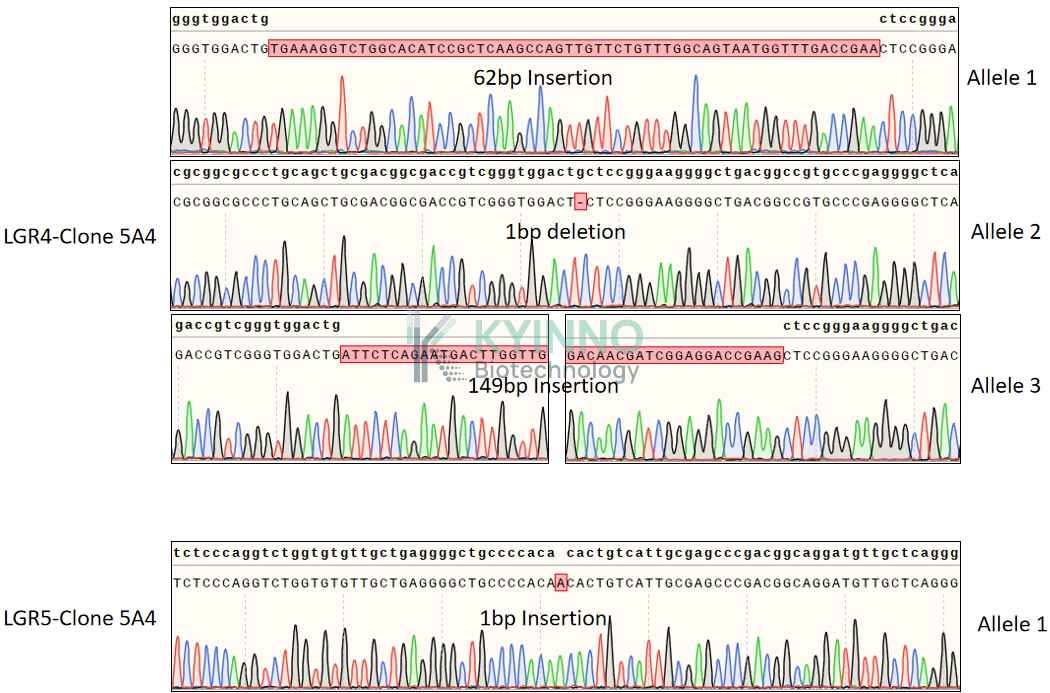
Figure 3: Characterization of LoVo-LGR4-LGR5-KO 5A4 cell line stable clone using RT-PCR sequencing.

Cell Resuscitation

  1. Prewarm culture medium (Ham's F12K + 10% FBS)in a 37°C water bath.
  2. Thaw the frozen vial in a 37°C water bath for 1-2 minutes.
  3. Transfer the vial into biosafety cabinet, and wipe the surface with 70% ethanol.
  4. Unscrew the top of the vial and transfer the cell suspension gently into a sterile centrifuge tube containing 9.0mL complete culture medium.
  5. Spin at ~ 125 × g for 5-7 minutes at room temperature, and discard the supernatant without disturbing the pellet.
  6. Resuspend cell pellet with the appropriate volume of complete medium and transfer the cell suspension into a T25 culture flask.
  7. Incubate the flask at 37°C, 5% CO2 incubator.
  8. Split the saturated culture at a ratio of 1:3 ~ 1:4 every 2~3 days; seed out at about 1-3 x 10⁵ cells/mL.

Cell Freezing

  1. Prepare the freezing medium (70% Ham's F12K + 20% FBS + 10% DMSO) fresh immediately before use.
  2. Keep the freezing medium on ice and label cryovials.
  3. Transfer cells to a sterile, conical centrifuge tube, and count the cells.
  4. Centrifuge the cells at 250×g for 5 minutes at room temperature and carefully aspirate off the medium.
  5. Resuspend the cells at a density of at least 3×10⁶ cells/mL in chilled freezing medium.
  6. Aliquot 1 mL of the cell suspension into each cryovial.
  7. Freeze cells in the CoolCell freezing container overnight in a -80°C freezer.
  8. Transfer vials to liquid nitrogen for long-term storage.

References

  1. Toh Y, Wu L, Park S, Wang A, Tu J, Yu W, Zuo M, Carmon KS, Liu QJ. LGR4 and LGR5 form distinct homodimers that only LGR4 complexes with RNF43/ZNRF3 to provide high affinity binding of R-spondin ligands. Sci Rep. 2023 Jul 4;13(1):10796. doi: 10.1038/s41598-023-37856-w. PMID: 37402772; PMCID: PMC10319729.
Please enable JavaScript in your browser to complete this form.