KC-4213

DLD1-ATM-KO-1A3-Cell-Line

×
Please enable JavaScript in your browser to complete this form.
42799
Home » DLD1-ATM-KO-1A3-Cell-Line

Background of DLD1-ATM-KO-1A3-Cell-Line

The protein encoded by ATM belongs to the PI3/PI4-kinase family. This protein is an important cell cycle checkpoint kinase that phosphorylates; thus, it functions as a regulator of a wide variety of downstream proteins, including tumor suppressor proteins p53 and BRCA1, checkpoint kinase CHK2, checkpoint proteins RAD17 and RAD9, and DNA repair protein NBS1. This protein is a master regulator of double-strand DNA break (DSB) signalling and stress responses. For three decades, ATM has been investigated extensively to elucidate its roles in the DNA damage response (DDR) and in the pathogenesis of ataxia telangiectasia (A-T), a human neurodegenerative disease caused by loss of ATM. Although hundreds of proteins have been identified as ATM phosphorylation targets and many important roles for this kinase have been identified, it is still unclear how ATM deficiency leads to the early-onset cerebellar degeneration that is common in all individuals with A-T. Recent studies suggest the existence of links between ATM deficiency and other cerebellum-specific neurological disorders, as well as the existence of broader similarities with more common neurodegenerative disorders.

Specifications

Catalog NumberKC-4213
Cell Line NameDLD1-ATM-KO-1A3-Cell-Line
Host Cell LineDLD1
DescriptionStable DLD1 clone with human ATM gene knockout, No.1A3
QuantityTwo vials of frozen cells (≥2-106/vial)
StabilityStable in culture over a minimum of 10 passages
ApplicationDrug screening and biological assays
Freezing MediumRPMI1640+20% FBS+10% DMSO
Propagation MediumRPMI1640+10% FBS
Selection MarkerN/A
MorphologyLymphoblast
SubcultureSplit saturated culture 1:5-1:10 every 2-3 days; seed out at about 1-3 × 10⁵ cells/mL
Incubation37 °C with 5% CO2
StorageLiquid nitrogen immediately upon receiving
Doubling TimeApproximately 20 hours
Mycoplasma StatusNegative
In Vivo ValidationYes

Cell Line Generation

Characterization

Figure 1: Characterization of ATM knockout in DLD1 using PCR sequencing.

Figure 2: Characterization of ATM knockout in DLD1 using RT-PCR sequencing.

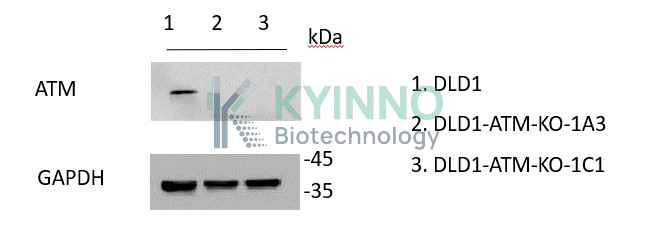
Figure 3: Characterization of ATM knockout in DLD1 using Western blot.

Cell Resuscitation

  1. Prewarm culture medium (RPMI1640 + 10% FBS)in a 37°C water bath.
  2. Thaw the frozen vial in a 37°C water bath for 1-2 minutes.
  3. Transfer the vial into biosafety cabinet, and wipe the surface with 70% ethanol.
  4. Unscrew the top of the vial and transfer the cell suspension gently into a sterile centrifuge tube containing 9.0mL complete culture medium.
  5. Spin at ~ 125 × g for 5-7 minutes at room temperature, and discard the supernatant without disturbing the pellet.
  6. Resuspend cell pellet with the appropriate volume of complete medium and transfer the cell suspension into a T25 culture flask.
  7. Incubate the flask at 37°C, 5% CO2 incubator.
  8. Split saturated culture 1:5-1:10 every 2-3 days; seed out at about 1-3 × 10⁵ cells/mL.

Cell Freezing

  1. Prepare the freezing medium (70% RPMI-1640 + 20% FBS + 10% DMSO) fresh immediately before use.
  2. Keep the freezing medium on ice and label cryovials.
  3. Transfer cells to a sterile, conical centrifuge tube, and count the cells.
  4. Centrifuge the cells at 250×g for 5 minutes at room temperature and carefully aspirate off the medium.
  5. Resuspend the cells at a density of at least 3×10⁶ cells/mL in chilled freezing medium.
  6. Aliquot 1 mL of the cell suspension into each cryovial.
  7. Freeze cells in the CoolCell freezing container overnight in a -80°C freezer.
  8. Transfer vials to liquid nitrogen for long-term storage

References

  1. Lee JH, Paull TT. Cellular functions of the protein kinase ATM and their relevance to human disease. Nat Rev Mol Cell Biol. 2021 Dec;22(12):796-814. doi: 10.1038/s41580-021-00394-2. Epub 2021 Aug 24. PMID: 34429537.
    2.https://www.ncbi.nlm.nih.gov/gene/472
Please enable JavaScript in your browser to complete this form.