KC-4140

LoVo-LGR4-KO-1A3-Cell-Line

×
Please enable JavaScript in your browser to complete this form.
43567
Home » LoVo-LGR4-KO-1A3-Cell-Line

Background of LoVo-LGR4-KO-1A3-Cell-Line

With an approximate length of 106 kb, the human LGR4 gene contains 18 exons and 17 introns and is located on chromosome 11 (11p14.1). Human LGR4 encodes a 7-TM receptor protein of 951 amino acids with an ectodomain comprising 17 LRRs flanked by N- and C-terminal cysteine-rich regions. It is widely expressed in the heart, brain, liver, kidneys, and various endocrine and reproductive organs, including the uterus, mammary gland, placenta, bone, ovaries, testicles, thyroid, adrenal glands, and pancreas, and a similar expression pattern has been observed in mice. LGR4 exerts critical effects on physiological processes, including the development and maturation of the eyes, kidney, skin, tooth, bone, reproductive system, hematopoietic system, digestive system, and other tissues. LGR4 has also been implicated in tumorigenesis.
Several recent studies have reported that, unlike LGR5/6, LGR4 plays essential roles in endocrine and metabolic diseases, including hypothalamic–gonadal axis defects, mammary gland dysplasia, osteoporosis, cardiometabolic diseases, and obesity. An inactivating mutation p.R126X in LGR4 leads to osteoporosis, electrolyte disturbance, abnormal sex hormone levels, and weight loss, whereas an activating mutation p.A750T is associated with bone mineral density, insulin resistance, and adiposity. Though several paracrine ligands are known to act on LGR4, the endocrine ligands of LGR4 remain poorly defined.

Specifications

Catalog NumberKC-4140
Cell Line NameLoVo-LGR4-KO-1A3-Cell-Line
Host Cell LineLoVo
DescriptionStable LoVo cell line with human LGR4 gene knockout, No.1A3
QuantityTwo vials of frozen cells (≥2-106/vial)
StabilityStable in culture over a minimum of 10 passages
ApplicationDrug screening and biological assays
Freezing Medium70% Ham's F12K + 20% FBS + 10% DMSO
Propagation MediumHam's F12K + 10% FBS
Selection MarkerN/A
MorphologyFibroblastoid cells growing as a monolayer
SubcultureSplit the saturated culture at a ratio of 1:3~1:4 every 2~3 days; seed out at about 1-3 x 10⁵ cells/ml
Incubation37 °C with 5% CO2
StorageLiquid nitrogen immediately upon receiving
Doubling TimeApproximately 30 hours
Mycoplasma StatusNegative
In Vivo ValidationNA

Cell Line Generation

LoVo-LGR4-KO 1A3 cell line was generated using the CRISPR method.

Characterization

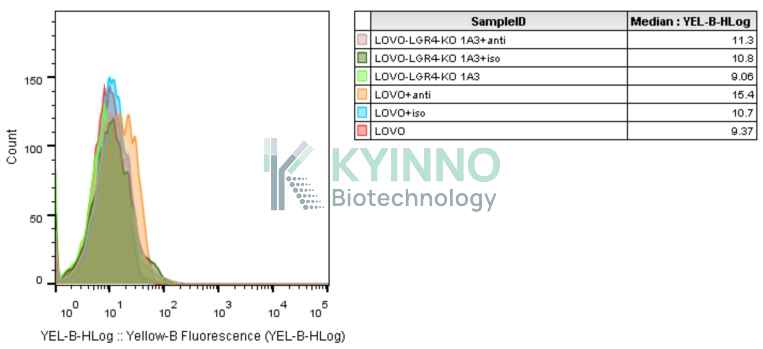
Figure 1: Characterization of LoVo-LGR4-KO 1A3 Cell Line stable clone using FACS.

Figure 2: Characterization of LoVo-LGR4-KO 1A3 Cell Line stable clone using PCR sequencing.

Figure 3: Characterization of LoVo-LGR4-KO 1A3 cell line stable clone using RT-PCR sequencing.

Cell Resuscitation

  1. Prewarm culture medium (Ham's F12K + 10% FBS)in a 37°C water bath.
  2. Thaw the frozen vial in a 37°C water bath for 1-2 minutes.
  3. Transfer the vial into biosafety cabinet, and wipe the surface with 70% ethanol.
  4. Unscrew the top of the vial and transfer the cell suspension gently into a sterile centrifuge tube containing 9.0mL complete culture medium.
  5. Spin at ~ 125 × g for 5-7 minutes at room temperature, and discard the supernatant without disturbing the pellet.
  6. Resuspend cell pellet with the appropriate volume of complete medium and transfer the cell suspension into a T25 culture flask.
  7. Incubate the flask at 37°C, 5% CO2 incubator.
  8. Split the saturated culture at a ratio of 1:3 ~ 1:4 every 2~3 days; seed out at about 1-3 x 10⁵ cells/mL.

Cell Freezing

  1. Prepare the freezing medium (70% Ham's F12K + 20% FBS + 10% DMSO) fresh immediately before use.
  2. Keep the freezing medium on ice and label cryovials.
  3. Transfer cells to a sterile, conical centrifuge tube, and count the cells.
  4. Centrifuge the cells at 250×g for 5 minutes at room temperature and carefully aspirate off the medium.
  5. Resuspend the cells at a density of at least 3×10⁶ cells/mL in chilled freezing medium.
  6. Aliquot 1 mL of the cell suspension into each cryovial.
  7. Freeze cells in the CoolCell freezing container overnight in a -80°C freezer.
  8. Transfer vials to liquid nitrogen for long-term storage.

References

  1. Zhang N, Yuan M, Wang J. LGR4: A New Receptor Member in Endocrine and Metabolic Diseases. Endocr Rev. 2023 Jul 11;44(4):647-667. doi: 10.1210/endrev/bnad003. PMID: 36791020; PMCID: PMC10335173.
Please enable JavaScript in your browser to complete this form.