KC-4142

LoVo-LGR5-KO-1B2-Cell-Line

×
Please enable JavaScript in your browser to complete this form.
43571
Home » LoVo-LGR5-KO-1B2-Cell-Line

Background of LoVo-LGR5-KO-1B2-Cell-Line

Lgr5 (leucine-rich-repeat-containing G-protein-coupled receptor 5, also known as Gpr49) was selected from a panel of intestinal Wnt target genes for its restricted crypt expression. LGR5 is best known for its critical function in the Wnt/β-catenin signaling pathway, a fundamental process involved in tissue homeostasis and regeneration . This receptor serves as a co-receptor for R-spondins, which potentiate Wnt signaling, making LGR5 a key regulator of stem cell activity in various tissues, notably in the intestine and hair follicles. LGR5's expression has been closely linked with adult stem cells, particularly in the gastrointestinal tract, where it marks a subset of cells with high regenerative capacity. These LGR5-positive cells are capable of repopulating damaged intestinal epithelium following injury, underscoring the receptor's importance in maintaining gut integrity. Similarly, LGR5-expressing stem cells in the hair follicle contribute to the cyclic regeneration of hair.In the context of cancer, LGR5 has emerged as a biomarker for cancer stem cells (CSCs) in several malignancies, including colorectal, gastric, and breast cancers.

Specifications

Catalog NumberKC-4142
Cell Line NameLoVo-LGR5-KO-1B2-Cell-Line
Host Cell LineLoVo
DescriptionStable LoVo cell line with human LGR5 gene knockout, No.1B2
QuantityTwo vials of frozen cells (≥2-106/vial)
StabilityStable in culture over a minimum of 10 passages
ApplicationDrug screening and biological assays
Freezing Medium70% Ham's F12K + 20% FBS + 10% DMSO
Propagation MediumHam's F12K + 10% FBS
Selection MarkerN/A
MorphologyFibroblastoid cells growing as a monolayer
SubcultureSplit the saturated culture at a ratio of 1:3~1:4 every 2~3 days; seed out at about 1-3 x 10⁵ cells/ml
Incubation37 °C with 5% CO2
StorageLiquid nitrogen immediately upon receiving
Doubling TimeApproximately 30 hours
Mycoplasma StatusNegative
In Vivo ValidationNA

Cell Line Generation

LoVo-LGR5-KO 1B2 cell line was generated using the CRISPR method.

Characterization

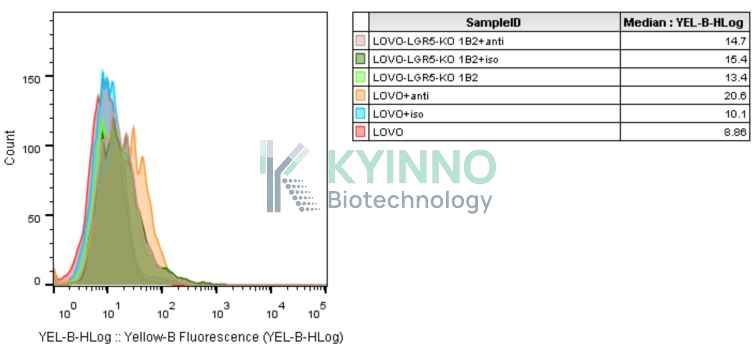
Figure 1: Characterization of LoVo-LGR5-KO 1B2 Cell Line stable clone using FACS.

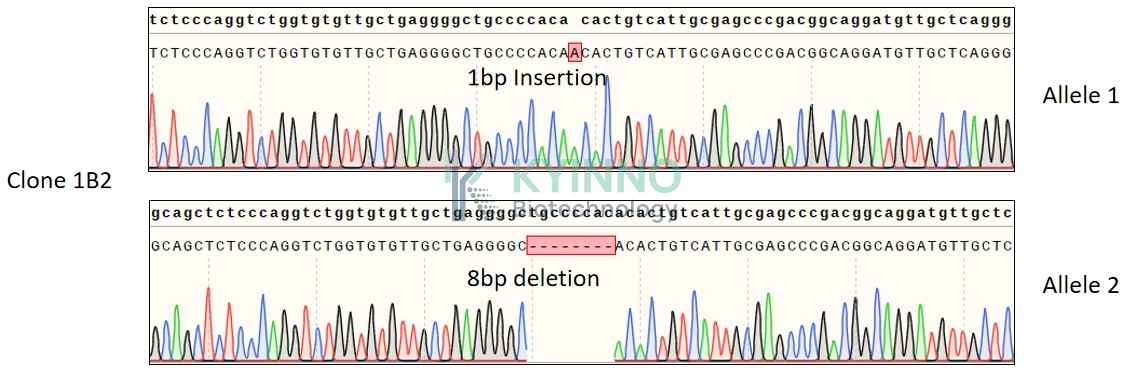
Figure 2: Characterization of LoVo-LGR5-KO 1B2 Cell Line stable clone using PCR sequencing.

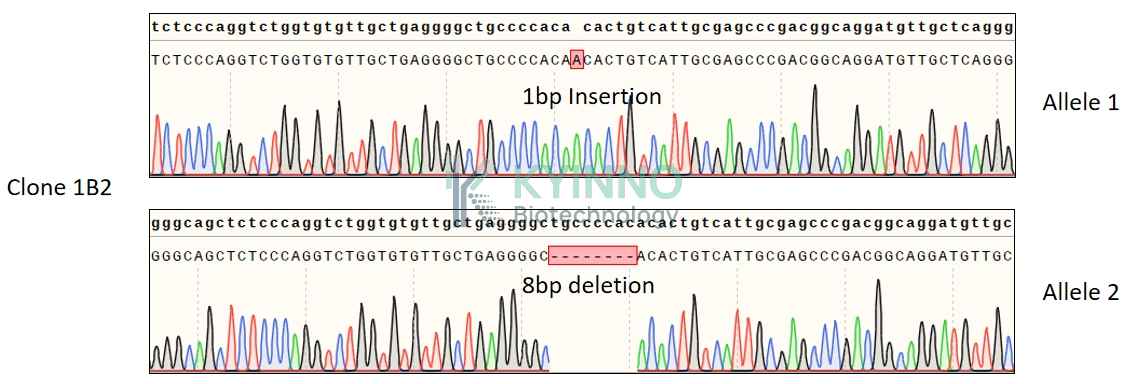
Figure 3: Characterization of LoVo-LGR5-KO 1B2 cell line stable clone using RT-PCR sequencing.

Cell Resuscitation

  1. Prewarm culture medium (Ham's F12K + 10% FBS)in a 37°C water bath.
  2. Thaw the frozen vial in a 37°C water bath for 1-2 minutes.
  3. Transfer the vial into biosafety cabinet, and wipe the surface with 70% ethanol.
  4. Unscrew the top of the vial and transfer the cell suspension gently into a sterile centrifuge tube containing 9.0mL complete culture medium.
  5. Spin at ~ 125 × g for 5-7 minutes at room temperature, and discard the supernatant without disturbing the pellet.
  6. Resuspend cell pellet with the appropriate volume of complete medium and transfer the cell suspension into a T25 culture flask.
  7. Incubate the flask at 37°C, 5% CO2 incubator.
  8. Split the saturated culture at a ratio of 1:3 ~ 1:4 every 2~3 days; seed out at about 1-3 x 10⁵ cells/mL.

Cell Freezing

  1. Prepare the freezing medium (70% Ham's F12K + 20% FBS + 10% DMSO) fresh immediately before use.
  2. Keep the freezing medium on ice and label cryovials.
  3. Transfer cells to a sterile, conical centrifuge tube, and count the cells.
  4. Centrifuge the cells at 250×g for 5 minutes at room temperature and carefully aspirate off the medium.
  5. Resuspend the cells at a density of at least 3×10⁶ cells/mL in chilled freezing medium.
  6. Aliquot 1 mL of the cell suspension into each cryovial.
  7. Freeze cells in the CoolCell freezing container overnight in a -80°C freezer.
  8. Transfer vials to liquid nitrogen for long-term storage.

References

  1. Barker N, van Es JH, Kuipers J, Kujala P, van den Born M, Cozijnsen M, Haegebarth A, Korving J, Begthel H, Peters PJ, Clevers H. Identification of stem cells in small intestine and colon by marker gene Lgr5. Nature. 2007 Oct 25;449(7165):1003-7. doi: 10.1038/nature06196. Epub 2007 Oct 14. PMID: 17934449.
  2. Barker N, van Es JH, Kuipers J, Kujala P, van den Born M, Cozijnsen M, Haegebarth A, Korving J, Begthel H, Peters PJ, Clevers H. Identification of stem cells in small intestine and colon by marker gene Lgr5. Nature. 2007 Oct 25;449(7165):1003-7. doi: 10.1038/nature06196. Epub 2007 Oct 14. PMID: 17934449.
  3. Clevers H. The intestinal crypt, a prototype stem cell compartment. Cell. 2013 Jul 18;154(2):274-84. doi: 10.1016/j.cell.2013.07.004. PMID: 23870119.
Please enable JavaScript in your browser to complete this form.