KC-4236

293T-ROCK1-KO-2B1-Cell-Line

×
Please enable JavaScript in your browser to complete this form.
44023
Home » 293T-ROCK1-KO-2B1-Cell-Line

Background of 293T-ROCK1-KO-2B1-Cell-Line

Rho family proteins are small G proteins with GTPases, which are widely presented in eukaryotic tissues. RhoA (Ras homologous gene family member A) is one of the most critical Rho family members. RhoA serves as a molecular switch that cyclically regulates intracellular signalling between an inactive GDP binding conformation and an active GTP binding conformation. Rho‐kinase 1 (Rho‐related coiled‐coil containing protein kinase, ROCK1) is the direct downstream and primary effector substrate of RhoA. Phosphorylation of myosin phosphatase targeting subunit 1 (MYPT1), one of the important physiological substrates of ROCK1, facilitates interaction and phosphorylation of the catalytic domain of ROCK1. The RhoA/ROCK signal mediates the process of cardiovascular diseases by regulating biological processes such as inflammation, differentiation and apoptosis. In addition, some research suggested the RhoA/ROCK1 pathway regulates mitochondrial fragmentation through Drp1, a large GTPase, which is activated and transported to the surface of mitochondria to regulate mitochondrial fission. Shen et al. found that RhoA/ROCK1 pathway was engaged in phosphorylated Drp1 at the 616th Serine in cardiomyocytes pretreated with TNF‐α, which promoted mitochondrial fragmentation. Another report showed that in LPS‐pretreated mice, ROCK1 inhibitor could improve mitochondrial function by restricting excessive mitochondrial fission through inhibiting Drp1(Ser616) phosphorylation.

Specifications

Catalog NumberKC-4236
Cell Line Name293T-ROCK1-KO-2B1-Cell-Line
Host Cell Line293T
DescriptionStable HEK293T cell line with human ROCK1 gene knockout, No.2B1
QuantityTwo vials of frozen cells (≥2-106/vial)
StabilityStable in culture over a minimum of 10 passages
ApplicationDrug screening and biological assays
Freezing Medium70% DMEM + 20% FBS + 10% DMSO
Propagation MediumDMEM + 10% FBS
Selection MarkerN/A
MorphologyFibroblastoid cells growing as a monolayer
SubcultureSplit the saturated culture at a ratio of 1:4~1:5 every 2~3 days; seed out at about 1-3 x 10⁵ cells/ml
Incubation37 °C with 5% CO2
StorageLiquid nitrogen immediately upon receiving
Doubling TimeApproximately 30 hours
Mycoplasma StatusNegative
In Vivo ValidationNA

Cell Line Generation

293T-ROCK1-KO 2B1 cell line was generated using the CRISPR method.

Characterization

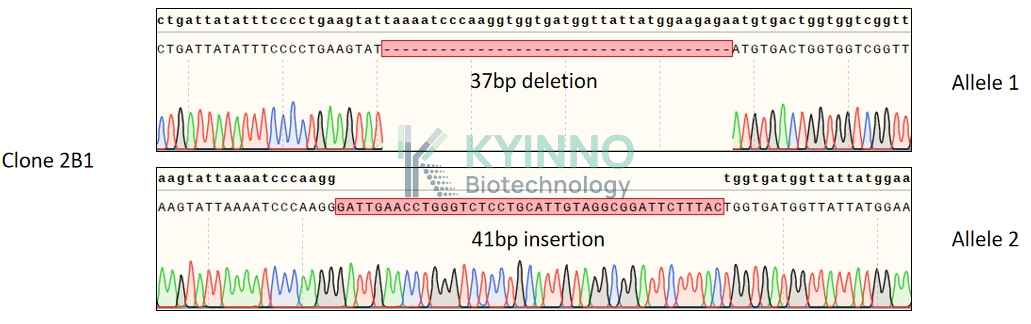
Figure 1: Characterization of 293T-ROCK1-KO 2B1 cell line stable clone using PCR sequencing.

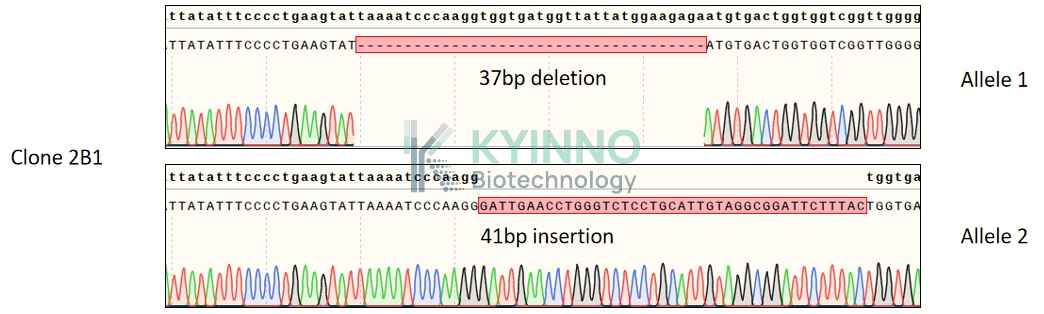
Figure 2: Characterization of 293T-ROCK1-KO 2B1 cell line stable clone using RT-PCR sequencing.

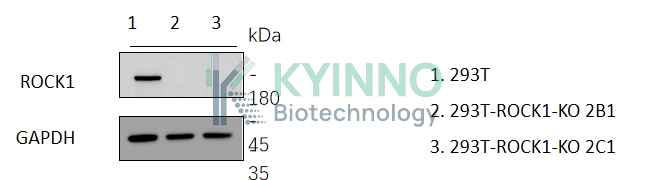
Figure 3: Characterization of 293T-ROCK1-KO 2B1 cell line stable clone using western blot.

Cell Resuscitation

  1. Prewarm culture medium (DMEM + 10% FBS)in a 37°C water bath.
  2. Thaw the frozen vial in a 37°C water bath for 1-2 minutes.
  3. Transfer the vial into biosafety cabinet, and wipe the surface with 70% ethanol.
  4. Unscrew the top of the vial and transfer the cell suspension gently into a sterile centrifuge tube containing 9.0mL complete culture medium.
  5. Spin at ~ 125 × g for 5-7 minutes at room temperature, and discard the supernatant without disturbing the pellet.
  6. Resuspend cell pellet with the appropriate volume of complete medium and transfer the cell suspension into a T25 culture flask.
  7. Incubate the flask at 37°C, 5% CO2 incubator.
  8. Split the saturated culture at a ratio of 1:4 ~ 1:5 every 2~3 days; seed out at about 1-3 x 10⁵ cells/mL.

Cell Freezing

  1. Prepare the freezing medium (70% DMEM + 20% FBS + 10% DMSO) fresh immediately before use.
  2. Keep the freezing medium on ice and label cryovials.
  3. Transfer cells to a sterile, conical centrifuge tube, and count the cells.
  4. Centrifuge the cells at 250×g for 5 minutes at room temperature and carefully aspirate off the medium.
  5. Resuspend the cells at a density of at least 3×10⁶ cells/mL in chilled freezing medium.
  6. Aliquot 1 mL of the cell suspension into each cryovial.
  7. Freeze cells in the CoolCell freezing container overnight in a -80°C freezer.
  8. Transfer vials to liquid nitrogen for long-term storage.

References

  1. Dong Q, Luo Y, Yin Y, Ma Y, Yu Y, Wang L, Yang H, Pan Y, Zhang D. RhoA/ROCK1 regulates the mitochondrial dysfunction through Drp1 induced by Porphyromonas gingivalis in endothelial cells. J Cell Mol Med. 2023 Aug;27(15):2123-2135. doi: 10.1111/jcmm.17796. Epub 2023 Jun 6. PMID: 37278388; PMCID: PMC10399523.
Please enable JavaScript in your browser to complete this form.