
KC-4287

FaDu-ATM-KO Cell Line

×
Please enable JavaScript in your browser to complete this form.
44216
Home » FaDu-ATM-KO Cell Line

Background of FaDu-ATM-KO Cell Line

The ATM (Ataxia Telangiectasia Mutated) gene encodes a serine/threonine kinase that plays a critical role in the cellular response to DNA double-strand breaks (DSBs). ATM is activated in response to DNA damage and phosphorylates key proteins involved in DNA repair, cell cycle arrest, and apoptosis, including p53, CHK2, and BRCA1. Mutations in the ATM gene are associated with ataxia-telangiectasia (A-T), a rare autosomal recessive disorder characterized by neurodegeneration, immunodeficiency, and increased cancer susceptibility. Additionally, ATM mutations are linked to an elevated risk of various cancers, such as breast, ovarian, and pancreatic cancer. ATM's role in maintaining genomic stability makes it a crucial player in cancer biology and a potential target for therapeutic interventions. Research is ongoing to develop ATM inhibitors and exploit synthetic lethality in cancers with defective DNA repair mechanisms.

Specifications

Catalog NumberKC-4287
Cell Line NameFaDu-ATM-KO Cell Line
Host Cell LineFaDu
DescriptionStable FaDu clone with human ATM gene knockout, No.1B6
QuantityTwo vials of frozen cells (≥2-106/vial)
StabilityStable in culture over a minimum of 10 passages
ApplicationDrug screening and biological assays
Freezing Medium70% MEM+20% FBS+10% DMSO
Propagation Medium(MEM+0.01mM NEAA)+10% FBS
Selection MarkerN/A
MorphologyEpithelial
SubcultureSplit saturated culture 1:2-1:3 every 2-3 days; seed out at about 1-3 × 10⁵ cells/mL
Incubation37 °C with 5% CO2
StorageLiquid nitrogen immediately upon receiving
Doubling TimeApproximately 50 hours
Mycoplasma StatusNegative
In Vivo ValidationYes

Cell Line Generation

FaDu-ATM-KO cell line was generated using the CRISPR method.

Characterization

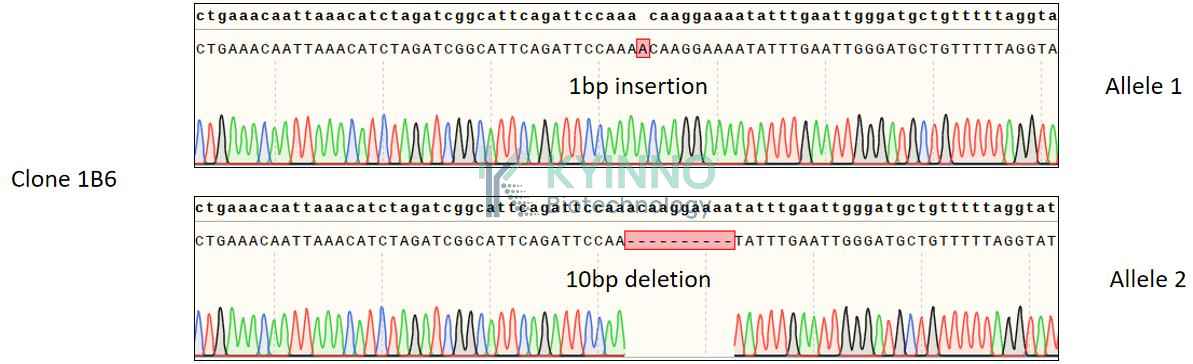
Figure 1: Characterization of FaDu-ATM-KO-1B6 cell line stable clone using PCR sequencing.
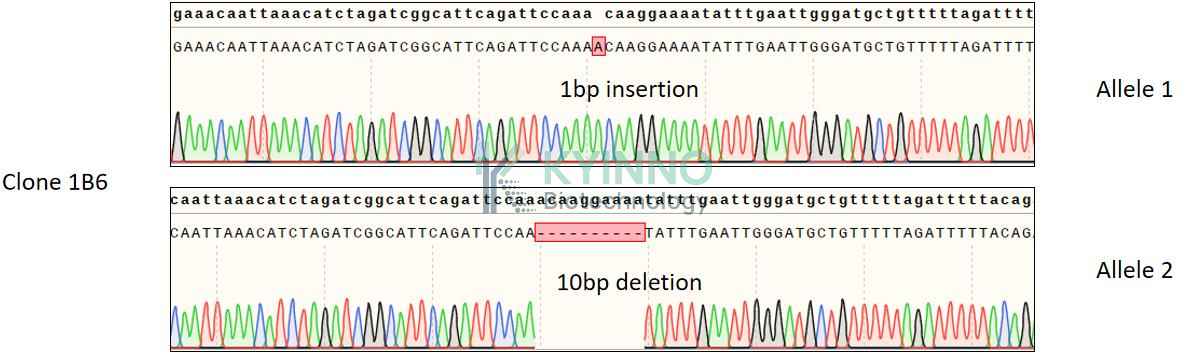
Figure 2: Characterization of FaDu-ATM-KO-1B6 cell line stable clone using RT-PCR sequencing.
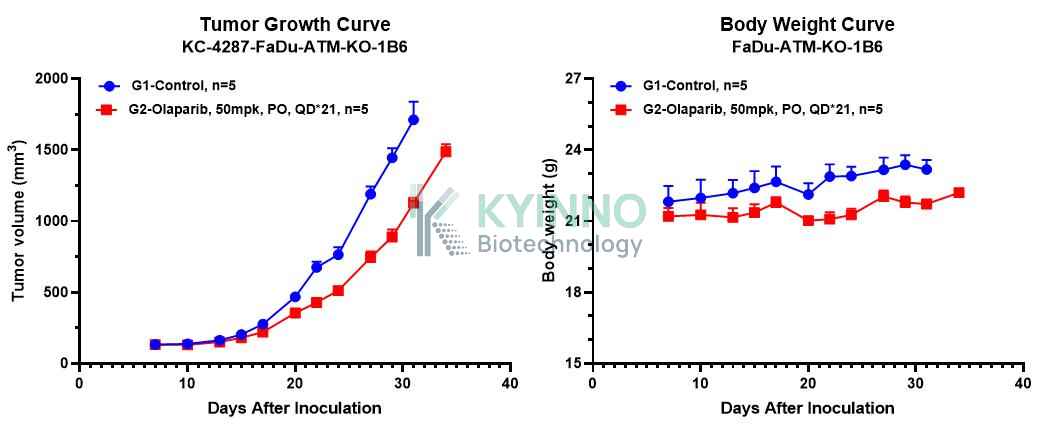
Figure 3: Characterization of (A) Tumor growth curve analysis shows that the control group proliferates faster than the Olaparib group. (B) Body weight curve analysis indicates that the control group maintains higher viability compared to the Olaparib group. Data are presented as mean ± SD.

Cell Resuscitation

1. Prewarm culture medium ((MEM+0.01mM NEAA)+10% FBS)in a 37°C water bath. 2. Thaw the frozen vial in a 37°C water bath for 1-2 minutes. 3. Transfer the vial into biosafety cabinet, and wipe the surface with 70% ethanol. 4. Unscrew the top of the vial and transfer the cell suspension gently into a sterile centrifuge tube containing 9.0mL complete culture medium. 5. Spin at ~ 125 × g for 5-7 minutes at room temperature, and discard the supernatant without disturbing the pellet. 6. Resuspend cell pellet with the appropriate volume of complete medium and transfer the cell suspension into a T25 culture flask. 7. Incubate the flask at 37°C, 5% CO2 incubator. 8. Split saturated culture 1:3-1:6 every 2-3 days; seed out at about 1-3 × 10⁵ cells/mL.

Cell Freezing

1. Prepare the freezing medium (70% MEM + 20% FBS + 10% DMSO) fresh immediately before use. 2. Keep the freezing medium on ice and label cryovials. 3. Transfer cells to a sterile, conical centrifuge tube, and count the cells. 4. Centrifuge the cells at 250×g for 5 minutes at room temperature and carefully aspirate off the medium. 5. Resuspend the cells at a density of at least 3×10⁶ cells/mL in chilled freezing medium. 6. Aliquot 1 mL of the cell suspension into each cryovial. 7. Freeze cells in the CoolCell freezing container overnight in a -80°C freezer. 8. Transfer vials to liquid nitrogen for long-term storage.

References

1.Shiloh, Y., & Ziv, Y. (2013). The ATM protein kinase: regulating the cellular response to genotoxic stress, and more. Nature Reviews Molecular Cell Biology, 14(4), 197-210. 2.Lavin, M. F. (2008). Ataxia-telangiectasia: from a rare disorder to a paradigm for cell signalling and cancer. Nature Reviews Molecular Cell Biology, 9(10), 759-769. 3.Thompson, D., et al. (2005). Cancer risks and mortality in heterozygous ATM mutation carriers. Journal of the National Cancer Institute, 97(11), 813-822.
Please enable JavaScript in your browser to complete this form.