KC-4294

293T-UAS-Luc2-GAL4BD-ELK1-INSRA-Cell-Line

×
Please enable JavaScript in your browser to complete this form.
44224
Home » 293T-UAS-Luc2-GAL4BD-ELK1-INSRA-Cell-Line

Background of 293T-UAS-Luc2-GAL4BD-ELK1-INSRA-Cell-Line

INSR encodes a member of the receptor tyrosine kinase family of proteins. The encoded preproprotein is proteolytically processed to generate alpha and beta subunits that form a heterotetrameric receptor.Binding of insulin or other ligands to this receptor activates the insulin signaling pathway, which regulates glucose uptake and release, as well as the synthesis and storage of carbohydrates, lipids and protein.Receptor tyrosine kinase which mediates the pleiotropic actions of insulin. Binding of insulin leads to phosphorylation of several intracellular substrates, including, insulin receptor substrates (IRS1, 2, 3, 4), SHC, GAB1, CBL and other signaling intermediates. Each of these phosphorylated proteins serve as docking proteins for other signaling proteins that contain Src-homology-2 domains (SH2 domain) that specifically recognize different phosphotyrosine residues, including the p85 regulatory subunit of PI3K and SHP2. Misregulation of the pathway features in diabetes, cancer, and neurodegenerative diseases, making it an important target for clinical interventions.

Specifications

Catalog NumberKC-4294
Cell Line Name293T-UAS-Luc2-GAL4BD-ELK1-INSRA-Cell-Line
Host Cell Line293T-UAS-Luc2-GAL4BD-ELK1
DescriptionStable 293T cell line expressing exogenous luciferase gene under the control of INSRA signaling pathway.
QuantityTwo vials of frozen cells (≥2-106/vial)
StabilityStable in culture over a minimum of 10 passages
ApplicationCell model for monitoring INSRA signaling pathway
Freezing Medium70% DMEM+20% FBS+10% DMSO
Propagation MediumDMEM+10% FBS +150μg/ml Hygromycin B+1μg/ml puromycin
Selection MarkerHygromycin B and Puromycin
MorphologyEpithelial
SubcultureSplit saturated culture 1:4-1:8 every 2-3 days; seed out at about 1-3 × 10⁵ cells/mL
Incubation37 °C with 5% CO2
StorageLiquid nitrogen immediately upon receiving
Doubling TimeApproximately 30 hours
Mycoplasma StatusNegative
In Vivo ValidationNA

Cell Line Generation

293T-UAS-Luc2-GAL4BD-ELK1-INSRA cell line was generated using a transposons system expressing INSRA sequence.

Characterization

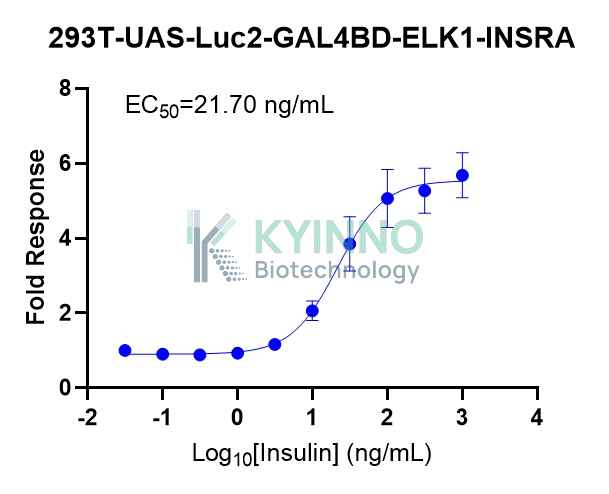
Figure 1. 293T-UAS-Luc2-GAL4BD-ELK1-INSRA cell line was seeded into the 96-well plate, and treated with insulin at a maximum concentration of 1μg/mL for 16 hours, then readout with Bright-Glo system.

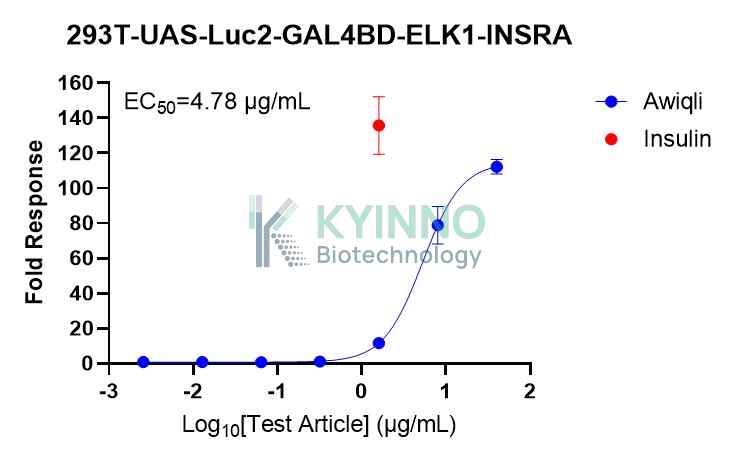
Figure 2. 293T-UAS-Luc2-GAL4BD-ELK1-INSRA cell line was seeded into the 96-well plate, and treated with Awiqli and insulin at a maximum concentration of 1mg/mL and 1μg/mL for 16 hours, then readout with Bright-Glo system.

Cell Resuscitation

  1. Prewarm culture medium (DMEM supplemented with 10% FBS, 150μg/ml Hygromycin and 1μg/ml Puromycin)in a 37°C water bath.
  2. Thaw the frozen vial in a 37°C water bath for 1-2 minutes.
  3. Transfer the vial into biosafety cabinet, and wipe the surface with 70% ethanol.
  4. Unscrew the top of the vial and transfer the cell suspension gently into a sterile centrifuge tube containing 9.0mL complete culture medium.
  5. Spin at ~ 125 × g for 5-7 minutes at room temperature, and discard the supernatant without disturbing the pellet.
  6. Resuspend cell pellet with the appropriate volume of complete medium and transfer the cell suspension into a T25 culture flask.
  7. Incubate the flask at 37°C, 5% CO2 incubator.
  8. Split saturated culture 1:4-1:8 every 2-3 days; seed out at about 1-3 × 10⁵ cells/mL.

Cell Freezing

  1. Prepare the freezing medium (70% DMEM + 20% FBS + 10% DMSO) fresh immediately before use.
  2. Keep the freezing medium on ice and label cryovials.
  3. Transfer cells to a sterile, conical centrifuge tube, and count the cells.
  4. Centrifuge the cells at 250×g for 5 minutes at room temperature and carefully aspirate off the medium.
  5. Resuspend the cells at a density of at least 3×10⁶ cells/mL in chilled freezing medium.
  6. Aliquot 1 mL of the cell suspension into each cryovial.
  7. Freeze cells in the CoolCell freezing container overnight in a -80°C freezer.
  8. Transfer vials to liquid nitrogen for long-term storage

References

  1. Payankaulam S, Raicu AM, Arnosti DN. Transcriptional Regulation of INSR, the Insulin Receptor Gene. Genes (Basel). 2019 Nov 29;10(12):984. doi: 10.3390/genes10120984. PMID: 31795422; PMCID: PMC6947883.
  2. Pandini G, Frasca F, Mineo R, Sciacca L, Vigneri R, Belfiore A. Insulin/insulin-like growth factor I hybrid receptors have different biological characteristics depending on the insulin receptor isoform involved. J Biol Chem. 2002 Oct 18;277(42):39684-95. doi: 10.1074/jbc.M202766200. Epub 2002 Jul 22. PMID: 12138094.
Please enable JavaScript in your browser to complete this form.