KC-3568

CHOK1-chimeric-DLL3-EGF5-Cell-Line

×
Please enable JavaScript in your browser to complete this form.
44920
Home » CHOK1-chimeric-DLL3-EGF5-Cell-Line

Background of CHOK1-chimeric-DLL3-EGF5-Cell-Line

DLL3 (Delta-like protein 3), also known as Delta-like protein 3, is a transmembrane protein that plays a role in cell signaling and is a member of the Notch signaling pathway, which is critical for cell differentiation and development. LL3 is involved in intercellular communication and is one of the ligands of the Notch receptor. It interacts with Notch receptors on adjacent cells to trigger a signaling cascade that can influence cell fate decisions, including cell differentiation and proliferation. THBD, an intron-free gene encoding a protein that is an endothel-specific type I membrane receptor, binds thromboxase. This binding results in the activation of protein C, which degrades the clotting factors Va and VIIIa, and reduces the amount of thromboxase produced.

Specifications

Catalog NumberKC-3568
Cell Line NameCHOK1-chimeric-DLL3-EGF5-Cell-Line
Host Cell LineCHOK1
DescriptionStable CHOK1 cell line expressing exogenous chimeric-DLL3-EGF5 gene
QuantityTwo vials of frozen cells (≥2-106/vial)
StabilityStable in culture over a minimum of 10 passages
ApplicationDrug screening and biological assays
Freezing Medium70% RPMI1640 + 20% FBS + 10% DMSO
Propagation MediumRPMI1640 + 10% FBS + 10μg/ml Puromycin
Selection MarkerPuromycin
MorphologyFibroblastoid cells growing as a monolayer
SubcultureSplit the saturated culture at a ratio of 1:4~1:8 every 2~3 days; seed out at about 1-2 x 10⁵ cells/ml
Incubation37 °C with 5% CO2
StorageLiquid nitrogen immediately upon receiving
Doubling TimeApproximately 30 hours
Mycoplasma StatusNegative
In Vivo ValidationNA

Cell Line Generation

CHOK1-chimeric-DLL3-EGF5 cell line was generated using a lentiviral vector expressing the chimeric-DLL3-EGF5 sequence.

Characterization

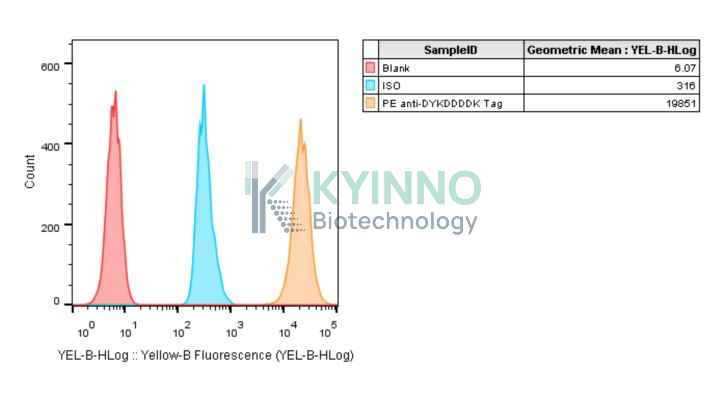
Figure 1: Characterization of chimeric-DLL3-EGF5 overexpression in CHOK1 stable clones using FACS.

Figure 2:Characterization of chimeric-DLL3-EGF5 overexpression in the CHO-K1 chimeric-DLL3-EGF5 stable clone using PCR sequence.

Cell Resuscitation

  1. Prewarm the culture medium (RPMI1640 supplemented with 10% FBS and 10μg/ml puromycin) in a 37°C water bath. 2.Thaw the frozen vial in a 37°C water bath for 1-2 minutes. 3.Transfer the vial into a biosafety cabinet and wipe the surface with 70% ethanol. 4.Unscrew the top of the vial and transfer the cell suspension gently into a sterile centrifuge tube containing 9.0 mL complete culture medium. 5.Spin at ~ 125 x g for 5~7 minutes at room temperature and discard the supernatant without disturbing the pellet. 6.Resuspend the cell pellet with the appropriate volume of complete medium and transfer the cell suspension into a T25 culture flask. 7.Incubate the flask in an incubator at 37°C, 5% CO2. 8.Split the saturated culture at a ratio of 1:4 ~ 1:8 every 2~3 days; seed out at about 1-2 x 10⁵ cells/ml.

Cell Freezing

  1. Prepare the freezing medium (70% RPMI1640+ 20% FBS + 10% DMSO) fresh immediately before use. 2.Keep the freezing medium on ice and label cryovials for later use. 3.Trypsinize and harvest cells to a sterile, conical centrifuge tube during the logarithmic growth period and count the cells. 4.Centrifuge the cells at 250 x g for 5 minutes at room temperature and carefully aspirate off the medium. 5.Resuspend the cells at a density of at least 3 x10⁶ cells/ml in chilled freezing medium. 6.Aliquot 1 ml of the cell suspension into each cryovial. 7.Freeze cells in the CoolCell freezing container overnight in a −80°C freezer. 8.Transfer vials to liquid nitrogen for long-term storage.

References

  1. Owen DH, Giffin MJ, Bailis JM, Smit MD, Carbone DP, He K. DLL3: an emergingtarget in small cell lung cancer. J Hematol Oncol. 2019 Jun 18;12(1):61. doi:10.1186/s13045-019-0745-2. PMID: 31215500; PMCID: PMC6582566. 2.Yao J, Bergsland E, Aggarwal R, Aparicio A, Beltran H, Crabtree JS, Hann CL,Ibrahim T, Byers LA, Sasano H, Umejiego J, Pavel M. DLL3 as an Emerging Targetfor the Treatment of Neuroendocrine Neoplasms. Oncologist. 2022 Nov3;27(11):940-951. doi: 10.1093/oncolo/oyac161. PMID: 35983951; PMCID:PMC9632312. 3.Manderstedt E, Halldén C, Lind-Halldén C, Elf J, Svensson PJ, Engström G,Melander O, Baras A, Lotta LA, Zöller B; Regeneron Genetics Center.Thrombomodulin (THBD) gene variants and thrombotic risk in a population-basedcohort study. J Thromb Haemost. 2022 Apr;20(4):929-935. doi: 10.1111/jth.15630.Epub 2022 Jan 12. PMID: 34970867. 4.Wu T, Kong M, Xin XJ, Liu RQ, Wang HD, Song MZ, Xu WP, Yuan YB, Yang YY, XiaoPX. Epigenetic repression of THBD transcription by BRG1 contributes to deep veinthrombosis. Thromb Res. 2022 Nov;219:121-132. doi:10.1016/j.thromres.2022.09.015. Epub 2022 Sep 19. PMID: 36162255.
Please enable JavaScript in your browser to complete this form.