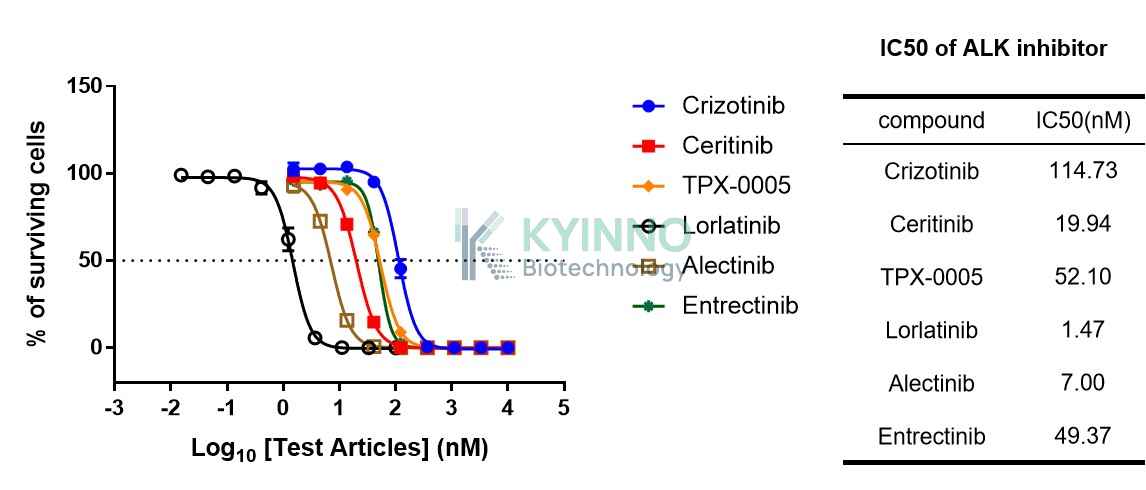
EML4-ALK, echinoderm microtubule-associated protein-like 4 - anaplastic lymphoma kinase, is an abnormal protein with transforming activity found in some primary lung malignant tumors due to the fusion of abnormal configuration of DNA wherein the echinoderm microtubule-associated protein-like 4 (EML4) gene is fused to the anaplastic lymphoma kinase (ALK) gene; EML4-ALK and its mutants can promote and maintain the malignant behavior of the cancer cells. Identifying ALK as a driver gene has led to the rapid development of anticancer therapeutic agents, including crizotinib, ceritinib, and Brigatinib.
Ba/F3 cell, a murine interleukin-3 dependent pro-B cell line, is a popular system for exploring both kinases and their inhibitors, because some protein kinases can render the Ba/F3 cells to be depended on the activation of the kinases instead of IL-3 supplement, while their inhibitors can antagonize the kinase-dependent growth effects.