KC-4361

NCI-H1299-Luc2-CPNE1-KO-3A1-Cell-Line

×
Please enable JavaScript in your browser to complete this form.
46525
Home » NCI-H1299-Luc2-CPNE1-KO-3A1-Cell-Line

Background of NCI-H1299-Luc2-CPNE1-KO-3A1-Cell-Line

Copine 1 (CPNE1), as a member of calcium-dependent phospholipid binding protein, is located on chromosome 20q11.21 region and expressed in various tissues and organs. CPNE1 is consisted of two tandem N-terminal C2 domains (C2A and C2B) associated with calcium-dependent phospholipid binding activities and a C-terminal A domain (von Willebrand factor) functioning as protein-binding domains. CPNE1 participates in various biological process. CPNE1 promotes neurite outgrowth via activating AKT phosphorylation and exerts an important role in the regulation of neural stem cell proliferation. In addition, proteomic profiling study demonstrated that CPNE1 may be a promising novel marker in ethanol-induced cardiotoxicity since expression of CPNE1 diminished after ethanol treatment in cardiomyocytes. CPNE1 regulates the half-life of NF-κB transcriptional responses through stimulating endoproteolysis of p65 protein. Moreover, downregulation of CPNE1 could induce senescence‐associated phenotypes. Recently, accumulating evidence indicates the key role of CPNE1 in tumorigenesis and malignant progression. It has been shown that high expression of CPNE1 predicts a poor prognosis in prostate cancer and triple-negative breast cancer. Furthermore, enhanced expression of CPNE1 promotes lung cancer growth and metastasis. CPNE1 also enhanced colorectal cancer cell growth, glycolysis and drug resistance via activating AKT-GLUT1/HK2 signaling pathway. Moreover, CPNE1 silencing can inhibit osteosarcoma cell migration and proliferation, suggesting a promising target for osteosarcoma therapy.

Specifications

Catalog NumberKC-4361
Cell Line NameNCI-H1299-Luc2-CPNE1-KO-3A1-Cell-Line
Host Cell LineNCI-H1299-Luc2
DescriptionStable NCI-H1299-Luc2 cell line with human CPNE1 gene knockout, No.3A1
QuantityTwo vials of frozen cells (≥2-106/vial)
StabilityStable in culture over a minimum of 10 passages
ApplicationDrug screening and biological assays
Freezing Medium70% RPMI1640 + 20% FBS + 10% DMSO
Propagation MediumRPMI1640+10% FBS+300μg/mL Hygromycin B
Selection MarkerN/A
MorphologyFibroblastoid cells growing as a monolayer
SubcultureSplit the saturated culture at a ratio of 1:3~1:5 every 2~3 days; seed out at about 1-3 x 10⁵ cells/ml
Incubation37 °C with 5% CO2
StorageLiquid nitrogen immediately upon receiving
Doubling TimeApproximately 30 hours
Mycoplasma StatusNegative
In Vivo ValidationNA

Cell Line Generation

NCI-H1299-Luc2-CPNE1-KO 3A1 cell line was generated using the CRISPR method.

Characterization

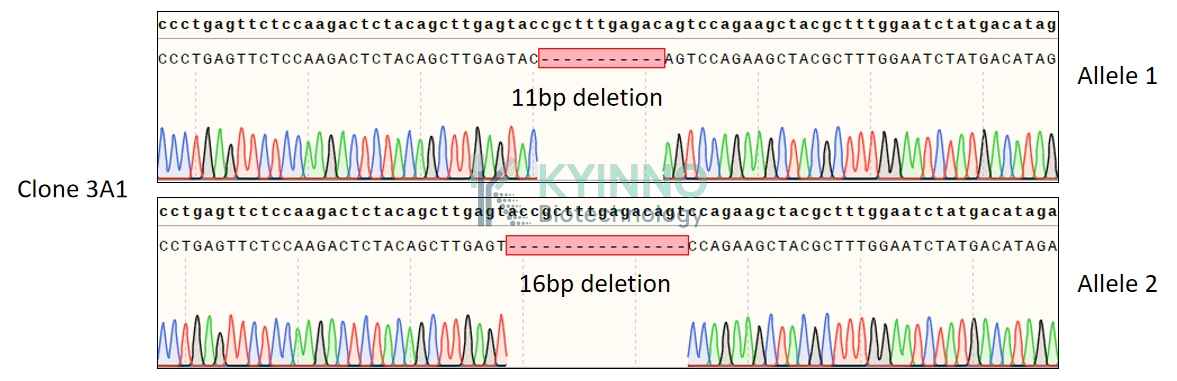
Figure 1: Characterization of NCI-H1299-Luc2-CPNE1-KO 3A1 cell line stable clone using PCR sequencing.

Figure 2: Characterization of NCI-H1299-Luc2-CPNE1-KO 3A1 cell line stable clone using RT-PCR sequencing.

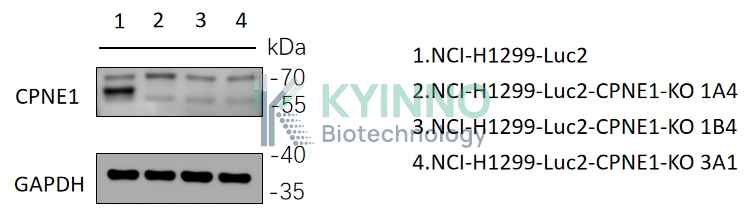
Figure 3: Characterization of NCI-H1299-Luc2-CPNE1-KO 3A1 cell line stable clone using western blot.

Cell Resuscitation

  1. Prewarm culture medium (RPMI1640+10% FBS+300μg/mL Hygromycin B)in a 37°C water bath.
  2. Thaw the frozen vial in a 37°C water bath for 1-2 minutes.
  3. Transfer the vial into biosafety cabinet, and wipe the surface with 70% ethanol.
  4. Unscrew the top of the vial and transfer the cell suspension gently into a sterile centrifuge tube containing 9.0mL complete culture medium.
  5. Spin at ~ 125 × g for 5-7 minutes at room temperature, and discard the supernatant without disturbing the pellet.
  6. Resuspend cell pellet with the appropriate volume of complete medium and transfer the cell suspension into a T25 culture flask.
  7. Incubate the flask at 37°C, 5% CO2 incubator.
  8. Split the saturated culture at a ratio of 1:3~1:5 every 2~3 days; seed out at about 1-3 x 10⁵ cells/ml.

Cell Freezing

  1. Prepare the freezing medium (70% RPMI1640 + 20% FBS + 10% DMSO) fresh immediately before use.
  2. Keep the freezing medium on ice and label cryovials.
  3. Transfer cells to a sterile, conical centrifuge tube, and count the cells.
  4. Centrifuge the cells at 250×g for 5 minutes at room temperature and carefully aspirate off the medium.
  5. Resuspend the cells at a density of at least 3×10⁶ cells/mL in chilled freezing medium.
  6. Aliquot 1 mL of the cell suspension into each cryovial.
  7. Freeze cells in the CoolCell freezing container overnight in a -80°C freezer.
  8. Transfer vials to liquid nitrogen for long-term storage.

References

  1. Li Y, Li L, Liu H, Zhou T. CPNE1 silencing inhibits cell proliferation and accelerates apoptosis in human gastric cancer. Eur J Pharm Sci. 2022 Oct 1;177:106278. doi: 10.1016/j.ejps.2022.106278. Epub 2022 Aug 17. PMID: 35985444.
Please enable JavaScript in your browser to complete this form.